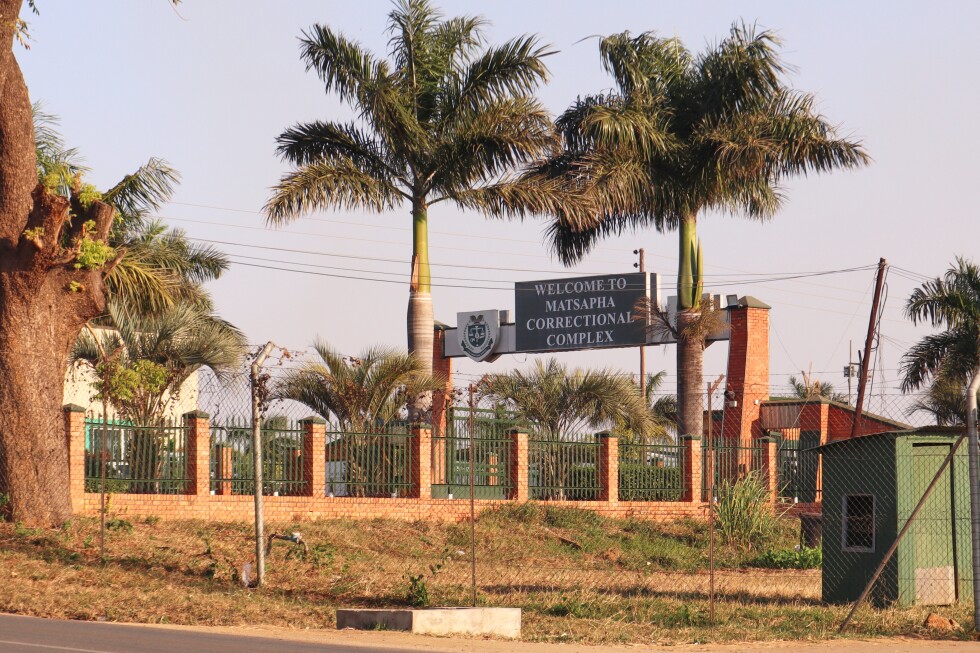
The Supreme Court of Eswatini, Africa’s last absolute monarchy, has granted four men deported from the United States the right to meet with a lawyer. These individuals were sent to Eswatini under the Trump administration’s third-country deportation program and had been denied access to in-person legal counsel for nine months while detained in a maximum-security facility.
Previously, a lower court allowed Sibusiso Nhlabatsi, representing the men’s U.S.-based lawyers, to meet with them. However, this decision was immediately contested by the Eswatini government. The Supreme Court has since dismissed the authorities’ claims that the deportees did not wish to consult Nhlabatsi and were not entitled to legal aid as they hadn’t been charged with any crime in Eswatini.
According to U.S.-based attorney Alma David of Novo Legal Group, representing two of the deportees, “the fact that it took nine months of litigation to allow the men to meet with a lawyer speaks volumes about how hard the government of Eswatini is fighting to deny these men the most basic of rights.”
The deportees, hailing from Cuba, Yemen, Laos, and Vietnam, have communicated via phone with their U.S. lawyers. Eswatini is among several African nations that have agreements with the U.S. to accept deported migrants. This program, part of the Trump administration’s immigration crackdown, enables the swift removal of migrants who are in the U.S. illegally and cannot be easily sent back to their home countries.
Criticism Surrounding Legal Rights
There has been criticism that the deportation program permits the violation of deportees’ rights in countries with questionable human rights records. U.S. authorities maintain that they adhered to due process during these deportations, but the responsibility for the migrants’ treatment has largely been transferred to the receiving countries.
Eswatini’s government spokesperson, Thabile Mdluli, indicated that the government has yet to decide on further actions following the Supreme Court’s decision.
The U.S. government has stated that the deportees were convicted of serious crimes in the U.S. and had deportation orders. Their attorneys argue that their detention in Eswatini is unlawful since they have not been charged with any crimes there.
Financial Agreements with African Governments
The U.S. has agreed to pay $5.1 million to Eswatini for accepting deportees, according to U.S. State Department documents. Since July, Eswatini has received 19 deportees from the U.S. in various groups, with two having been repatriated to their home countries. The nation is capable of detaining them for up to a year.
Other African nations involved in similar agreements include South Sudan, Rwanda, Uganda, Ghana, Cameroon, Equatorial Guinea, and Congo. For instance, Rwanda was to receive $7.5 million, while South Sudan requested the lifting of sanctions against an official and assistance in prosecuting an opposition leader in exchange for taking in deportees.
Senate Democrats have raised questions regarding a $7.5 million payment to Equatorial Guinea, a nation with allegations of corruption and repression against its leadership. Many elements of the deportation deals remain undisclosed, including the deportees’ detention conditions and duration.
Ongoing Negotiations for Further Agreements
A report by Democratic staff on the Senate Foreign Relations Committee revealed that the Trump administration had allocated at least $40 million to deport roughly 300 migrants to third countries, including those in Africa and Central America. Internal documents reviewed showed 47 such agreements were either finalized or under negotiation.