Massachusetts Court Halts GE’s Exit from Vineyard Wind Project
A Massachusetts court ruling on Friday has temporarily prevented a turbine manufacturer from withdrawing from a significant offshore wind farm project. The decision came after Vineyard Wind took legal action against GE Renewables, which intended to terminate its contracts related to turbine services and maintenance.
GE Vernova, the parent company of GE Renewables, asserted that Vineyard Wind owed it $300 million for previous work. However, Vineyard Wind contended that the manufacturer was responsible for approximately $545 million due to a turbine blade collapse in July 2024, which delayed the project by two years and caused fiberglass fragments to wash ashore on Nantucket during peak tourist season.
Judge Peter Krupp of Suffolk County Superior Court sided with Vineyard Wind, issuing a preliminary injunction to prevent GE Renewables from terminating the contracts. Krupp described the notion of replacing GE as “fanciful,” emphasizing the critical phase of the project and the difficulty of substituting GE’s specialized knowledge.
Vineyard Wind spokesperson Craig Gilvarg expressed satisfaction with the court’s decision, emphasizing the importance of continuing to deliver energy to Massachusetts and the New England grid.
GE Renewables maintained that its decision to terminate the contracts was justified, stating, “We stand by our compliance with contractual obligations and our performance, including recently completing installation of all 62 wind turbines at the Vineyard Wind Farm.”
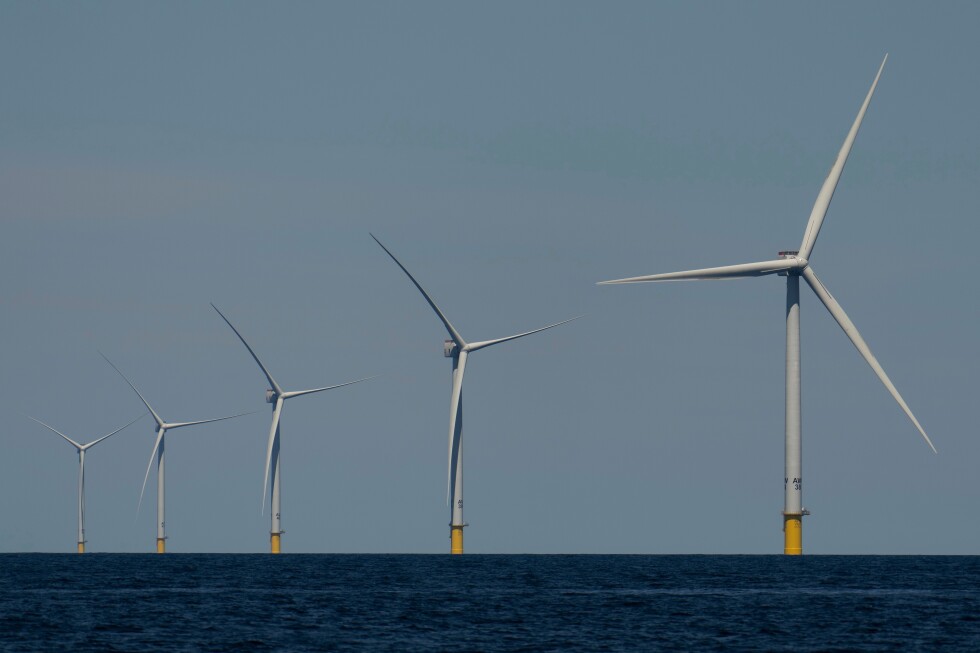
The Vineyard Wind project, a joint venture between Avangrid and Copenhagen Infrastructure Partners, is located 15 miles south of Martha’s Vineyard and Nantucket, Massachusetts. It consists of 62 turbines capable of generating 800 megawatts, enough to power around 400,000 homes. Construction concluded in March, marking it as the first project to reach this stage during President Donald Trump’s administration.
The Trump administration, which has been critical of the project due to the blade failure, attributed the issue to insufficient bonding at a Canadian factory rather than a design flaw. The project was one of five major East Coast offshore wind initiatives halted by the administration over national security concerns. However, after legal challenges from developers and states, federal judges allowed construction to resume on all five projects.