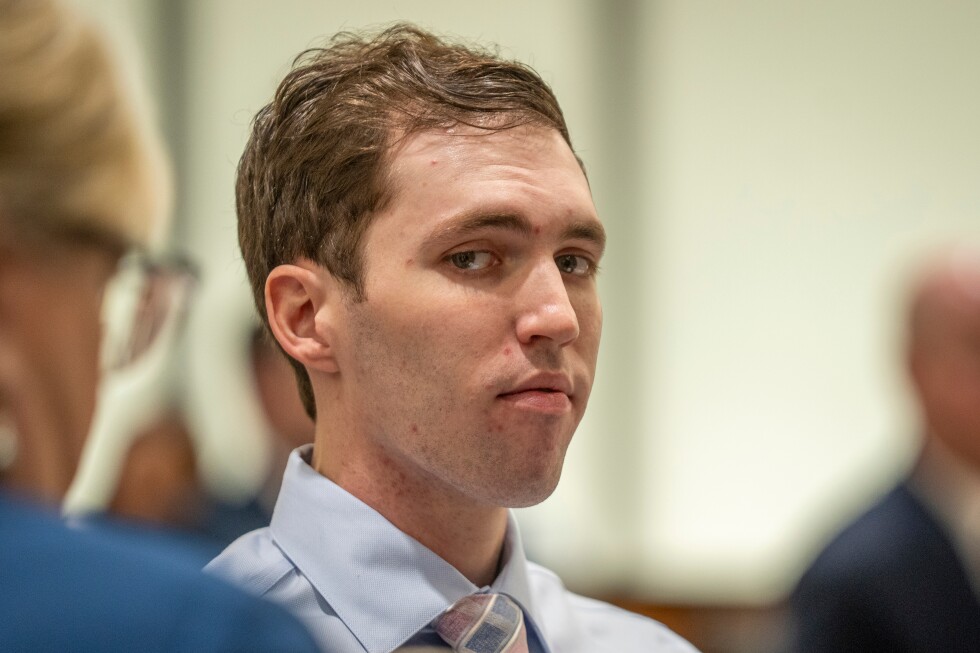
The debate over the presence of cameras in courtrooms has been reignited with the upcoming trial of Tyler Robinson, accused of killing conservative activist Charlie Kirk. This issue has a long history in American judicial proceedings, from the Lindbergh baby kidnapping trial to the O.J. Simpson murder case.
Historical Precedents
Cameras have long been a part of courtroom history, capturing infamous moments since the early 20th century. Notably, the trial of Bruno Richard Hauptmann in 1935, accused of kidnapping and killing Charles Lindbergh’s baby, was a media spectacle that led to new judicial ethics rules limiting camera access for decades. The chaotic nature of that trial, with dozens of photographers and reporters present, raised concerns about the influence of media on judicial proceedings.
In another high-profile case, Billie Sol Estes’ 1962 trial for swindling was broadcast live, leading to a Supreme Court ruling that the intense media coverage deprived him of a fair trial. The court’s decision reflected ongoing tensions between transparency advocates and defense attorneys concerned about media influence on jurors.
Modern-Day Implications
More recently, cameras have been allowed in many state and local courtrooms, but not without controversy. The trials of serial killers Ted Bundy and Jeffrey Dahmer, the Rodney King police brutality cases, and the murder trial of Jodi Arias received widespread media attention. However, federal courts still generally prohibit cameras, as seen in Donald Trump’s 2024 trial, where sketch artists were used instead.
In Robinson’s case, his defense team argues that banning cameras would prevent media-induced bias, while prosecutors claim that transparency could counteract misinformation and conspiracy theories. Utah County prosecutors have stated, “Transparency serves as a corrective to misinformation,” as they advocate for camera access in the courtroom.
Ongoing Debate
The public fascination with televised trials reached its peak with the O.J. Simpson case in 1995, dubbed the “trial of the century.” It was watched by millions daily and raised questions about whether participants in the trial were performing for the cameras. Valerie Hans, a professor at Cornell Law School, noted, “People were talking about how the judge and the attorneys were playing to the cameras as much as they were playing to the jury.”
The debate over cameras in courtrooms continues, with both sides presenting compelling arguments. While transparency is crucial, the potential for media influence on judicial outcomes remains a significant concern.