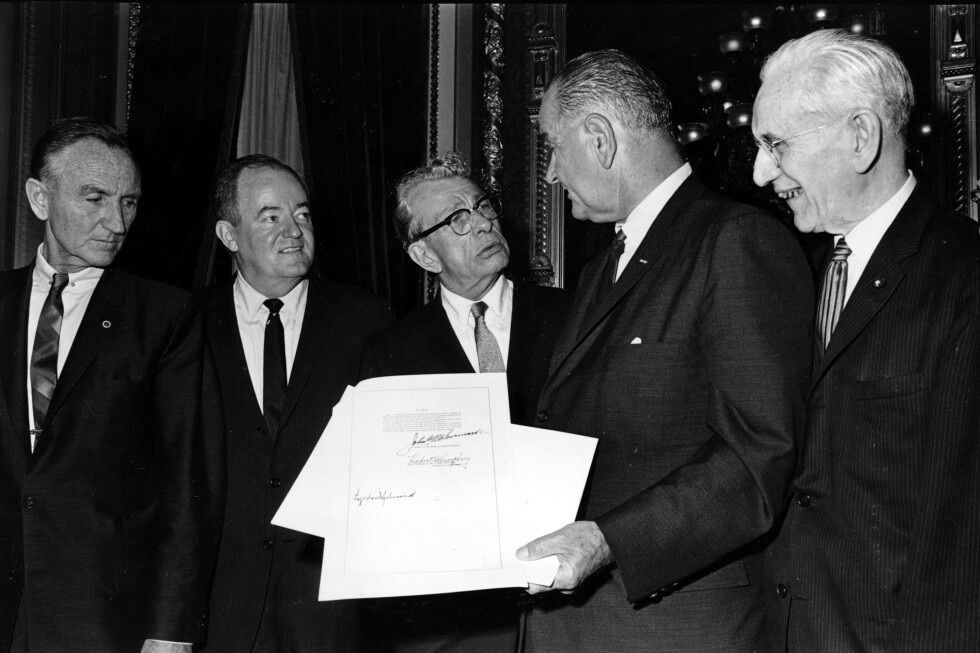
The recent ruling by the U.S. Supreme Court marks a significant turning point for the Voting Rights Act, a legislation that has been pivotal in preventing racial discrimination at the polls for nearly six decades. Instituted by President Lyndon B. Johnson in 1965, this law became a cornerstone in the fight for civil rights, catalyzed by the events of “Bloody Sunday” in Selma, Alabama.
On August 6, 1965, President Johnson took an unprecedented step by leaving the Oval Office to sign the legislation on Capitol Hill, acknowledging the bravery of Congress members who risked their political careers to support it. Over the years, the Act facilitated the election of thousands of Black and Hispanic representatives, reshaping the political landscape in the United States.
Supreme Court Decision and Its Implications
The Supreme Court’s recent decision involves a case of congressional redistricting in Louisiana, where a district was drawn to include a second Black representative. The court found the district to be a racial gerrymander, with Justice Samuel Alito stating that Section 2 of the Voting Rights Act is meant to guard against intentional discrimination.
Justice Elena Kagan expressed concern in her dissent, noting that proving intentional discrimination poses “an almost insurmountable barrier” for those challenging voting rights violations.
Voting rights advocates fear this ruling significantly weakens the Act, potentially enabling political mapmakers across various levels of government to undermine minority representation. “We’re witnessing the evisceration of America’s greatest legislative landmark,” commented Democratic U.S. Rep. Ritchie Torres.
Historical Impact and Future Challenges
Since its enactment, the Voting Rights Act has dramatically increased the number of Black elected officials, from approximately 1,500 in 1970 to over 10,000 today, as noted by Sherrilyn Ifill, a law professor at Howard University.
However, the Supreme Court’s decisions over the years, including the 2013 ruling in Shelby County v. Holder, have progressively eroded the Act’s effectiveness. This ruling ended the requirement for certain states to obtain preclearance for changes to voting laws, leading to the passage of restrictive voting laws in many states.
Concerns Over Minority Representation
Many worry that the recent decision will lead to a dilution of minority voting strength. Maria Teresa Kumar of Voto Latino warned that it could lead to more aggressive redistricting strategies that minimize minority influence, not just in Congress but also in state and local governments.
In Louisiana, Democratic Rep. Cleo Fields faces uncertainty as the decision jeopardizes his district, echoing past challenges he faced due to redistricting. Similarly, Shomari Figures, who benefited from a new district in Alabama, highlighted the decision’s potential to hinder future efforts to prove racial discrimination in redistricting.
As the future of minority representation in the U.S. hangs in the balance, many, like Alabama plaintiff Shalela Dowdy, express concern over entrusting states with decisions that could significantly impact minority communities. “There’s just been a history of the states not doing the right thing based off their state population,” Dowdy stated.