Haitian Restaurant Flourishes in Tijuana Amid Citizenship Debates
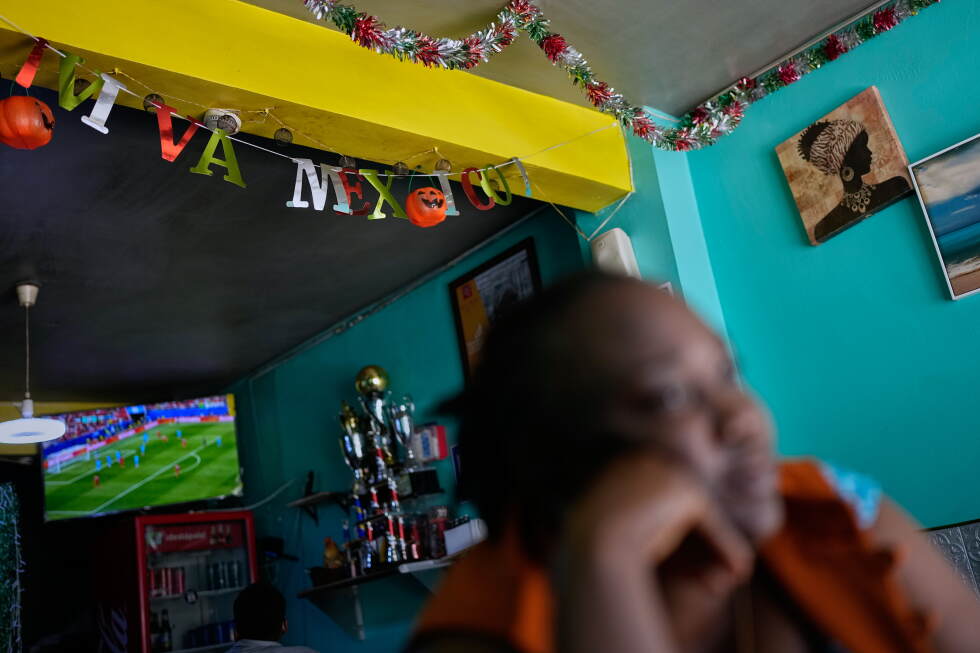
In Tijuana, Mexico, just blocks from the imposing U.S. border wall, Vivianne Petit Frere has established Lakou Lakay, a vibrant Haitian eatery. The restaurant’s name, translating to “home” in Haitian Creole, echoes her family’s growing ties to Mexico, where her granddaughter, Alexca, was born, securing her Mexican citizenship.
Mexico, similar to the United States, grants citizenship to children born on its soil. Former U.S. President Donald Trump, however, has challenged the notion of birthright citizenship in the U.S., claiming it is unique to the country. Trump’s order to deny this right to children of undocumented immigrants awaits scrutiny by the U.S. Supreme Court. His stance remains controversial, drawing skepticism across the political spectrum.
Trump expressed his dissatisfaction on Truth Social, stating, “We are the only Country in the World STUPID enough to allow ‘Birthright’ Citizenship!” However, nations such as Canada, Honduras, Brazil, Argentina, Venezuela, and Mexico also practice birthright citizenship.
Petit Frere’s journey from Haiti began in 2019, traversing from Brazil through Panama to Mexico, in pursuit of the American Dream. Realizing its elusiveness, she instead found opportunity in Mexico. Her restaurant serves traditional Haitian cuisine, aiming to foster cultural exchanges between Haitians and Mexicans.
Birthright Citizenship in Historical Context
The concept of birthright citizenship in the U.S. emerged post-Civil War with the 14th Amendment, ensuring citizenship for former slaves. The late 1800s saw its expansion to include children of immigrants. César Cuauhtémoc García Hernández, a law professor, notes the historical roots in European colonial practices, where citizenship was tied to birth within a monarch’s domain.
Dominican Republic’s Shift on Citizenship
The Dominican Republic, in a significant policy shift, ceased granting citizenship to children born to undocumented parents in 2007, applying it retroactively to 1929. Despite a 2014 law intended to amend this decision, many affected individuals remain stateless, according to the Center for Migration Studies of New York.
Petit Frere’s Expanding Family and Community Role
Vivianne Petit Frere, originally from French Saint Martin, was deported to Haiti as a child. Seeking a better life, she was surprised when her teenage daughter arrived in Tijuana nearly five months pregnant. Her granddaughter, Alexca, now enjoys the benefits of Mexican citizenship, which Petit Frere believes offers more opportunities than a Haitian passport.
The Haitian community in Tijuana has seen many children born as Mexican citizens, allowing their parents to gain permanent residency. Petit Frere herself is pursuing Mexican citizenship and continues her role as a community organizer with the Haitian Bridge Alliance. She plans to further her education in international migration.
“The children of immigrants are proving to be the most outstanding in the world,” she remarked, suggesting that opposition to birthright citizenship might stem from envy.