Chinese Tycoon Sentenced to 30 Years in U.S. Fraud Case
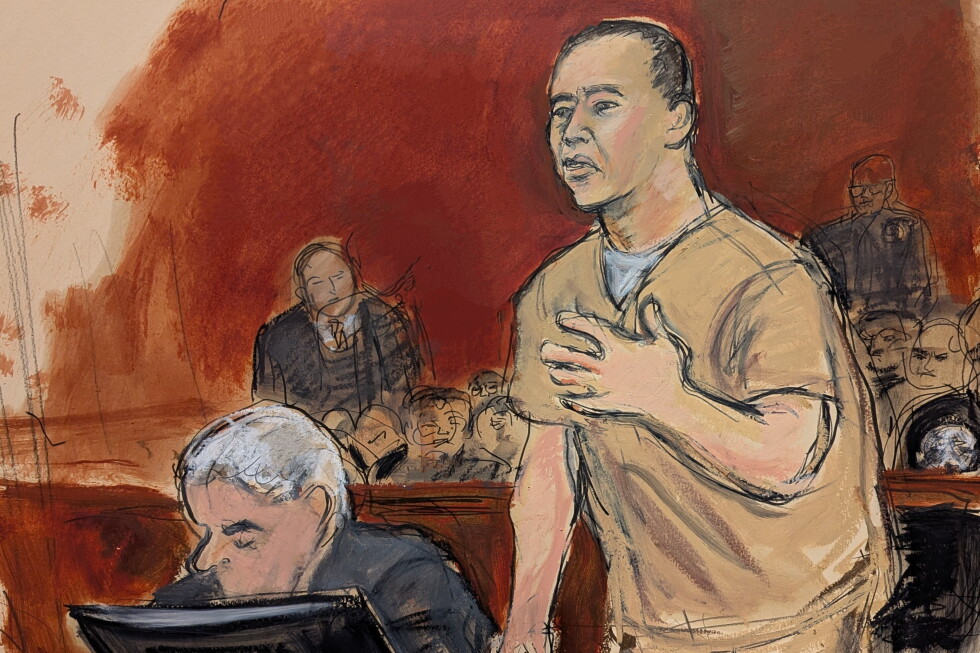
A once-celebrated billionaire and self-exiled Chinese business magnate, Guo Wengui, received a 30-year prison sentence in the United States for orchestrating a large-scale financial fraud. During the proceedings in Manhattan, Judge Analisa Torres revealed that Guo’s fraudulent activities resulted in hundreds of millions of dollars in losses for over 1,000 victims globally.
Guo, who left China a decade ago and became a vocal critic of the Communist Party while residing in the U.S., was accused of exploiting individuals aspiring to promote democracy in China. Judge Torres noted Guo’s manipulation of these individuals for his personal gain, allowing him to sustain an extravagant lifestyle.
Prior to the sentencing, Guo raised concerns about his detention conditions, claiming he experienced health issues and was hospital-bound earlier in the day. He disputed allegations of feigning illness, stating through an interpreter, “When I came here, I said: ‘I have a tummy ache, I need to go to the bathroom, I don’t feel well.’” Despite his health claims, he briefly addressed the court, asserting his intent to combat the Chinese Communist Party.
Victim accounts submitted to the court depicted the profound impact of Guo’s deception. Judge Torres highlighted the distress and financial ruin experienced by many victims, some of whom lost their life savings and faced familial discord due to their investment decisions.
In addition to the prison term, Guo was ordered to forfeit $889 million as restitution. Wei Chen, one of the victims, testified that the fraud had “destroyed my life” and adversely affected her family.
Guo’s supporters, present in the courtroom, expressed their allegiance by applauding as he exited post-sentencing. His arrest three years ago marked a significant shift from his earlier ties with prominent figures like Steve Bannon, with whom he announced plans to challenge the Chinese government. Guo’s previous lifestyle included residing in a lavish apartment near Central Park and membership at former President Donald Trump’s Florida golf club.
Prosecutors, labeling the fraud as “astonishing,” emphasized its detrimental effect on numerous lives between 2018 and 2023. They argued that Guo’s ill-acquired wealth financed a life of opulence, marked by luxury properties, designer attire, and high-end vehicles.
Throughout a seven-week trial, Guo was found guilty on nine out of 12 charges, showcasing his deceitful practices towards investors in fraudulent ventures.
Guo’s defense team attributed his legal challenges to persecution by the Chinese Communist Party, describing a concerted effort involving U.S. elites to undermine him. They argued that a harsh sentence would further China’s alleged campaign against dissidents and noted that similar cases resulted in significantly shorter prison terms.
According to Guo’s lawyers, his assets grew substantially as his family held a major stake in a leading Chinese securities firm, but his exposés on government corruption led to his targeting by officials. Guo relocated to Hong Kong, London, and eventually New York in 2017.
Despite Chinese allegations of serious crimes against Guo, he dismissed them as fabrications. The Chinese Ministry of Foreign Affairs acknowledged the U.S. sentencing and reiterated Guo’s status as a wanted individual under an Interpol Red Notice.
Authorities accused Guo of enticing vast numbers of investors to contribute over $1 billion to his ventures, including GTV Media Group Inc. and the Himalaya Farm Alliance. U.S. prosecutors criticized Guo for exploiting asylum laws and remaining unrepentant for his actions.