Australian Court Deliberates on Activist’s Genocide Charges Against King Charles III
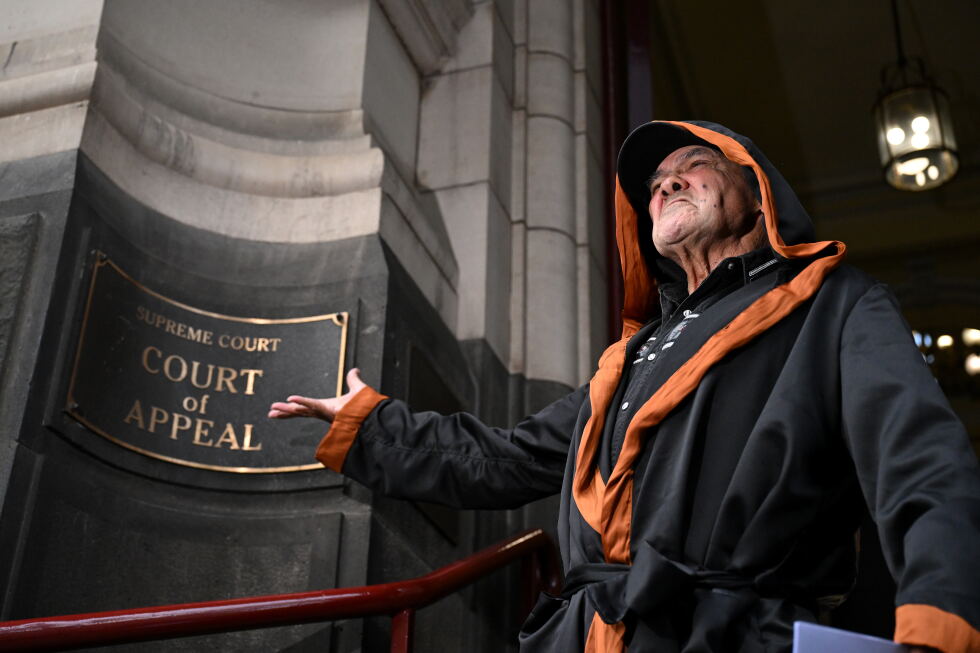
In Melbourne, an Australian appeals court is contemplating whether activist Uncle Robbie Thorpe can pursue a legal case against Britain’s King Charles III. Thorpe accuses the monarch, as Australia’s head of state, of perpetuating genocide against Indigenous Australians.
Thorpe, aged 68, has taken his case to the Supreme Court of Appeal in Victoria after previous rejections by two lower courts. His argument centers on the claim that the Australian government and its institutions, under the monarchy, maintain systemic socioeconomic disadvantages for Indigenous people, resulting in them being the most marginalized group in the country.
Statistics show that Indigenous Australians, making up 4% of the population, have a lower life expectancy, experience poorer health, and face higher rates of imprisonment and unemployment than other Australians.
Thorpe stated to The Associated Press his intent to escalate the case to the International Criminal Court in the Netherlands if Australian legal avenues are exhausted. He expressed frustration with the Australian judiciary, saying, “It’s clear that they’re unwilling, unable, reluctant to deal with these international legal issues like genocide.”
In court, Thorpe attributed the ongoing disadvantages faced by Indigenous communities to systemic issues, declaring, “The Crown is responsible for all this mess. Australia’s got away with genocide of Aboriginal people since they arrived here.”
A historical context exists, with Britain colonizing Australia in 1788 and seizing Indigenous lands without treaties. Indigenous languages and cultures were suppressed, and assimilation policies resulted in generations of children being removed from their families.
Thorpe made a cultural statement in court, wearing a traditional possum-skin coat and carrying a feather from an Australian wedge-tailed eagle, a significant totem. He requested to be addressed as Uncle Robbie or his tribal name, Djuran Bunjileenee, which was honored by Justice Karin Emerton, the presiding judge.
The court documents cited King Charles as Charles Philip Arthur George Windsor. Thorpe’s charges rely on Indigenous law, state common law, and federal criminal law. However, previous rulings dismissed his appeal on grounds that Indigenous law could not be considered and that genocide is not recognized as an offense under common law. Any federal prosecution would require approval from the federal attorney-general.
After a two-hour hearing, Justice Emerton announced that a decision would be delivered at a later date. Should Thorpe’s appeal be denied, his recourse would be to approach Australia’s High Court, followed by the possibility of pursuing the case in The Hague.