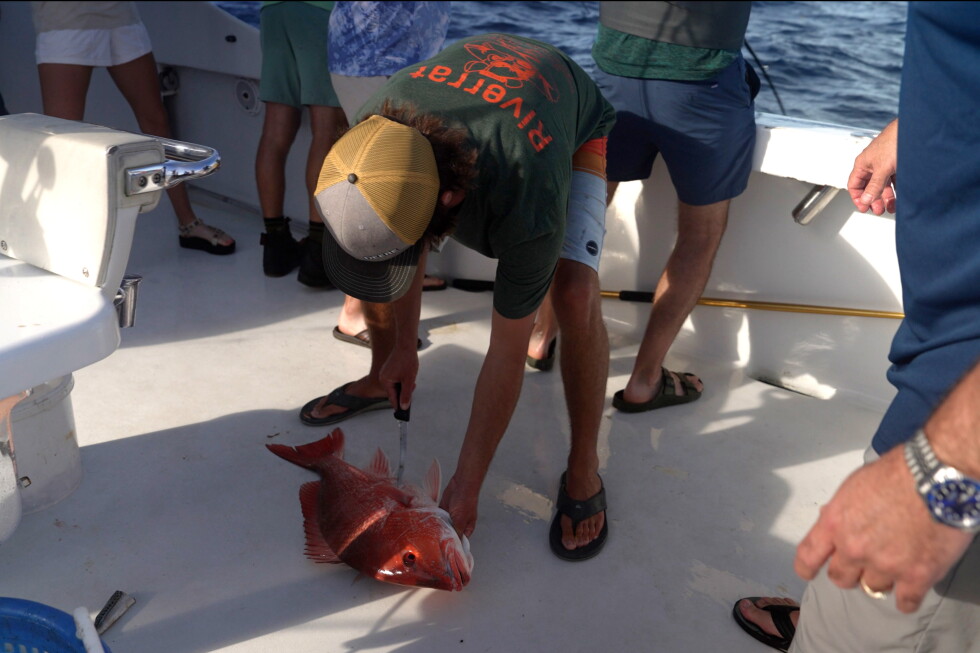
ST. AUGUSTINE, Fla. (AP) — Far from the coastline, Chris Kemp engaged in a battle with a fish 150 feet below the surface. After an intense struggle, he managed to reel in a 10-pound red snapper aboard the Jodie Lynn II.
However, celebrations were short-lived. As Kemp posed with his catch, the charter boat captain swiftly punctured the fish’s gas-filled bladder, a federally mandated measure aimed at increasing the fish’s survival chances upon release.
“Send it overboard,” the captain directed, and Kemp’s dreams of a fresh seafood dinner floated away with the fish.
Recreational anglers like Kemp find themselves at odds with commercial fishers and environmental advocates in a legal battle. This conflict has disrupted plans for what was anticipated to be the longest snapper season in recent years, highlighting broader issues regarding the Trump administration’s initiatives to relax fishing regulations and reduce oceanic oversight.
The National Oceanic and Atmospheric Administration (NOAA) in May granted states exemptions from certain stipulations of the Magnuson-Stevens Act, a key fisheries management legislation. However, this decision was blocked by a federal judge in Washington.
The Atlantic red snapper, prized both for its combativeness and culinary appeal, faced stringent fishing restrictions after years of overfishing. Since 2010, recreational fishing has been limited to just a few days annually, and sometimes not permitted at all.
Last year, Florida Governor Ron DeSantis spearheaded efforts with Georgia, North Carolina, and South Carolina officials to assume control over the recreational Atlantic snapper fishery, framing the move as safeguarding the “God-given right to fish.” NOAA, in response, issued special permits in May exempting these states from certain legal protections for fish, and set an Atlantic snapper season spanning 39 to 62 days across four states, allowing one fish per angler per day.
“We were excited,” Kemp remarked, having scheduled a charter for the opening day of the season.
Court Clash: Recreational vs. Commercial Anglers
Just before the season was set to start on May 22, a court injunction by U.S. District Judge Rudolph Contreras suspended the plan, citing environmental concerns. He referenced data from the nonprofit Ocean Conservancy, which projected recreational catches could reach 485,000 in Florida alone — 20 times the permitted amount.
Kemp received news of the judge’s ruling via a friend’s text while en route to the marina.
“Initially, we thought it was a joke, given its seriousness,” Kemp said.
The decision was met with immediate backlash. Florida wildlife authorities criticized the ruling as the work of a “rogue federal judge,” while some fishermen involved in the lawsuit reported threats after DeSantis mistakenly accused them of monopolizing the quota.
Jeff Oden, a North Carolina commercial fisherman and a plaintiff in the lawsuit, expressed concerns about survival amid climbing expenses and competition from imported seafood. He fears increased recreational harvesting could deplete snapper stocks by the commercial season.
“We’re vanishing,” Oden stated. “You as a consumer, you’re the loser.”
Rebounding Stocks and Scientific Caution
The contention partially arises from differing views on the fishery’s health. NOAA estimates that around a quarter of released red snapper perish, even with survival-enhancing methods like bladder puncturing to relieve gas buildup, which hampers their return to oceanic depths.
Despite this, many fishers claim the stock is flourishing. Kemp’s group caught about a dozen fish within 40 minutes at a Florida reef.
“To be completely honest, we have never seen an unhealthy stock,” stated Haley Stephens, who co-manages the Sea Spirit charter boat in Ponce Inlet, Florida, with her husband.
Scientists argue that the visible abundance of juvenile fish is misleading. Biological data indicates most caught fish haven’t reached peak reproductive maturity.
“It’s tricky because this is a rebuilding fish stock,” explained Meredith Moore, a program director at Ocean Conservancy. “So people out in the water are seeing more of the fish than they have seen in a long time, and so that gives them the sense that everything is great.”
NOAA declined to comment on the ongoing litigation regarding the snapper, but stated it is collaborating with fisheries managers nationwide to better prioritize resources, enhance efficiencies, and streamline operations following the “Restoring American Seafood Competitiveness” executive order signed last year by President Donald Trump.
The judge criticized Florida and other states for not providing their own harvest estimates, while officials argued that existing federal estimates were inaccurate and would eventually be supplanted by improved state-collected data.
Oden acknowledged recreational anglers’ frustrations but stressed the need for shared conservation efforts.
“There’s only so many fish to go around,” he stated.