Financial Challenges Facing NCAA Sports
With basketball securing additional funding, smaller sports within the NCAA continue to grapple with financial instability. The expansion of March Madness, expected to generate an additional $300 million from beverage sponsorships, temporarily diverts attention from the broader financial pressures facing college sports.
Recent developments highlight these challenges:
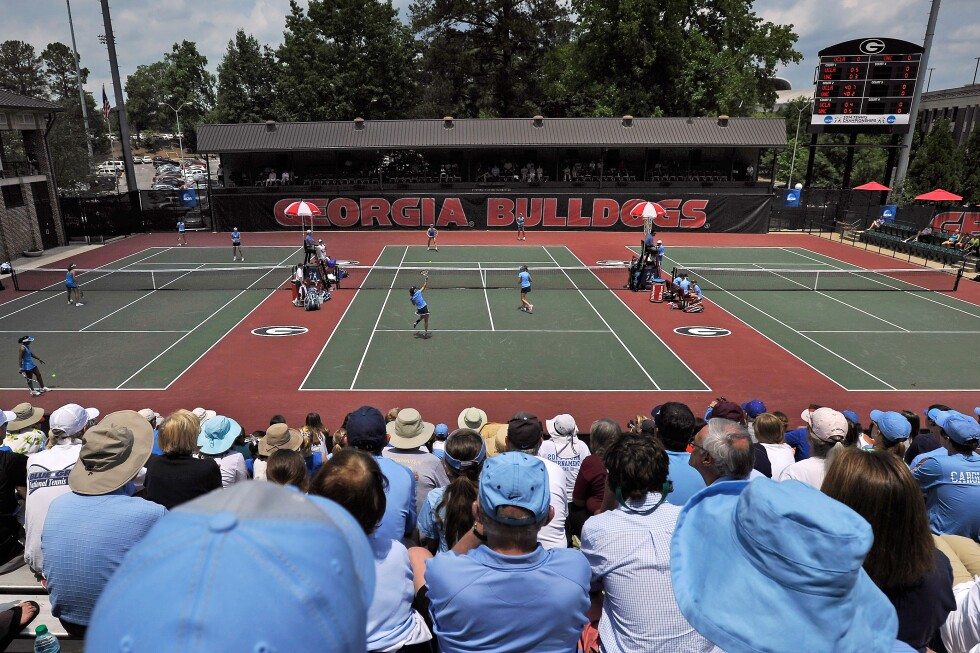
- The discontinuation of the Arkansas tennis program and the Wichita State golf teams exemplifies a trend of cutting less prominent sports to manage budgets.
- The Big 12’s exploration of private equity loans and Duke’s lucrative streaming deal with Amazon reflect innovative approaches to revenue generation.
- The College Sports Commission, responsible for overseeing player compensation, faces legal challenges as it awaits institutional agreement on its regulatory authority.
The NCAA’s decision to increase tournament team numbers to 76 aims to address financial concerns. This move will allow for an estimated $131 million distribution to participating conferences over six seasons. Dan Gavitt, NCAA Division I basketball overseer, emphasized the importance of responsible revenue generation in current conditions.
Evaluating the Worth of College Sports Programs
Sports attorney Gabe Feldman recently questioned North Carolina’s Bubba Cunningham about the viability of college sports programs following Arkansas’ decision to cut its tennis teams. Cunningham suggested that a dual-financial model might emerge, where athletes either receive payment or pay to play.
Programs like tennis and golf, often deemed non-essential, may increasingly require participant funding. Arkansas, part of the SEC — the second wealthiest college sports conference — cut its tennis program, costing approximately $2.5 million. Men’s coach Jay Udwadia expressed disbelief at the decision.
About 20 college sports programs have been eliminated this year, impacting Olympic sports significantly. Paia LaPalombara, a legal expert in college sports, notes that these sports are frequently the first to face cuts.
Innovative Revenue Streams and Financial Disparity
Colleges and conferences continue to explore new revenue opportunities. Duke’s recent Amazon streaming deal, expected to generate substantial income, signals a potential trend in college sports partnerships with streaming services.
Georgia and Florida State are also considering similar streaming arrangements after canceling a planned football series. Smaller schools lack the leverage to secure such deals, exacerbating the financial divide between major and minor programs.
In a notable financial maneuver, the Big 12 secured a $30 million credit line for its 16 schools through private equity. However, Texas Tech opted out, with regent chair Cody Campbell criticizing these deals as temporary solutions akin to “payday loans.”
Regulatory Challenges for the College Sports Commission
The College Sports Commission, created to oversee NIL payments, faces operational hurdles. Schools have hesitated to sign a “participation agreement,” which would formalize the CSC’s regulatory role.
Arbitration cases, including a significant one involving Nebraska football players, challenge the CSC’s authority over third-party NIL deals. The outcomes of these cases may prompt further litigation and test the CSC’s effectiveness as a governing body.
“The true test of the CSC’s efficacy will be in the legal outcomes,” said Paia LaPalombara. “Whether it can sustain its current structure depends on the resolution of any lawsuits that arise.”
For more information on March Madness, visit the AP March Madness Hub.