Research Grants Suspended at UC Berkeley Amid Legal Disputes
In a surprising move, the National Science Foundation (NSF) put a halt to at least 18 research grants at UC Berkeley this April, despite a court order intended to prevent such actions. This information was shared by an attorney representing university researchers involved in a class action lawsuit against the NSF.
The NSF has refrained from commenting on the matter.
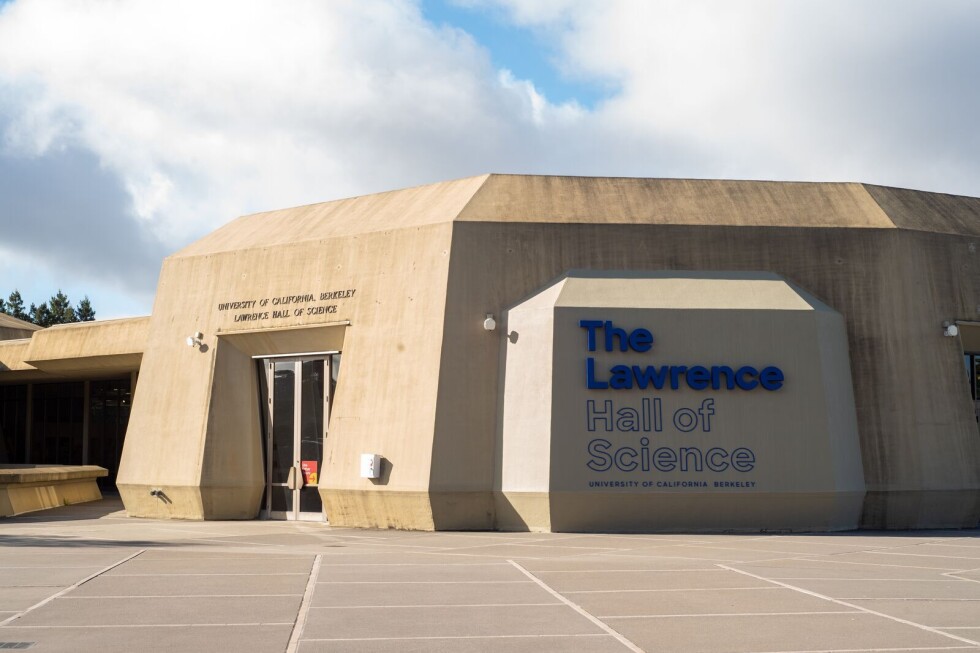
Among the suspended grants is one that had been previously canceled and was later reinstated by a federal court. This particular grant supports a series of mixed-reality exhibits at the Lawrence Hall of Science, focusing on Indigenous Ohlone knowledge. Jedda Foreman, a leader of the project, expressed concerns over the suspension, which impacts a $1.4 million grant.
Foreman, who serves as an associate director at the Lawrence Hall of Science, mentioned that a team researcher received a notification from Katherine Yelick, UC Berkeley’s vice chancellor of research, regarding the grant’s suspension. The email cited concerns over “foreign funding,” although no detailed explanation or copy of the NSF’s letter was provided. Foreman assured that the project had not received any foreign funding.
According to Claudia Polsky, a professor from UC Berkeley School of Law and legal representative of the researchers, “The grantees were given near-zero information about what was problematic in the execution of their grant.” Polsky’s team is seeking further clarity on the suspensions, suspecting potential violations of the court order meant to restore previously defunded projects.
UC Berkeley’s spokesperson, Dan Mogulof, stated that the university is actively engaged with the government regarding research grants and remains committed to adhering to federal laws and regulations. However, he did not provide specifics on the types of grants, the financial implications, or the potential impact on the institution.
One exhibition at the Lawrence Hall of Science, co-created with Ohlone youth, is slated to open on May 17, while another is planned for the fall of 2028. The research also investigates whether participating in exhibit creation fosters a greater interest in science among Indigenous youth and encourages them to pursue STEM careers.
Foreman expressed hope for a resolution, stating, “We’re doing a lot of hoping and finger-crossing that something works out. It was such a powerful project and we really want to be able to share what we’ve learned.”
NSF Oversight and Federal Funding Volatility
The National Science Foundation’s oversight recently saw a significant change when President Trump dismissed all 22 members of the board of scientists overseeing the agency. Additionally, the NSF’s funding, which includes $525 million allocated to UC Berkeley for the 2024-25 fiscal year, has become uncertain under the current administration. Nearly 2,000 grants have been terminated nationwide due to misalignment with agency priorities, particularly those centered on diversity, equity, and inclusion.
In April, President Trump removed the independent board of scientists supervising the NSF. Furthermore, he proposed a substantial budget cut for the agency, exceeding 50% by 2027, although a similar proposal was rejected by Congress last year.
Several federal agencies, including the NSF, Department of Energy, National Institutes of Health, and others, have faced mass research grant cancellations, some of which have been challenged and overturned in court.
A class action lawsuit by UC researchers contests these reversals, involving various federal agencies. However, the University of California itself is not a participant in this legal action.
U.S. District Judge Rita Lin played a crucial role last June by issuing a preliminary injunction to restore grants canceled by the NSF, EPA, and NEH, including those involving the Ohlone exhibits. The judge prohibited the use of form letters without specific explanations for grant cancellations, as well as cancellations based on anti-DEI executive orders.
In August, Judge Lin intervened again when the NSF froze grants to UCLA, amidst efforts by the Trump administration to secure a settlement over antisemitism allegations. The judge ruled that suspending grants indefinitely was equivalent to termination and ordered the reinstatement of funds.
Polsky expressed concerns that the recent suspension of Foreman’s grant could be an attempt by the administration to circumvent the court orders. “It seems to us like something that should not have been canceled on the merits and raises suspicion that this was just a different way to cancel the grant,” she said.
UC Seeks State Support Amid Federal Funding Challenges
The University of California is actively pursuing alternative funding sources to support its extensive research endeavors as federal funding becomes less reliable. UC President James Milliken recently joined state Sen. Scott Wiener and United Auto Workers president Shawn Fain at a Sacramento rally supporting a bill to create a $23 billion fund for scientific research.
If passed, the bill would place a bond measure on the November ballot, directing funds towards research in areas such as wildfire and pandemic preparedness, and new medical treatments. The state assembly’s appropriations committee is scheduled to review the bill on May 14.
Milliken emphasized the importance of state support, stating, “If the federal government is going to continue to attempt to reduce funding for the research that has been so important to UC — that saves lives, that drives the economy — then the state of California, I hope, will be able to step up.”
UC Provost Katherine Newman mentioned ongoing discussions with leaders of the Russell Group, a consortium of top UK universities, to explore collaborative research efforts in climate change, clean energy, and public health, all of which have faced federal funding threats.