President Donald Trump took action on Friday to ensure Transportation Security Administration (TSA) employees receive payment amidst the ongoing shutdown of the Department of Homeland Security (DHS), which stalled again in Congress.
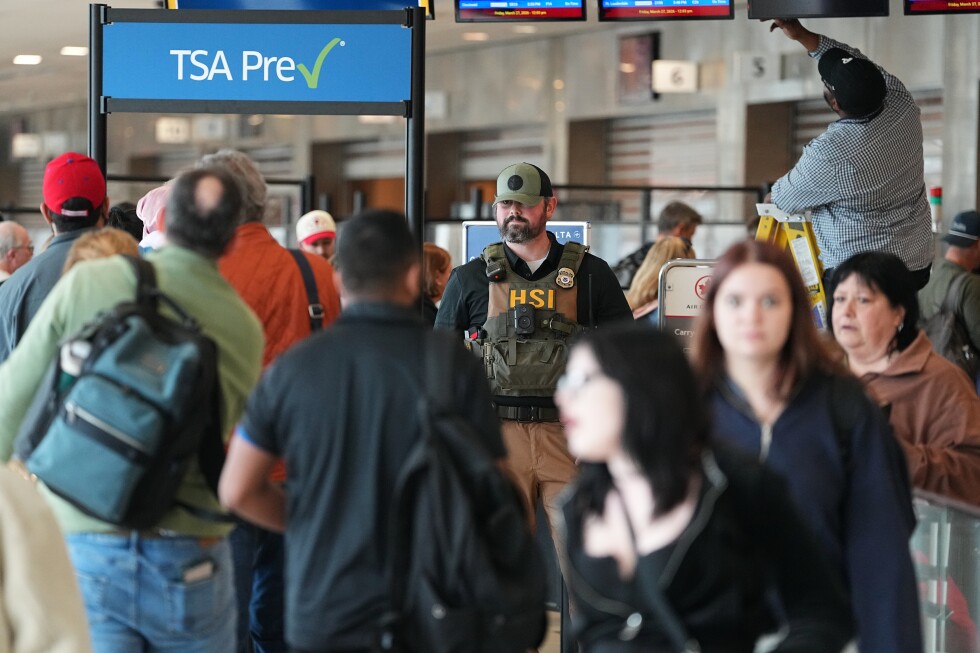
Trump’s executive decision aims to alleviate the extended security wait times affecting major airports nationwide. “America’s air travel system has reached its breaking point,” Trump stated in the memo, highlighting the “emergency situation compromising the Nation’s security.”
The administration plans to allocate funds “that have a reasonable and logical nexus to TSA operations” for these payments. According to Homeland Security Secretary Markwayne Mullin, TSA workers can expect to see paychecks starting Monday.
While this action may improve conditions for travelers, it does not resolve the broader DHS shutdown. The House and Senate, having passed differing bills, have left Washington for a two-week recess, prolonging the impasse.
Sunday will mark the 44th day of the DHS shutdown, surpassing last fall’s record 43-day government shutdown.
House Republicans Reject Senate Proposal
Although the Senate approved a funding agreement early Friday, it was met with strong opposition from House Republicans. House Speaker Mike Johnson criticized the Democrats, asserting the need for internal Republican discussions on the way forward.
Following extensive discussions, Johnson condemned the Senate’s actions and revealed the House’s alternative plan, which includes a bill to fund the entire department through May 22. He noted support from President Trump for the House Republican strategy.
House Republicans were discontented with the Senate’s bill, which excluded funding for Immigration and Customs Enforcement (ICE) and Border Patrol, due to Democratic demands for changes in immigration enforcement practices.
Johnson challenged the Senate to consider the House’s short-term funding solution for DHS. However, Senate Democrats, led by Chuck Schumer, stated that the House GOP’s plan would be “dead on arrival.”
House Democratic leader Hakeem Jeffries indicated that the Senate’s bill would likely pass in the House if put to a vote, asserting, “This could end, and should end, today.”
Details of the Senate Compromise
The Senate’s bill, passed by voice vote, provides funding for much of DHS, including the Federal Emergency Management Agency, the Coast Guard, and TSA.
While Senate Republicans expressed disappointment over the lack of funding for ICE and Border Patrol, they acknowledged continued immigration enforcement, supported by a previous GOP tax cuts bill that allocated substantial funds to DHS.
Conservative Republicans resisted the idea of selectively funding DHS agencies during the annual appropriations process. Sen. Eric Schmitt, R-Mo., emphasized, “We will fully fund ICE. That is what this fight is about.”
Democrats, opposing funding for ICE and Border Patrol, cited the deaths of two protesters during immigration crackdowns as a catalyst for their stance. They advocate for federal agents to wear identification, avoid raids in sensitive locations, and seek judicial approval before conducting searches. DHS Secretary Mullin expressed openness to these proposals.
Rift in Republican Leadership
The Senate’s agreement, which failed in the House, underscored a divide between Johnson and Senate Majority Leader John Thune, R-S.D. Despite past cooperation, the current scenario highlighted their differing approaches.
Thune secured enough Senate support to pass the compromise, which was agreed upon after lengthy negotiations involving the White House. However, Thune’s communication with Johnson on the matter appeared limited.
The White House remained silent during Senate deliberations, and Trump did not publicly engage. As the deal unraveled in the House, Thune refrained from addressing Johnson’s criticisms.
Impact on TSA Workers and Aviation
The ongoing DHS shutdown has led to travel disruptions and potential airport closures, with TSA workers missing paychecks, leading some to stop working. This situation follows the previous record-setting government shutdown.
Airports are experiencing high callout rates, with some reporting over 40% absenteeism among TSA staff. Nearly 500 officers have resigned during this period. Nationwide, more than 11.8% of scheduled TSA employees missed work on Thursday, according to DHS data.