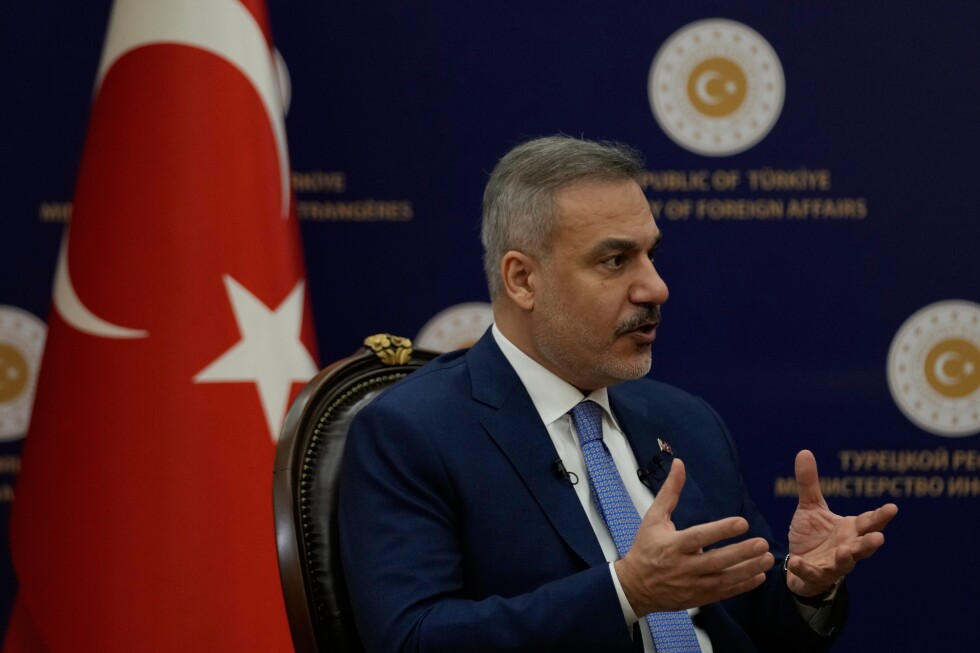
ANKARA, Turkey (AP) — Turkey’s Foreign Minister Hakan Fidan addressed the lack of significant efforts to restart discussions between the U.S. and Iran. He suggested, however, that Iran might be receptive to informal diplomatic conversations.
Fidan’s insights came during an exclusive interview with The Associated Press as Turkey seeks to avoid involvement in the escalating Middle East conflict. Despite past mediation efforts between Washington and Tehran, tensions heightened after the U.S. and Israel engaged Iran militarily.
Fidan noted, “The conditions are not very much conducive” for diplomacy as Iran feels “betrayed” by the attacks during nuclear talks with the U.S. Nonetheless, he believes Iran is open to “sensible back-channel diplomacy.”
Having served as Turkey’s intelligence chief before becoming foreign minister in 2023, Fidan is a key figure in shaping Turkey’s Middle East policies, especially regarding Syria, Iraq, and Iran. He is considered a close advisor to President Recep Tayyip Erdogan and a possible future leader.
Turkey’s Neutral Stance in Conflict
Turkey’s strategy has been to remain neutral, criticizing both U.S. and Israeli attacks on Iran, as well as Iran’s retaliatory actions against Gulf countries hosting U.S. bases. Fidan emphasized Turkey’s priority to avoid conflict, even after three missiles from Iran were intercepted by NATO defenses in Turkey.
Iran has denied targeting Turkey, though evidence suggests otherwise. Fidan dismissed any immediate military response, citing effective NATO defenses, and reaffirmed Turkey’s objective to stay out of the war: “I know that we are being provoked and we will be provoked, but this is our objective,” he stated.
Iran’s Leadership and Turkey’s Role
Fidan also addressed the status of Iran’s new Supreme Leader Ayatollah Mojtaba Khamenei, who was injured but remains in power following his father’s, Ayatollah Ali Khamenei, death in a missile strike. Fidan indicated that the power vacuum was filled by the Revolutionary Guards’ high command.
Failed Peace Talks
Prior to the conflict, Turkey had attempted to broker peace by proposing talks in Istanbul involving the U.S., Iran, and other regional nations. However, Iran chose to engage in negotiations mediated by Oman, focused solely on its nuclear program, which did not succeed. Fidan noted Iran’s refusal to discuss its missile program and regional proxies like Hezbollah and Iraqi militias.
Turkey-Israel Relations
Relations between Turkey and Israel remain strained, with Erdogan vocally opposing Israel’s actions in Gaza. Turkey has severed trade relations with Israel, accusing it of genocide, while Israel accuses Turkey of supporting Hamas. Despite speculation that Turkey could be a future target following Israeli strikes on Iran, Fidan dismissed this, noting an enhanced focus on Turkey’s defense capabilities.
Fidan criticized Israel’s actions, suggesting that its motives extend beyond security to territorial ambitions, which he believes perpetuates conflict in the region.
Involvement in Gaza
Turkey has expressed interest in postwar Gaza reconstruction, joining the U.S.-led Board of Peace and offering troops for international stabilization efforts, although Israel’s resistance has hindered its participation. Fidan emphasized the importance of establishing a politically independent Palestinian administration in Gaza.