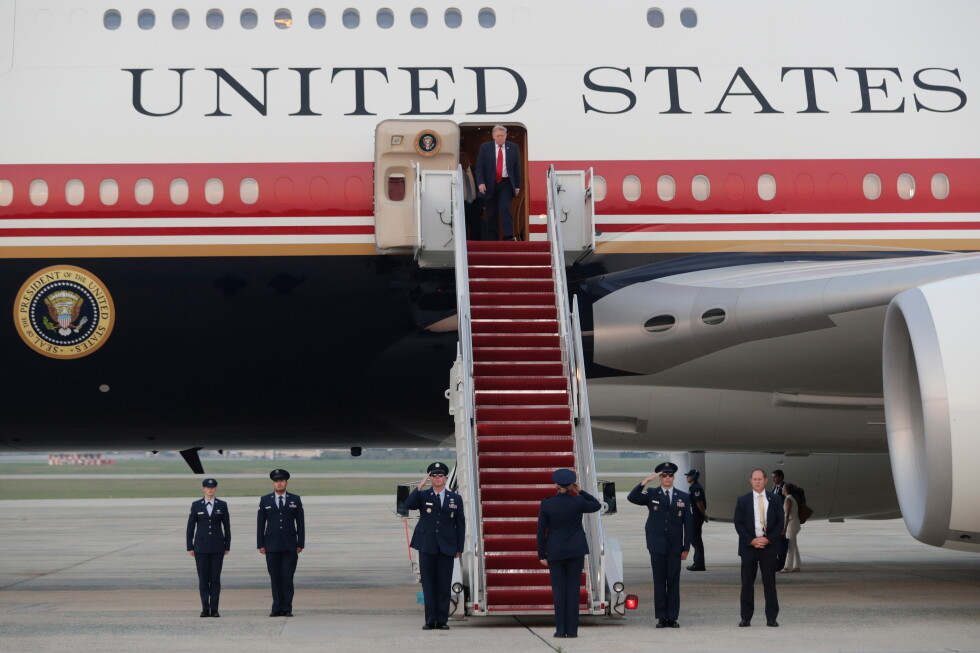
The Trump administration has reportedly taken an unusual step by seeking phone records of journalists from The New York Times, along with those of some family members, as part of an investigation to uncover the sources behind stories about a Qatari-gifted Air Force One jet. This aggressive move was revealed in a motion unsealed on Monday, highlighting the strained relationship between the executive branch and the press.
Subpoenas Extend Beyond Specific Articles
The push to identify sources went further than previously understood, covering a timeframe that extends beyond the period related to the articles in question. According to a letter-motion filed by The Times, two subpoenas requested records starting from January 1, 2026. Lawyers for the newspaper argued that this suggests a broader attempt to gather information about the journalists’ sources.
Legal Challenges and Government Response
In addition to the phone records subpoenas, grand jury subpoenas were issued to three journalists, compelling them to reveal their sources. The Times has challenged these subpoenas, and a U.S. District Judge, Arun Subramanian, is set to hear arguments soon. Meanwhile, a temporary freeze on enforcing the phone records subpoenas is in place.
The newspaper’s legal team accused the government of acting in “bad faith” by issuing subpoenas without prior notice and failing to conduct a thorough investigation beforehand. Questions were raised about the accuracy of testimony given by Jay Clayton, the U.S. attorney in Manhattan, regarding adherence to protocols.
Broader Implications for Press Freedom
The subpoenas also included requests for phone records of a journalist’s mother, a mental health professional, and two journalists’ spouses, one of whom is a law firm’s general counsel. The Times’ lawyers expressed concern over the implications for confidential newsgathering practices and potential violations of First Amendment rights.
The Justice Department defended its actions, stating that it followed its regulations and conducted preliminary investigations. The department maintained that the aim was not to target reporters but to identify those leaking classified information.
Escalation of Tensions with the Media
The grand jury subpoenas are part of a broader effort by the Trump administration to crack down on media leaks, an effort that has attracted criticism from press freedom advocates. This follows an FBI search of a Washington Post reporter’s home earlier this year.
The jet at the center of the investigation, a gift from Qatar, was recently upgraded at a cost of $400 million. However, Trump opted to use an older Air Force One model for a recent NATO summit, reportedly due to security concerns, though Trump denied these online.
Since returning to office, Trump’s administration has had multiple clashes with the media, employing legal actions and public threats. The First Amendment guarantees press freedom, an issue brought to the forefront by these legal battles.