CHICAGO (AP) — The second term of President Donald Trump has seen a series of tariff impositions that have notably impacted U.S.-Canada relations. His administration’s policies have brought forth new import taxes on Canadian goods, stirring tension between the two nations.
Trump’s aggressive stance included suggesting Canada could become the “51st state” of the United States. This and various tariff threats have angered Canadians and prompted their government to retaliate, increasing uncertainty for businesses and consumers in both countries.
Recently, the U.S. imposed a 50% tariff on $20 billion worth of Canadian imports after negotiations failed. In response, Canadian Prime Minister Mark Carney vowed to implement equivalent tariffs on American goods.
January-March 2025: Initial Tariff Exchanges
On re-entering office, Trump announced a 25% tariff on Canadian imports, citing a national emergency over illegal immigration and drug trafficking. Outgoing Prime Minister Justin Trudeau promised to counteract with Canadian tariffs.
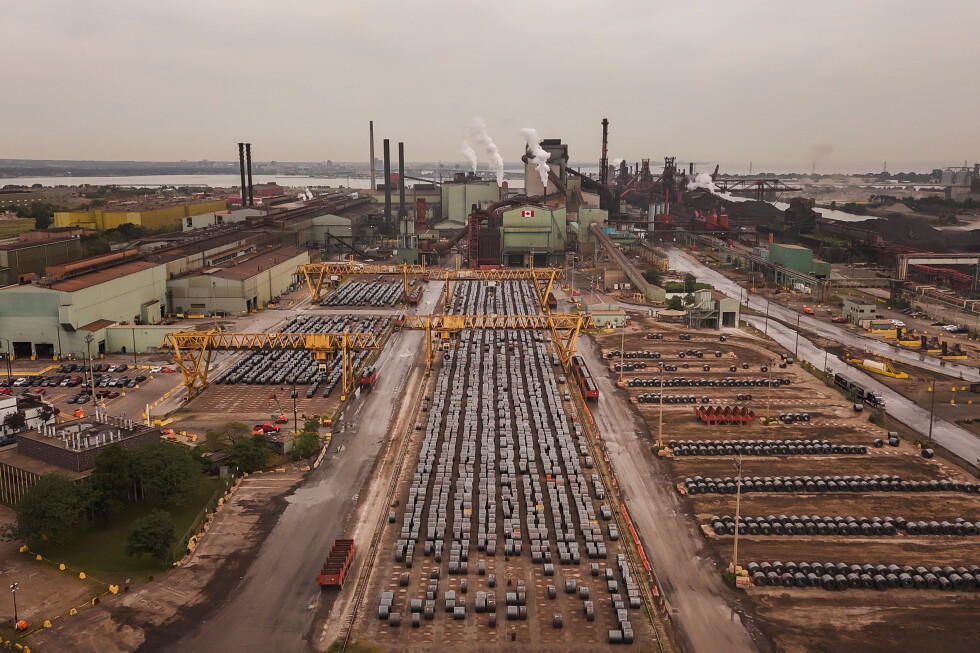
Although tensions initially eased with a temporary pause on tariffs, the U.S. proceeded with new tariffs on steel and aluminum, prompting Canada to retaliate with tariffs of its own.
April-June 2025: Legal Challenges and Global Tariffs
Trump extended his tariff policies globally, though legal challenges arose. The U.S. Court of International Trade ruled against Trump’s utilization of emergency powers, but a federal court temporarily halted this order.
Despite legal hurdles, Trump enacted a 50% tariff on steel and aluminum in June, with Canada threatening similar measures.
July-October 2025: Trade Talks and Tariff Escalations
Trade tensions persisted as Trump imposed a 35% tariff on Canadian goods and a 50% levy on imported copper. In response, Canada adjusted its tariffs to align with U.S. exemptions for goods under the USMCA.
By late October, further tariffs were imposed, and trade discussions stalled when Trump reacted to a Canadian ad opposing U.S. tariffs.
November 2025-February 2026: Supreme Court Intervention
The legality of Trump’s tariffs reached the Supreme Court, culminating in a 6-3 decision to strike down these tariffs. Subsequently, Trump temporarily enacted a 10% global tariff using different legislation.
Amid strained U.S.-Canada relations, Prime Minister Carney pursued improved trade ties with China, further complicating the bilateral dynamic.
March-present day: USMCA Negotiations and New Tariffs
Talks to renew the USMCA started in March, with Canada advocating for a 16-year renewal. However, the U.S. was not ready to commit, keeping the current agreement effective until 2036.
In July, Trump announced plans for a 50% tariff on Canadian goods, including those previously protected under the USMCA, citing unfair treatment of U.S. products. These tariffs began after negotiations failed, affecting products like hockey sticks and dairy, with Canada promising retaliatory measures effective September 8.