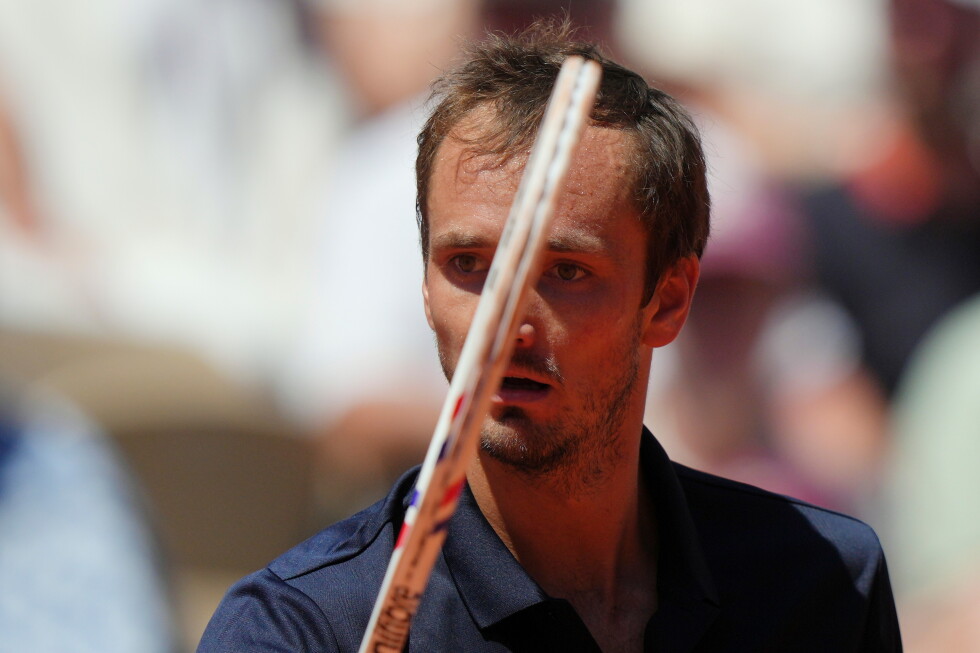
The French Open is currently in full swing in Paris, marking an intense phase in the tennis season. High-stakes matches often lead to emotional displays, with racket-smashing incidents becoming a notable feature. Recently, players like Daniil Medvedev and Daniel Altmaier have had their moments of frustration on the clay courts of Europe.
Mental endurance is a significant aspect of tennis, often leading players to express frustration visibly. This phenomenon is not new, as past players like John McEnroe have shown. Current players, including Andrey Rublev, also grapple with controlling their on-court emotions.
Rublev, once ranked among the top five, has been candid about his struggles with on-court anger. “It’s not about tennis,” Rublev explained. He acknowledges that emotions can sometimes take over, a sentiment echoed by his coach, Marat Safin, who famously broke over a thousand rackets during his career.
Daniil Medvedev is another player known for his emotional displays. At the Monte Carlo Masters, Medvedev experienced a rare defeat, losing 6-0, 6-0 to Matteo Berrettini. After repeatedly smashing his racket, he discarded the broken equipment in a trash bin. Medvedev later reflected on the incident, saying, “When I broke the racket, I kind of didn’t (want to)… Maybe sometimes this can give you a boost. And it didn’t.”
In Hamburg, German player Daniel Altmaier also let his emotions get the better of him, smashing his racket and inadvertently kicking it into the stands. Fortunately, no spectators were harmed during the incident.
Notable Players and Their Reactions
Even tennis legends have had their temperamental moments. Roger Federer, known for his composure on the court, was once prone to racket-smashing as a junior. Serena Williams faced a penalty at the 2009 U.S. Open for verbally lashing out at a line judge. In 2020, Novak Djokovic’s frustration led to his disqualification from the U.S. Open after accidentally hitting a line judge with a ball.
Struggles with Emotions
Aryna Sabalenka, the top-ranked player, shared her journey of managing emotions, noting that they previously hampered her performance. “My emotions were destroying my game,” she admitted. By learning to control these impulses, Sabalenka has seen significant improvements in her career.
Similarly, Coco Gauff and Jessica Pegula have sought ways to manage their frustrations. Gauff’s off-court racket-smashing at the Australian Open sparked discussions about players’ privacy. Pegula prefers to vent her frustrations away from public view, maintaining a calm demeanor during matches.
Maintaining Composure
Naomi Osaka, known for her calm on-court presence, revealed she had to work on her attitude from a young age. “I had a pretty bad attitude when I was younger,” she said. Nowadays, Osaka manages to release anger discreetly, avoiding fines for unsportsmanlike conduct.
Sorana Cirstea, who made her top 20 debut at 36, attributes these emotional outbursts to the mental demands of the sport. “It’s such a mental sport,” Cirstea stated, emphasizing the human aspect behind these moments of emotional expression.
For more tennis news, visit AP Tennis.