Supreme Court to Consider Legality of Six-Person Juries in Criminal Trials
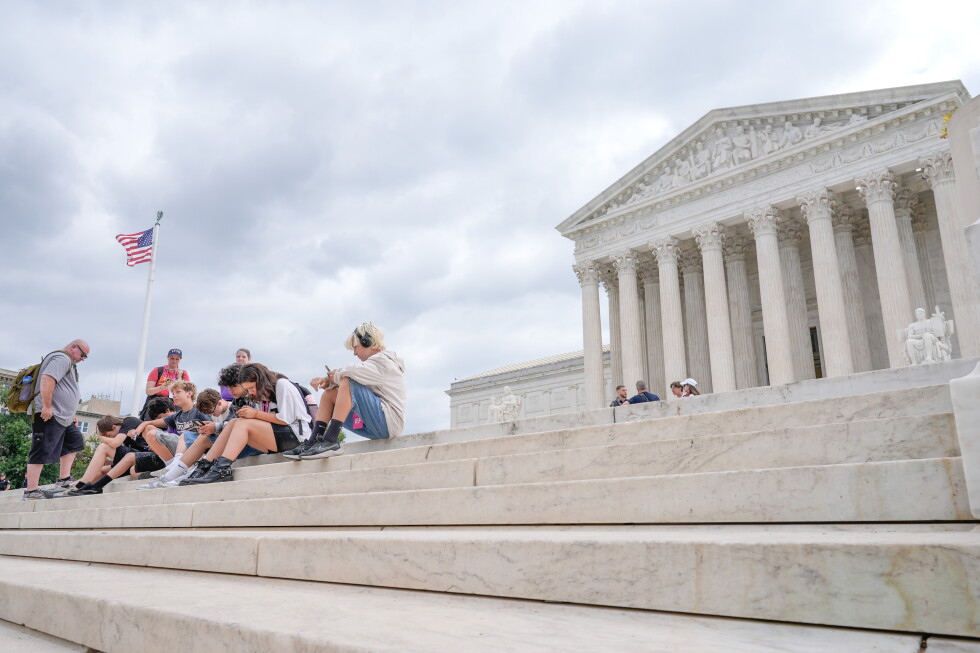
The United States Supreme Court is set to deliberate on whether states can constitutionally utilize juries composed of only six members for criminal trials, diverging from the traditional 12-member jury. This pivotal case involves Hamed Kian, a Florida chiropractor, who was found guilty of practicing with a suspended license.
Arguments will be presented in the fall concerning Kian’s assertion that a jury consisting of six individuals infringes upon his constitutional rights. Currently, Florida employs six-person juries for all criminal proceedings not involving capital punishment. Similarly, Arizona, Connecticut, Indiana, Massachusetts, and Utah also conduct certain trials with smaller juries.
Kian, aged 45, had his professional license revoked following accusations from three female patients of inappropriate conduct, as documented in court records. Despite the suspension, prosecutors gathered evidence indicating Kian continued patient appointments, leading to his conviction by a six-member jury.
His legal team contends that the Sixth Amendment, which ensures “a speedy and public trial, by an impartial jury of the state,” implicitly mandates a 12-person jury, aligning with what “jury” signified when the amendment was established in 1791. This interpretation was supported by a Supreme Court ruling over a century later, affirming the necessity for 12-member juries.
However, in a significant turn in 1970, the Supreme Court decided, by a 7-1 vote, that the number 12 was not indispensable, a decision originating from a Florida case. Justice Thurgood Marshall dissented in this ruling.
In more recent decisions, the court has emphasized the original meaning of the Constitution. In 2020, the court ruled that jury unanimity is required in criminal cases, thereby overturning a 1972 ruling that permitted non-unanimous verdicts in states like Louisiana and Oregon.
Kian’s legal representatives argue in their appeal that “the same reasoning applies to the historical right to a jury of twelve,” emphasizing that the constitutional right to a jury trial should remain uninfluenced by modern social science perspectives.
Florida Attorney General James Uthmeier, advocating for Kian’s conviction to be upheld, argued that the precedent set in 1970 was correctly adjudicated. He cautioned that overturning this decision could jeopardize thousands of criminal convictions across Florida and five other states that have operated under this ruling for over fifty years.