Supreme Court Deliberates on Mail Ballot Deadline Changes
After attending the U.S. Supreme Court session where justices considered arguments about the validity of mail ballots arriving post-Election Day, Nevada Secretary of State Cisco Aguilar instructed his team to prepare for potential adjustments in November’s election procedures. Aguilar emphasized the difficulty of educating voters on election operations on short notice, underscoring the necessity of early planning.
Officials from Nevada and 13 other states permitting the counting of mail-in ballots postmarked by Election Day but arriving later closely followed Monday’s proceedings. Conservative justices expressed skepticism about allowing such grace periods. These grace periods are also in place in 15 states specifically for military and overseas voters.
Mail ballots, often described as absentee ballots, have been at the center of unfounded claims by former President Donald Trump, who attributed his 2020 election loss to them. The Republican National Committee, along with the Libertarian Party, has challenged Mississippi’s law that allows counting of mail ballots that arrive up to five days after Election Day, a matter currently under Supreme Court review.
During the session, Justice Brett Kavanaugh queried RNC attorney Paul Clement on whether a decision in June would interfere with the court’s practice of avoiding rulings that could disrupt imminent elections. Clement assured, “June would give them plenty of time,” referring to election officials preparing for November voting.
However, Tammy Patrick, a former Arizona election official and now chief programs officer at the National Association of Elections Officials’ Election Center, disagreed. She noted that election offices have already printed materials with existing deadlines, and reprinting them on short notice could pose logistical and financial challenges. “Nobody has put in their budget to reprint all of their educational material for the midterms,” Patrick pointed out.
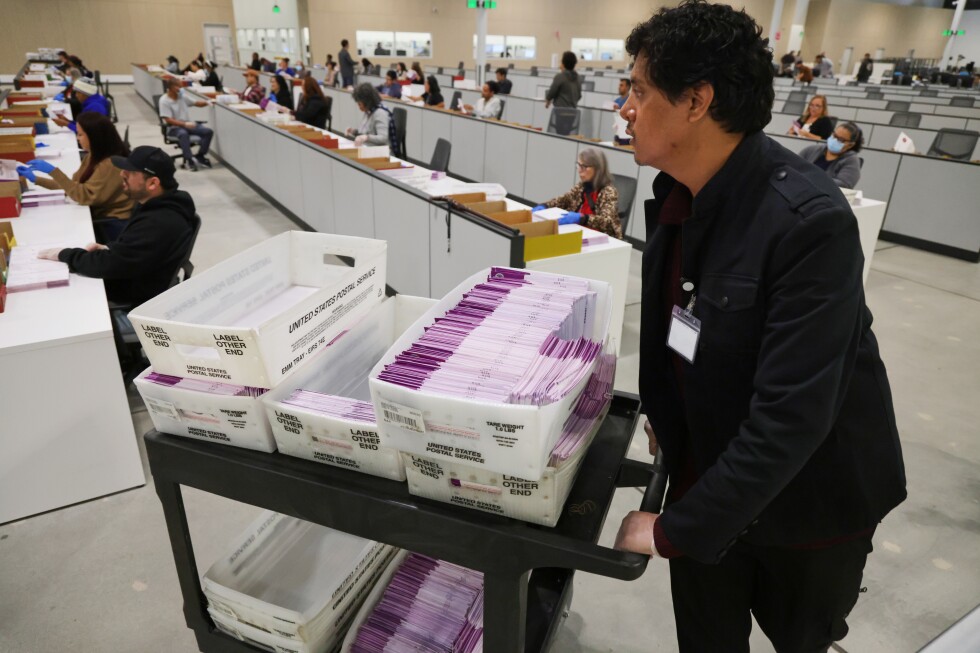
Though this case concerns a small portion of election ballots, the impact of changing deadlines could be significant. In Nevada, 98% of mail ballots arrive before Election Day, with 95% of late ballots arriving the next day. In Illinois, during a past election, 106,000 ballots were counted within a 14-day grace period, representing under 2% of total votes.
If deadlines are altered, informing voters would be the main hurdle, according to Matt Dietrich from the Illinois State Board of Elections, who said efforts would be made to disseminate new information through local offices.
In Alaska, where vast distances and isolated communities depend on a 10-day grace period, changes could significantly affect voters. Michelle Sparck from Get Out the Native Vote expressed concerns about the potential impacts of the court’s decision, saying it would force many Alaskans to reconsider their voting strategies.
In Massachusetts, primary elections are scheduled for September 1, limiting the window for sending out general election ballots, as explained by Debra O’Malley from the secretary of state’s office. O’Malley emphasized the challenges of adjusting to any new court-mandated timelines.
Patrick remarked on the difficulty election administrators face in adapting to quick changes in voting laws, noting that Texas introduced 3,000 election-related legislative proposals last year. The “Purcell principle,” established by the Supreme Court, advises against altering voting procedures close to elections to prevent voter confusion, a principle Patrick highlighted from her experience in Maricopa County, Arizona.
Aguilar expressed confidence in Nevada’s ability to adapt but voiced concerns over potential disruptions, stating, “To change the rules of the game in the middle of the competition does not do anyone any good.”