Rural Voters’ Confidence in Trump Waning Amid Economic Pressures
Rural Americans, long seen as the backbone of Donald Trump’s electoral support, are showing signs of dissatisfaction. Recent polling suggests a significant shift in sentiment among farmers and rural communities, with financial concerns at the forefront of their changing views.
A Fox News poll released this week reveals Trump’s net approval rating among rural voters has drastically declined, plummeting 34 points since early 2025, shifting from +20 to -14. Among rural white voters, there is a similar trend, with a drop of 33 points from +27 to -6. For Trump, whose political strength has relied heavily on rural support, these figures are concerning.
Insights from the Poll
Conducted from May 15-18, the survey sampled 1,002 registered voters nationwide, with participation organized by Beacon Research and Shaw & Company Research. The margin of error stands at plus or minus 3 percentage points. Trump’s overall approval rating hovers at 39 percent, barely above the lowest recorded in this polling series, with critical insights emerging from traditionally supportive voter demographics.
Regarding economic management, only 29 percent of voters approve of Trump’s performance, with 71 percent disapproving. Among rural respondents, the figures are nearly identical. On the topic of inflation, his approval rating is even lower at 24 percent nationally and 28 percent among rural voters.
Border security, once a stronghold for Trump, has dipped into negative territory nationwide, with 49 percent approval against 51 percent disapproval. Rural voters still slightly favor him on this issue, but an overall downward trend is evident.
Republican pollster Daron Shaw, collaborating with Democratic pollster Chris Anderson, commented, “Despite consistently strong GOP support, the president’s numbers are leaking a bit. Make no mistake; it’s all about affordability. Independents jumped ship in 2025, and now non-MAGA Republicans and other core constituencies are wavering.”
Farmers Under Financial Strain
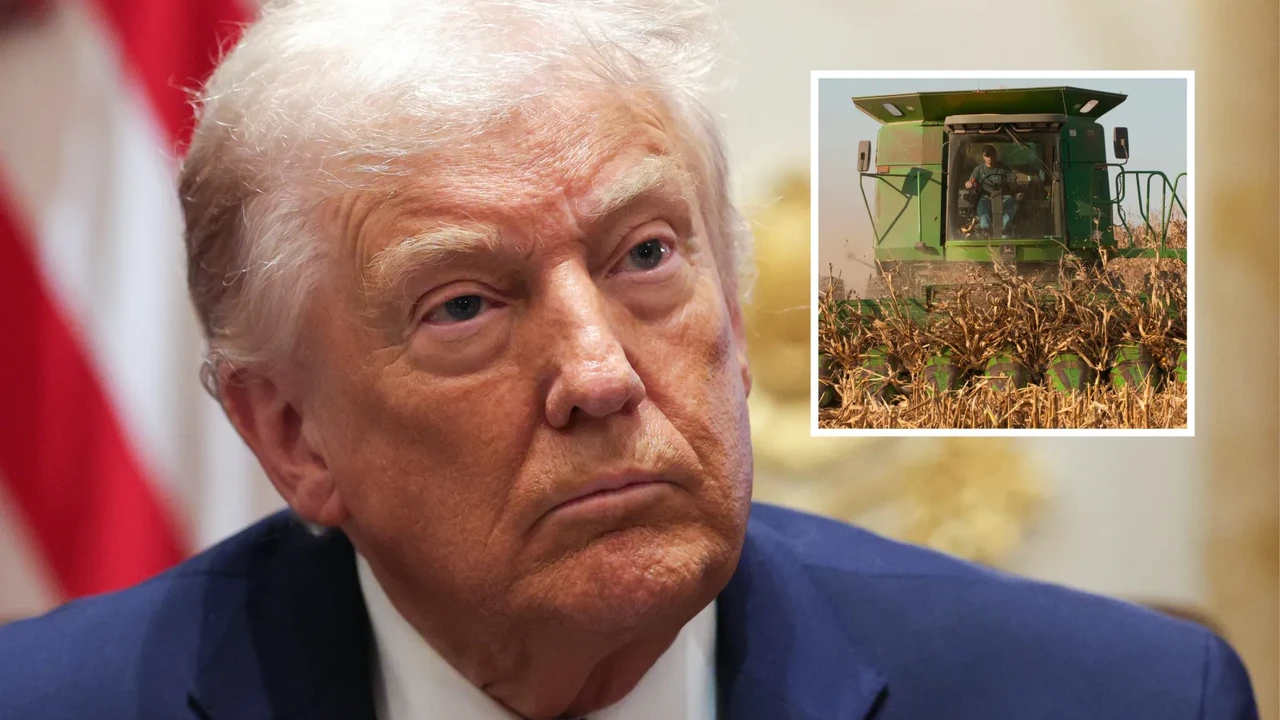
The poll’s findings are mirrored by the struggles of the farm economy. According to the American Farm Bureau Federation, farm bankruptcies increased by 46 percent in 2025, highlighting the severe financial challenges faced by agricultural producers.
The situation has worsened in 2026, with rising fertilizer and diesel costs due to geopolitical tensions involving Iran. Louisiana farmer Willis Nelson expressed the financial pressure: “We’re not financially able” to maintain operations as usual, noting a reduction in fertilizer use due to tight margins.
Ohio farmer Fred Yoder shared his concerns, highlighting the burden of daily expenses: “It’s costing us about $1,500 of cash per day to run two tractors,” he said. “I spent many years buying potash for $90 a ton, and now it’s $670 to $700 a ton. Our big problem is the input costs. I haven’t seen anything this bad since the 1980s.”
Trade tensions have further complicated matters, with reduced Chinese purchases of U.S. soybeans affecting market prices and demand. Trump’s recent remarks in Beijing opposing limits on foreign ownership of American farmland have also unsettled farmers, already wary of foreign influence over agricultural assets.
The White House Responds
White House officials have downplayed the poll results, describing them as a temporary snapshot. Spokesman Kush Desai emphasized the resilience of the U.S. economy under Trump, suggesting improvements are forthcoming: “As this agenda continues taking effect, and as Congress passes more of the president’s healthcare and housing affordability agenda, the best is yet to come in the second Trump term.”
Another spokesman, Davis Ingle, referenced Trump’s 2024 election victory as a more significant indicator of voter sentiment: “The ultimate poll was November 5th, 2024, when nearly 80 million Americans overwhelmingly elected President Trump to deliver on his popular and commonsense agenda.”
As the 2026 midterm elections approach, the impact of rising input costs and increased farm bankruptcies on rural voters will become clearer. Historically a reliable demographic, the current shift among rural voters suggests potential changes in the political landscape.