Italy’s Judicial Reform Referendum: A Test for Giorgia Meloni
In Rome, a pivotal referendum on judicial reform has emerged as a critical test for Italy’s conservative premier, Giorgia Meloni. What began as a technical proposal to overhaul the justice system has evolved into a broader assessment of her leadership both domestically and internationally.
The referendum, initially intended to address judicial issues, has intensified political divisions and united the center-left opposition, creating a symbolic confrontation over Meloni’s governance. With national elections looming in a year, the stakes are high.
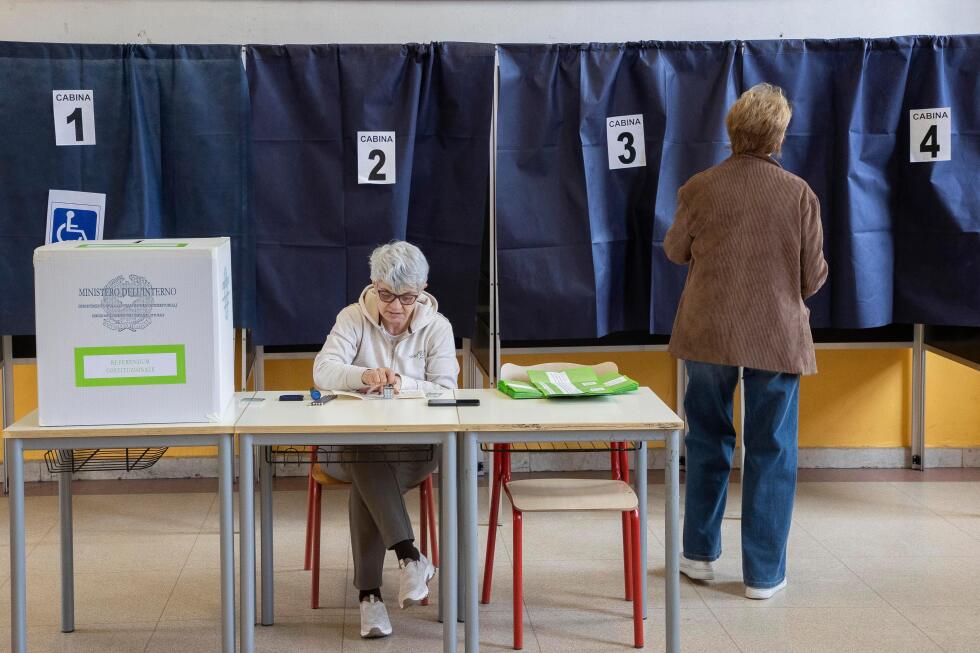
According to recent surveys, the outcome remains uncertain, with the “No” faction gaining momentum in a politically charged atmosphere. Voter turnout, reportedly at 38% after the first day, may be the decisive factor, as per Italy’s Interior Ministry.
Lorenzo Pregliasco, a political analyst at YouTrend, emphasized the significance of a potential rejection of the reform. “A possible ‘No’ victory would send a political signal, weakening Meloni’s aura of invincibility, while pushing the center-left opposition to say that there is already an alternative in the country,” he stated to The Associated Press.
Political Implications for Meloni
Initially, Meloni distanced herself from the referendum, mindful of the potential repercussions of a loss on her domestic and international image. However, as the vote approached, she embraced the “Yes” campaign more vigorously.
Her government, noted for its stability, stands to gain further credibility both at home and abroad if the referendum passes. Meloni has accused certain judicial factions of obstructing government actions on migration and security, arguing that failure to pass the reform would empower these factions and jeopardize public safety.
At a recent campaign event, she warned, “If the reform doesn’t pass this time, we will probably not have another chance,” highlighting the perceived risks of increased judicial negligence and security threats.
Criticism has mounted from magistrates and the center-left, who claim the reforms could compromise judicial independence. Giovanna Antongini, an 89-year-old voter in Rome, expressed her disapproval, stating, “Obviously (I’m voting) no, because I think this government has organized a referendum that serves no purpose other than its own, if it were to go ahead.”
International Ramifications and the ‘Trump Risk’
Beyond Italian borders, the referendum carries international weight, partly due to Meloni’s historical alignment with former U.S. President Donald Trump. This alliance, once beneficial, now poses challenges as Trump’s foreign policy, including U.S. and Israeli tensions with Iran, faces increasing domestic disapproval.
Pregliasco articulated the potential risk for Meloni, describing it as the “Trump risk,” due to her perceived alignment with an unpopular leader in Italy and Europe.
Although a referendum defeat wouldn’t necessitate Meloni’s resignation, it could undermine her standing within the European Union, where she is viewed as a stabilizing force.
The Debate on Judicial Reforms
The referendum seeks to introduce long-debated reforms to Italy’s judiciary. A significant proposal includes separating the career paths of judges and prosecutors, who currently can switch roles, though infrequently.
Another proposed change involves restructuring the High Judicial Council to include three distinct chambers and altering the selection process for its members from internal elections to a lottery system.
This clash between conservative leaders and the judiciary has historical roots, notably during the tenure of Silvio Berlusconi, a fervent advocate of judicial reform.
Proponents argue the reforms will modernize Italy’s notoriously slow judicial process and enhance accountability. However, critics, including Naples’ chief prosecutor Nicola Gratteri, express concerns. Gratteri remarked, “I don’t think this government has implemented the reforms needed to make trials work more effectively,” criticizing the potential impact on tackling corruption and white-collar crime.
As Italians cast their votes, the referendum not only reflects on Meloni’s leadership but also holds the potential to reshape Italy’s judiciary and political landscape.