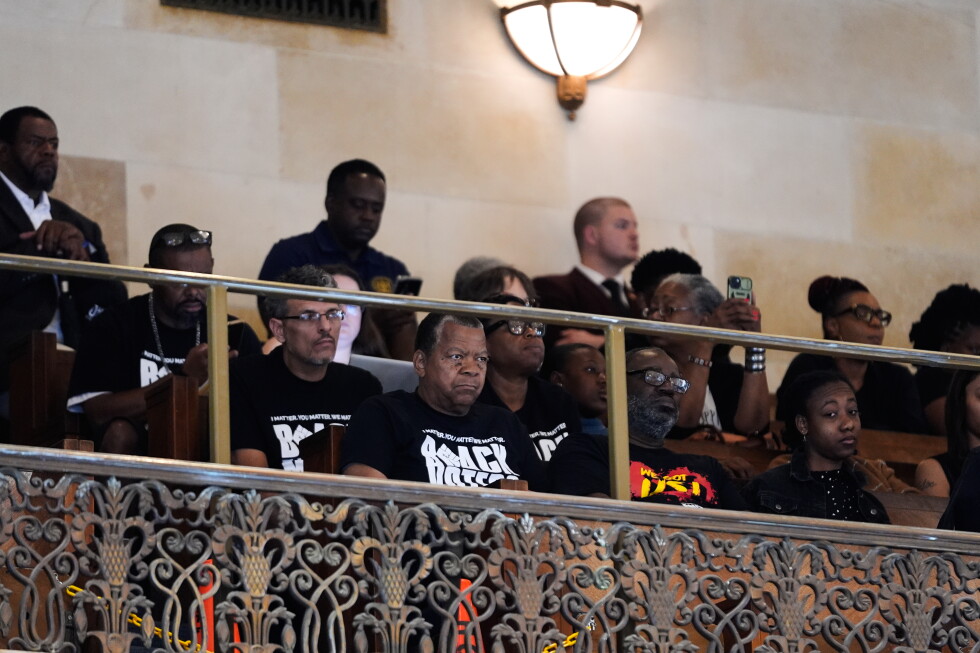
Republican Moves to Reshape Louisiana’s Congressional Districts
In response to a recent U.S. Supreme Court decision, Louisiana’s Republican lawmakers are set to remove a majority-Black congressional district that previously elected a Democrat. This move coincides with ongoing national debates over redistricting.
The Louisiana state House recently approved a redistricting plan that could potentially increase Republican seats in the upcoming midterm elections. This plan, awaiting a final Senate vote, aims to protect U.S. House Speaker Mike Johnson’s reelection chances. Republican state Rep. Beau Beaullieu, head of the redistricting committee, stated, “We drew this map in an effort to safely maximize Republican strength.”
Redistricting Efforts and Implications
This redistricting plan comes after the Supreme Court’s ruling, which has prompted several Southern states to revisit their congressional maps. The ruling has sparked renewed interest in redistricting battles across the nation, particularly with the approaching November elections.
Republicans have made significant gains so far in this redistricting push. Despite these efforts, Democrats only need a few seats to regain control of the U.S. House. Historically, the president’s party often loses seats in midterms, posing another challenge for Republicans.
Louisiana’s Journey Through Redistricting
After the 2020 census, Louisiana Republicans overrode a veto from Democratic Gov. John Bel Edwards to implement new congressional districts. However, federal courts found these districts violated the Voting Rights Act, due to insufficient representation for majority-Black populations.
In response, the Louisiana Legislature in 2024 created a second majority-Black district, leading to the election of Democratic U.S. Rep. Cleo Fields. Yet, this map was later deemed an illegal racial gerrymander by the Supreme Court. Consequently, Gov. Jeff Landry postponed the state’s U.S. House primary to allow time for redrawing districts.
The newly passed plan by the Republican-led House eliminates Fields’ district, reorganizing it around predominantly white areas. Meanwhile, it incorporates part of Baton Rouge into a majority-Black district based in New Orleans, represented by Democratic U.S. Rep. Troy Carter.
Potential Legal Challenges Ahead
Despite the latest redistricting efforts, further legal challenges may arise. The plaintiffs from the previous lawsuit, which led to the Supreme Court decision, have threatened additional litigation, arguing that the new map maintains racial gerrymandering by consolidating Black voters into one district.
Republican U.S. Rep. Clay Higgins criticized the plan, describing it as a “Frankenstein looking thing” on social media. Meanwhile, Louisiana state Rep. Kyle Green, chair of the House Democratic Caucus, expressed concerns that the map could still be considered a racial gerrymander.
State Sen. Jay Morris, the bill’s sponsor, remains confident, stating, “I believe this map is easily defendable under the Constitution because we did not racially gerrymander it.”
Southern States React to Supreme Court Ruling
Following the Supreme Court’s ruling, several Southern states have swiftly acted on redistricting. For instance, Florida’s Republican-led legislature enacted new congressional districts shortly after the decision, potentially increasing Republican seats.
Similarly, Tennessee adjusted its U.S. House districts, while Alabama’s efforts faced a legal block due to perceived racial discrimination. South Carolina, despite pressure, chose not to pursue redistricting changes, citing logistical challenges.