Justice Jackson Raises Concerns Over Supreme Court’s Perceived Political Bias
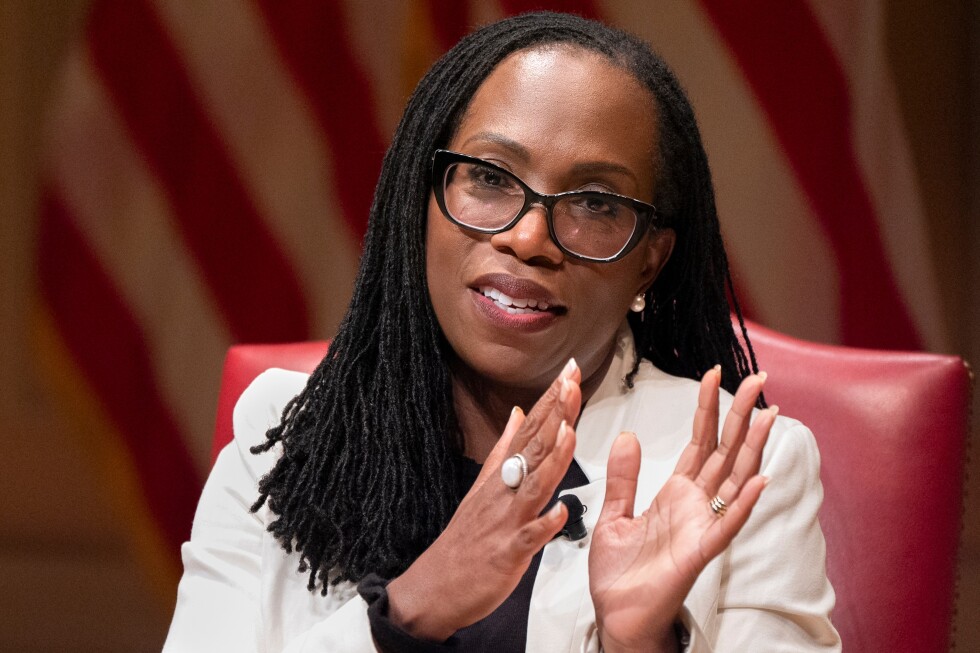
In Washington, D.C., Justice Ketanji Brown Jackson expressed apprehension regarding the Supreme Court’s potential perception as a political entity following a pivotal decision on voting rights. Her remarks were made during a discussion at the American Law Institute, subsequent to her dissent from a ruling that permitted Louisiana to expedite the implementation of new electoral maps.
The court’s conservative bloc recently nullified a majority-Black district, leading to the weakening of the Voting Rights Act, as reported by the Associated Press. Justice Jackson, emphasizing the judiciary’s reliance on public trust, remarked, “Public confidence is really all the judiciary has.” She continued, highlighting the importance of the court maintaining its impartiality, “Everyone believes the court system is outside the political sphere. I think that means it’s incumbent on us to do things, to act in ways, that shore up public confidence.”
Public perception of the Supreme Court has been on a downward trend, with polls indicating historically low levels of trust in the institution. In a separate context, Chief Justice John Roberts addressed similar concerns, as noted in a previous statement, describing the view of justices as “political actors” as a misunderstanding.
Justice Jackson’s dissenting opinions have become more frequent, aligning with liberal justices in a recent 6-3 decision that significantly affected the Voting Rights Act. She authored a separate dissent concerning the court’s decision to allow Louisiana’s new maps amidst ongoing primary voting, criticizing the ruling for causing “chaos” in the nationwide redistricting struggle.
In response, three conservative justices on the court rebutted Jackson’s assertions, labeling them “baseless.” They argued that the alternative would have been to conduct an election using a map deemed unconstitutional, thereby defending their stance against accusations of partisanship.