Supreme Court Upholds Birthright Citizenship: A Landmark Victory
The U.S. Supreme Court has upheld the principle of birthright citizenship in a significant decision that reaffirms a longstanding constitutional guarantee. The ruling, celebrated by advocates as a victory for all Americans, maintains the precedent set by the case of Wong Kim Ark.
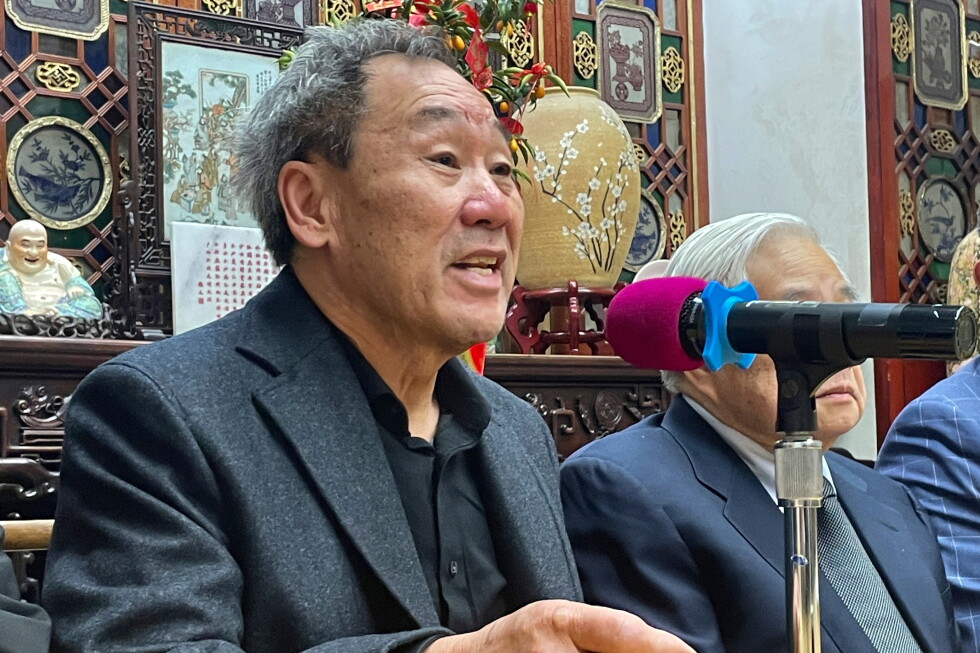
Norman Wong, the great-grandson of Wong Kim Ark, expressed that the ruling is not just a personal triumph but a reaffirmation of fundamental rights for all Americans. “It’s an obligation and a duty for every American to care about this because ultimately we’re not fighting for the rights of Chinese or Japanese or whatever. We’re fighting for rights for all Americans because these are fundamental rights,” Wong stated in an interview with The Associated Press.
In a 6-3 decision, the Supreme Court dismissed former President Donald Trump’s executive order, which challenged the citizenship of children born in the U.S. to undocumented or temporary residents. Chief Justice John Roberts, writing for the majority, emphasized that the Fourteenth Amendment ensures citizenship to anyone born on U.S. soil, with few exceptions.
However, dissenting Justices Samuel Alito, Neil Gorsuch, and Clarence Thomas disagreed, arguing that the Fourteenth Amendment was initially intended to grant equal rights primarily to freed slaves. “The Fourteenth Amendment was designed and understood to secure equal rights for the freed blacks but has instead been repurposed for political projects that the Reconstruction Congress did not support,” Justice Thomas wrote.
Former President Trump criticized the ruling as detrimental to the country and claimed that Congress could “easily” legislate a change, despite the decision’s basis in constitutional law.
Historical Context and Family Legacy
The roots of birthright citizenship trace back to the late 19th century when it was expanded to include children of immigrants. Wong Kim Ark, born in San Francisco in 1873, was denied reentry to the U.S. after a trip to China in 1895. He successfully sued the government, and the 1898 Supreme Court ruling in his favor established that citizenship is determined by place of birth.
Norman Wong, who became a public advocate for birthright citizenship, was unaware of his great-grandfather’s legacy until later in life. He was approached by journalists after his father was identified in historical court records, sparking Wong’s involvement in the movement.
Wong, residing in the San Francisco Bay Area, has actively campaigned for the preservation of birthright citizenship. “I consider myself lucky enough to actually have a meaningful role,” Wong reflected on his involvement in the advocacy.
Impact of the Decision and Ongoing Concerns
The Supreme Court’s decision has provided a sense of relief to many, yet concerns remain. California Attorney General Rob Bonta highlighted the anxiety felt by many individuals born in the U.S. about their citizenship status due to parental immigration issues. “Everyone who believes in the rule of law, believes in the U.S. Constitution — its durability, its strength, its potency — should breathe a little easier today,” Bonta noted.
Nonetheless, Bonta cautioned that the attacks on lawful immigration status and constitutional protections are likely to persist.
Advocacy and Legal Challenges Moving Forward
The Justice Department has committed to addressing illegal birth tourism while emphasizing national security concerns. Concurrently, Cecillia Wang of the American Civil Liberties Union, who argued for birthright citizenship in the Supreme Court, affirmed the decision as upholding a core American promise. “A president cannot change the Constitution by executive fiat,” Wang stated, underscoring the importance of steadfast advocacy.
Wang’s personal connection to the case, as an American-born child of Taiwanese immigrants, resonated deeply with Norman Wong. He appreciated the continuity of advocacy from his great-grandfather’s era to the present.