WASHINGTON (AP) — Even after the implementation of President Donald Trump’s tax law last year, which addressed several of his tax-related campaign pledges, a significant portion of the American public still feels that their tax burden is excessively high. This sentiment is reflected in recent opinion polls.
According to a Fox News poll conducted in late March, dissatisfaction with taxes has increased compared to the previous year. This discontent coincides with ongoing concerns about personal finances, as the U.S. faces rising inflation and slow economic growth. Many Americans also express frustration with the perception that wealthy individuals and corporations do not contribute fairly to taxes, alongside concerns about government inefficiency.
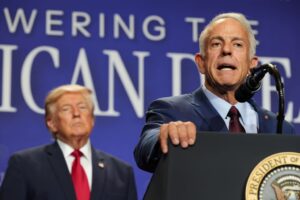
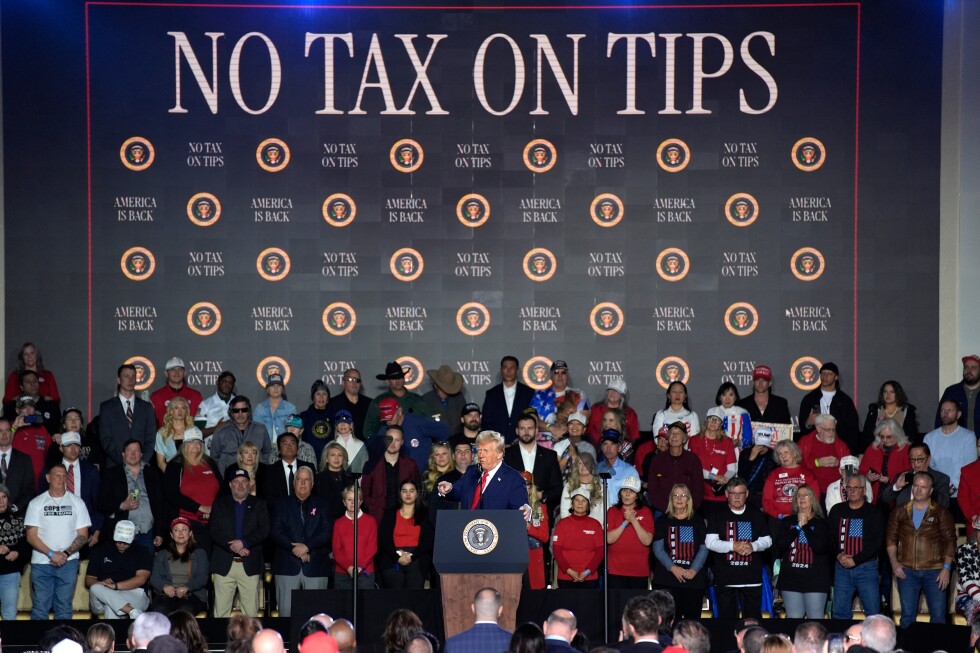
The tax and spending legislation signed by Trump and the Republican party last year introduced various tax breaks, such as an enhanced child tax credit and new deductions for tips and overtime. While tax refunds are reportedly increasing and more households are expected to benefit financially, the Congressional Budget Office has projected that the wealthiest Americans will reap the most significant benefits.
Republican leaders have hailed this law as a measure to make life more affordable for working families. Nonetheless, many Americans remain skeptical, particularly as rising prices seem to offset any gains from increased tax refunds.
Majority Believe Taxes Are Excessive
Approximately 70% of registered voters perceive their tax obligations as “too high,” as per the Fox News poll. This marks an increase from the previous year’s 60%. Concern spans various demographics, including very liberal voters, Democratic men, moderates, rural voters, and white voters without a college degree, groups Republicans aim to attract in upcoming elections.
Americans’ dissatisfaction with taxes has been growing over the years. A Gallup poll from March indicates that about six in ten adults feel their federal income tax is “too high,” a perception consistent since 2023 and reminiscent of sentiments prevalent from the 1980s to the 1990s before significant tax cuts under President George W. Bush.
Currently, around half of Democrats and six in ten Republicans consider their federal income taxes excessive. While Republicans generally view their tax bills more negatively, Gallup’s data suggests this partisan gap narrows when a Republican is in office.
Wealthy Perceived as Under-Contributing
A significant number of Americans are concerned about the notion that wealthy individuals and corporations do not pay enough in taxes, as highlighted by a Pew Research Center survey from January. About 60% of respondents indicated that this issue troubles them significantly, a sentiment that has remained stable in recent years.
Conversely, only about 40% expressed significant concern over their personal tax contributions. The Pew survey shows that approximately 80% of Democrats are troubled by the perceived underpayment of taxes by the wealthy, compared to 40% of Republicans. On the other hand, government spending is a more pressing issue for Republicans, with the Fox News poll indicating that 75% of registered voters, including a similar proportion of Republican voters, view government spending as largely wasteful and inefficient.
This perception creates a sense of dissatisfaction for many Americans. Even if individual tax bills are manageable, the belief that the wealthy are under-contributing or that the government is mismanaging funds is unsettling. According to the Gallup poll, around 49% of Americans feel that their income taxes are “not fair,” echoing a record high from 2023.
Trump’s Tax Strategy Faces Criticism
Tax frustrations had been on the rise even before Trump assumed office, but they remain a challenging issue for his administration, particularly if citizens do not perceive the promised benefits. The Fox News poll shows that around 64% of registered voters disapprove of Trump’s tax handling, an increase from 53% in the previous April. This disapproval is notably more pronounced among independents, in addition to Democrats and Republicans.
This sentiment aligns with a broader belief that Trump is not adequately addressing inflation. According to an AP-NORC poll from January, many Americans believe Trump has negatively impacted the cost of living, with nine in ten Democrats and approximately six in ten independents expressing this view.
——-
This article has been updated to reflect that less than half of Republicans, 43%, stated Trump has positively influenced the cost of living, while 33% saw no impact, and 23% perceived a negative effect.
___
Details of the surveys: Fox News poll conducted among 1,001 registered voters from March 20-23; Gallup poll conducted among 1,000 U.S. adults from March 2-18; Pew Research Center poll conducted among 8,512 U.S. adults from Jan. 20-26; AP-NORC Poll conducted among 1,203 U.S. adults from Jan 8-11.