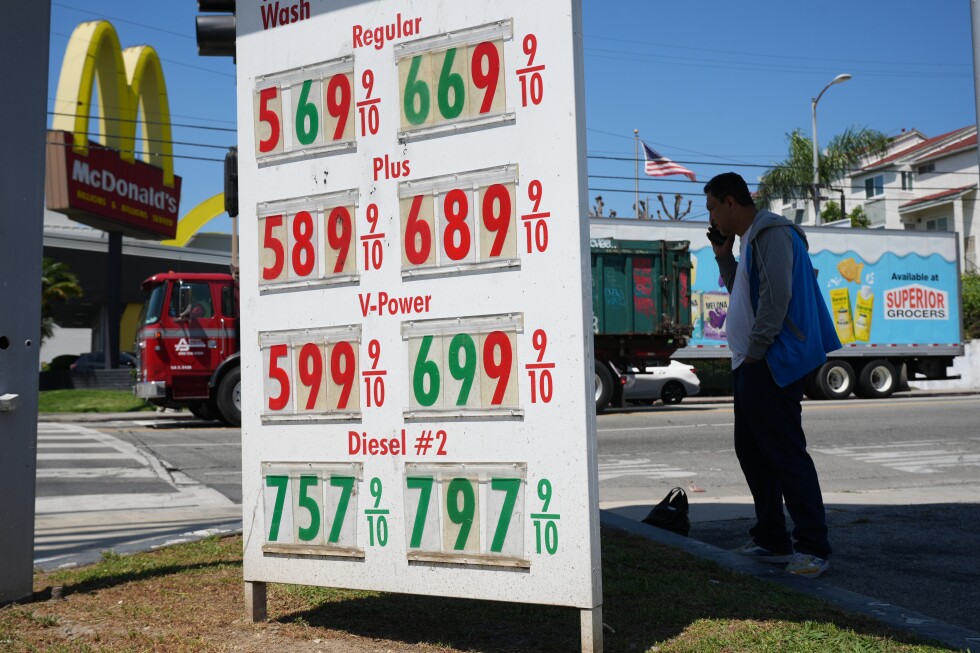
In the face of escalating gas prices influenced by geopolitical tensions, drivers in various states are seeking more affordable fuel options on Native American reservations. Junelle Lewis, residing near Seattle, discovered cheaper gas prices through an app, directing her to the Tulalip Reservation where she refueled her Chevrolet Suburban for $4.84 per gallon, significantly cheaper than local prices.
Lewis expressed her strategic choice, stating, “I purposely drove here just for the gas,” highlighting the cost-effectiveness of the reservation’s fuel station compared to those in her vicinity.
Apps Aid in Locating Budget-Friendly Fuel
With the nationwide average gas price climbing to $4.15 per gallon due to the Iran conflict, tools like Gas Buddy are proving invaluable for consumers in search of savings. Economists predict continued price hikes, potentially exacerbating inflation.
Across the U.S., nearly 500 tribally owned gas stations offer competitive prices, often exempt from state fuel taxes. California, New Mexico, New York, Oklahoma, and Washington state are among the regions benefitting from these tax-exempt tribal stations.
For instance, the Chukchansi Crossing Fuel Station in California offers gas at $5.09 per gallon, while New Mexico’s Mescalero Apache Reservation features prices as low as $3.79.
Tax Exemptions Drive Price Reductions
Tribal gas stations benefit from unique tax arrangements. While federal fuel taxes apply to all, state taxes do not apply on tribal lands, enabling lower prices. Dan Lewerenz, a University of North Dakota law professor, notes, “The Supreme Court consistently held to this view and it’s one of the most enduring principles in federal Indian law.”
These tax exemptions vary by state, with rulings like the 2019 Supreme Court decision protecting the Yakama Nation from state fuel taxes under an 1855 treaty.
Beyond Fuel: Tribal Businesses Thrive
While fuel sales draw customers, many tribal businesses generate substantial revenue through convenience store offerings, including groceries and household goods, addressing food desert challenges.
Matthew Klas, a consultant for tribal enterprises, emphasizes the role of these stores: “Sometimes these gas stations and convenience stores are the nearest, best place to purchase affordable food or household supplies.”
Additional amenities such as smoke shops, car washes, and proximity to casinos further bolster revenue. Tanya Burns of the Tulalip Tribes Federal Corporation remarks that increased gas sales contribute to community services, stating, “Like any government, we provide critical services to our people.”
Drivers like Todd Hall and Mark Foster frequent these stations for both savings and community support, with Foster noting, “I like the way the tribe operates. And the price is good too.”