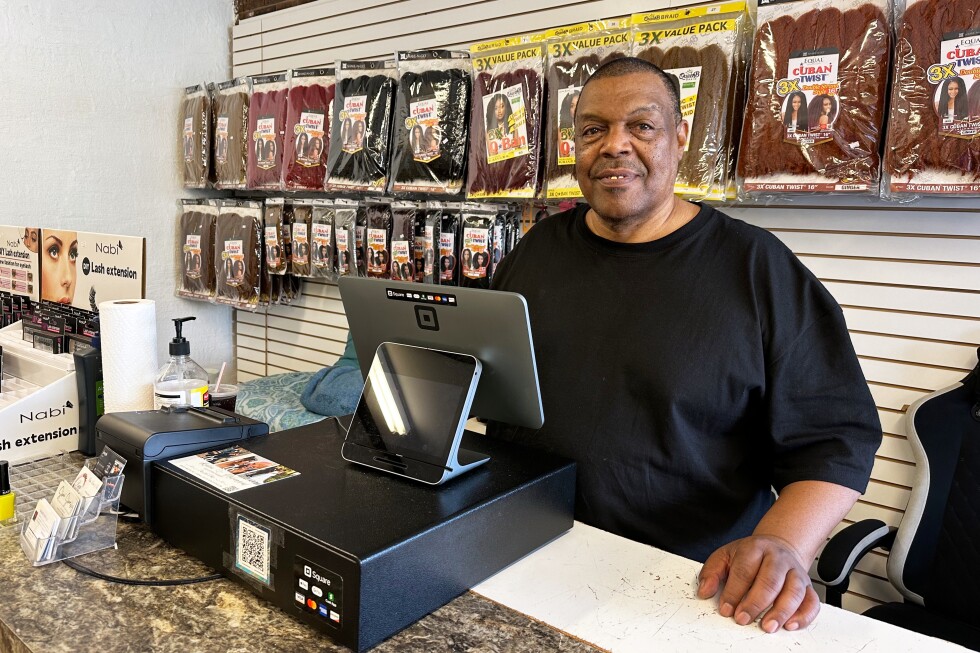
NASHVILLE, N.C. (AP) — Ricky Brinkley, a longtime resident of rural North Carolina, enjoys the quiet life “out in the county,” away from the lights and activity of nearby towns. Despite this, the 65-year-old former truck driver often feels overlooked during election periods in this politically significant state.
“People don’t come out like they should and ask you how you feel about things,” Brinkley remarked while working at his daughter’s beauty supply shop near the Nashville courthouse. “You want somebody to vote, but you don’t want to do nothing to get the vote. No, it don’t work that way.”
Brinkley’s sentiments reflect a broader challenge for Democrats in rural North Carolina, where mobilizing Black voters has proven difficult, despite typically strong support from this demographic. The party’s failure to galvanize these voters presents a significant obstacle as they attempt to counter Republican strengths.
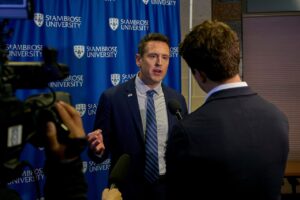
Former Governor Roy Cooper aims to convert this challenge into an opportunity as he campaigns for a U.S. Senate seat. Winning could shift the balance of power in Washington and potentially reshape future presidential elections by expanding Democratic pathways to the White House.
Democratic Outreach and Rural Voters
“People want to look at the word ‘rural’ in North Carolina and equate it to the word ‘white,’” said state party chair Anderson Clayton, who at 28, has been working to broaden the party’s reach beyond urban areas. “In my vision of a Democratic Party, when you talk about reaching out to rural voters, you are talking about rural Black voters.”
Reverend James Gailliard, a former state legislator and pastor of a large Black congregation in Rocky Mount, emphasized a similar point. “You don’t win this state in Durham,” Gailliard stated. “You win it in the east.”
Strategic Importance of Eastern North Carolina
North Carolina, home to the urban hubs of the Research Triangle and Charlotte, also includes expansive rural regions where Democrats have struggled in recent years. While some of this shift is due to white voters’ realignment with Republicans, it is also affected by lower turnout among rural Black voters, who are more prevalent east of the Triangle along the Atlantic coast.
Governor Cooper has already engaged with Black communities through discussions with farmers, business owners, and North Carolina A&T University students. His campaign plans a comprehensive statewide organizing push ahead of the election.
Calls for Deeper Engagement
Gailliard, however, seeks a more substantial commitment. Having lost his legislative seat after Republican-led redistricting, he argues for grassroots organizing and investment from national Democrats, referencing efforts he attempted during Kamala Harris’ 2024 campaign.
“I couldn’t get any traction,” Gailliard recalled. “I begged them to bring her to Rocky Mount. I said, ‘Listen, Rocky Mount is the gateway to the East. If we crack Rocky Mount, we’ve cracked the East.’ Could not convince them to come. Two weeks later, guess who’s in Rocky Mount? Donald Trump.”
Instead, the Harris campaign dispatched former President Bill Clinton to the region. Gailliard insists that Cooper’s success depends on local support.
“Roy is a great friend, and I’m gonna run my butt off to help him in every way, but I’m not banking on his coattails,” Gailliard said. “I’m going to do the opposite. I’m going to grow coattails for him.”
Efforts to Bridge the Political Divide
State party chair Clayton asserts that national attention and funding have been insufficient in North Carolina during recent election cycles. She has managed to finance a team of 25 full-time staffers through local contributions, significantly more than in the 2022 midterms.
Camille Taylor, chairwoman of Bertie County Democrats, acknowledges the increased local engagement but highlights the challenge of encouraging rural voters to participate in non-presidential elections, emphasizing their significance in everyday life.
Democratic candidates are contesting every legislative and congressional district, with State Supreme Court Justice Anita Earls also campaigning for reelection.
Voter Turnout Trends
AP VoteCast data indicates that Black voters comprised approximately 20% of North Carolina’s electorate in recent presidential and Senate elections. Notably, a significant portion of Black voters resides in small towns or rural areas rather than urban centers.
Even minor changes in voter turnout can have substantial electoral implications. Barack Obama’s narrow victory in North Carolina in 2008 exemplifies this, as he won by just 14,000 votes out of 4.3 million cast.
Between the 2020 and 2024 elections, voter turnout declined more noticeably in counties with larger Black populations, with a decrease exceeding three percentage points in regions where Black voters constitute 30% to 40% of the electorate.
Personal Appeals Matter
Gailliard emphasizes the importance of personal engagement in securing votes, stating, “Black and rural voters are not transactional. They are relational.”
Back in Nashville, Brinkley concurs, acknowledging that while he might support Cooper and other Democrats, his decision to vote remains uncertain amid various concerns.
“I could. I could. I may vote,” he said. “There’s just so much going on.”