As the November elections approach, the focus is often on congressional races, overshadowing the crucial state attorney general races. Behind the scenes, however, partisan groups, corporations, and advocacy networks are gearing up for campaigns that could significantly influence American politics.
Republican groups involved in these races reported a record fundraising haul of $29 million last year, positioning themselves for the 2026 midterms. Meanwhile, Democratic organizations also saw a surge in contributions, raising $28 million—double their usual intake at this stage of the election cycle.
There are 30 attorney general seats up for grabs this year, drawing substantial funding from tech companies, tobacco firms, and other entities potentially subject to state legal scrutiny. Contributions also come from law firms, unions, and ideological groups, highlighting the increasing importance of the attorney general role in shaping national policy and as a stepping stone to higher office.
“Because we try to solve so many of our problems with lawsuits, the office of attorney general has become more important,” stated James Tierney, a former Maine attorney general who now teaches about the position at Harvard.
Attorneys General: Political Stepping Stones
This election cycle, at least six sitting attorneys general are running for governor, with ten current governors having previously served as attorneys general, including three elected in 2024.
During Kamala Harris’s 2024 presidential campaign, three of her potential running mates—Kentucky’s Andy Beshear, North Carolina’s Roy Cooper, and Pennsylvania’s Josh Shapiro—were former attorneys general who became governors.
On the Republican front, former Florida Attorney General Pam Bondi served as President Donald Trump’s attorney general.
According to Adam Piper, executive director of the Republican Attorneys General Association, the office’s potential for political advancement is a key factor attracting donors. “The AGs used to be the underdogs in the races” for top-of-the-ballot offices, he noted. “Now, they’re the favorite in them.”
Key races for party organizations include swing states where Democrats triumphed in 2022: Arizona, Michigan, Nevada, and Wisconsin. Democrats also aim to gain seats in Republican-leaning states like Georgia, Kansas, and Ohio, while Republicans target Minnesota and New York for pickups.
Texas: Legal Influence Beyond Borders
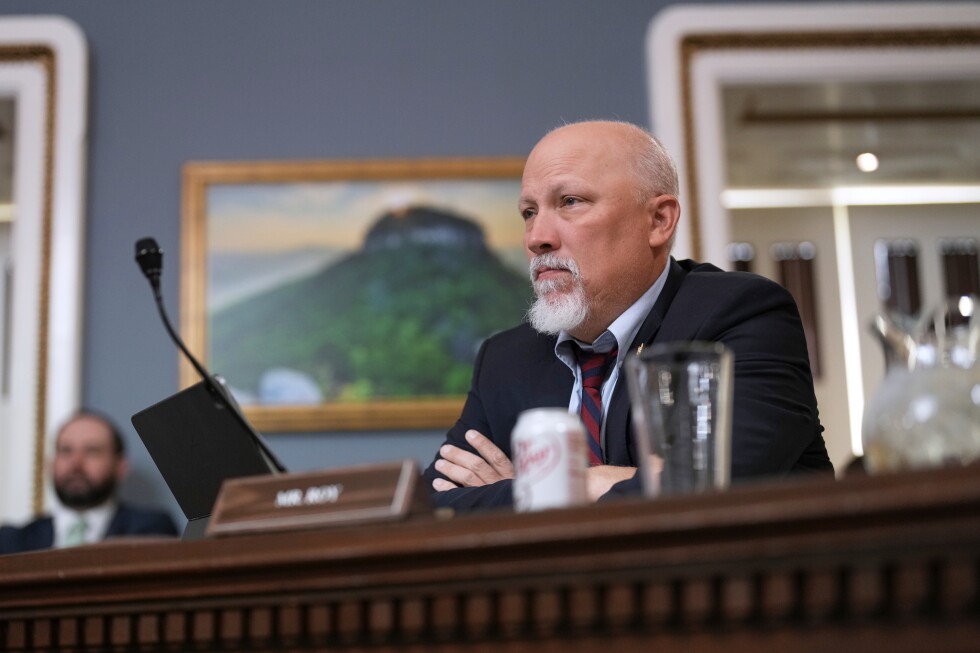
In Texas, U.S. Rep. Chip Roy and state Sen. Mayes Middleton are competing in a May 26 runoff for the Republican nomination for attorney general. The current attorney general, Ken Paxton, is engaged in a runoff for the GOP U.S. Senate nomination against John Cornyn, another former attorney general.
Paxton gained attention after being acquitted of corruption charges and for his proactive investigations into gender-affirming care of minors and abortion cases, often extending his efforts across state lines.
Both Roy and Middleton have pledged to curb what they perceive as the “Islamification” of Texas, with Middleton expressing intent to investigate George Soros for alleged crimes. Roy emphasized the appeal of a state office over a federal position, stating, “I’ll be one of one instead of one of 435 (members of the U.S. House) fighting for you.”
The Democratic runoff features state Sen. Nathan Johnson and former Galveston Mayor Joe Jaworski. A Democratic victory in a statewide election would be unexpected.
Frequent Legal Challenges to Trump’s Administration
Earlier this month, 24 Democratic officials, including 22 attorneys general and two governors from states with Republican attorneys general, sued the Trump administration over intended tariffs following a Supreme Court decision against a prior version of the trade penalties.
Since Trump returned to office, Democratic officials have honed their legal strategies, filing over 80 lawsuits against the administration, with numerous favorable outcomes, according to the Progressive State Leaders Committee.
Sean Rankin, president of the Democratic Attorneys General Association, remarked that the group is “the only lever to hold Trump accountable” due to a Republican-controlled Congress.
Arizona: A High-Profile Legal Battle
Arizona Attorney General Kris Mayes, a Democrat who narrowly won in 2022, asserted in an interview that lawsuits against the administration have saved Arizona $1.5 billion, supporting programs in AmeriCorps, Head Start, and universities.
“If you don’t have an attorney general who is willing to stand up to the federal government,” Mayes argued, “your state is going to get hurt.”
Mayes notably filed criminal charges against Kalshi, accusing the prediction market company of illegal gambling.
Rodney Glassman, a Republican contender, has centered his campaign on reversing Mayes’s legal actions against the administration, describing them as “clickbait” driven by partisanship.
Glassman has solicited small donations equivalent to $1 for each lawsuit filed by Mayes, targeting her legal challenges to the administration’s policies. He faces state Senate President Warren Peterson in the June 22 primary.
A Republican victory could amplify efforts to dispute voter fraud claims in Arizona. Peterson, who did not respond to interview requests, recently submitted election records to the FBI.