Alabama’s Political Landscape: Senate and Gubernatorial Races Heat Up
The political scene in Alabama is set for a compelling election season with significant races for both the U.S. Senate and the governor’s office. The state will also witness changes in congressional district alignments due to recent redistricting efforts.
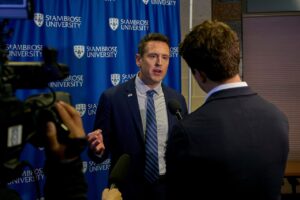
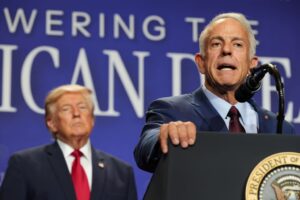
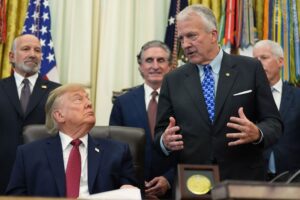
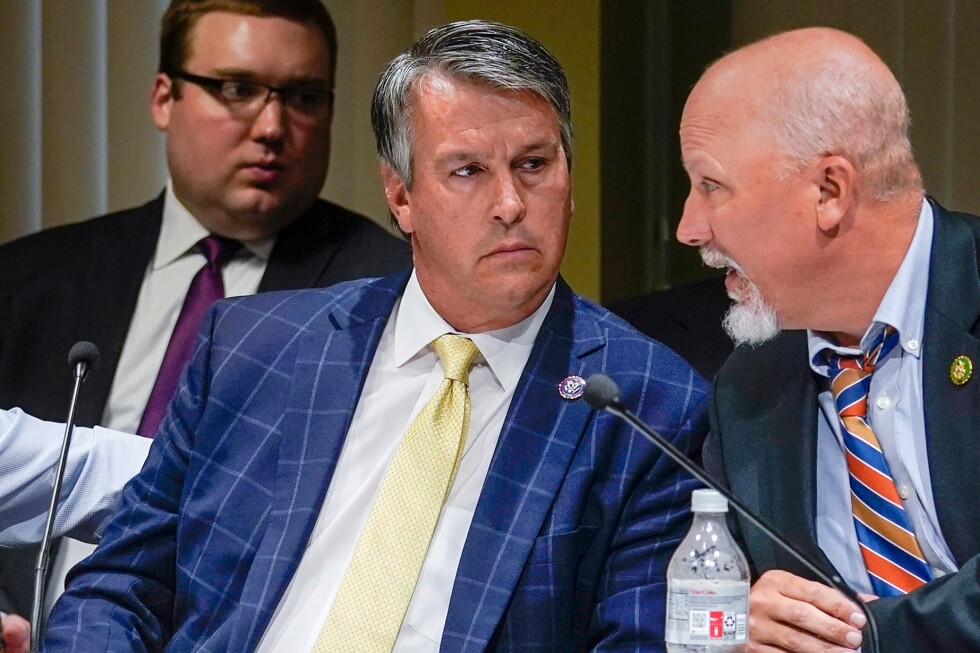
On the Republican side, former Navy SEAL Jared Hudson has emerged as a contender in the race for Alabama’s open U.S. Senate seat. Hudson, who identifies as a political outsider, narrowly defeated Alabama Attorney General Steve Marshall to secure a spot in the June 16 runoff against U.S. Rep. Barry Moore. Moore, who has been endorsed by former President Donald Trump, aims to bring a “Trump conservative” approach to the Senate. Hudson, in contrast, has pledged to uphold Trump’s “America First” policies if elected.
Hudson shared his excitement on social media, stating, “We made history last night, Alabama!” He further emphasized the grassroots nature of his campaign, suggesting that, “DC money is going to have to punch a lot harder if they want to stop this grassroots movement.” Moore, after advancing to the runoff, told his supporters, “We’re going to win this thing, and God’s going to bless this great nation.”
The Democratic primary has also set the stage for a runoff, with business owner Dakarai Larriett and attorney Everett Wess vying for the nomination. The Democratic candidates face a challenging battle in a predominantly Republican state.
This Senate seat is being vacated by Sen. Tommy Tuberville, who secured his place as the Republican nominee for the gubernatorial race. Tuberville is set to face former U.S. Sen. Doug Jones, a Democrat, in a rematch of a Senate race that Tuberville won six years prior. Jones, the last Democrat to win a statewide election in Alabama, urged voters, “I’m asking all of you to give us a chance, to join us, to be that force for change.” Tuberville, framing the race as a clash of ideologies, stated, “I’m not running against him. I’m really not. I’m running against socialism and communism.”
Alabama’s congressional elections are also in a state of transition due to redistricting prompted by a U.S. Supreme Court decision. The state plans to adopt a new congressional map, potentially allowing Republicans to reclaim the 2nd Congressional District in the November elections. This development follows a broader trend in Southern states to revise U.S. House maps and reduce districts held by Black Democrats, a move that has sparked legal challenges.
Despite voters casting ballots in all seven of the state’s congressional districts during the initial primary, Republicans intend to hold a special primary on August 11 for four districts using the new Republican-favored maps. Litigation concerning these district lines persists, with federal judges scheduled to hear a motion by the NAACP Legal Defense Fund to halt the state’s redistricting changes.