Federal Judge Alters Student Loan Limits for Certain Graduate Programs
Graduate students in fields such as nursing and physical therapy can temporarily access higher federal student loan amounts following a recent court decision. This development comes after a federal judge blocked a Trump-era rule that imposed lower loan limits on these programs.
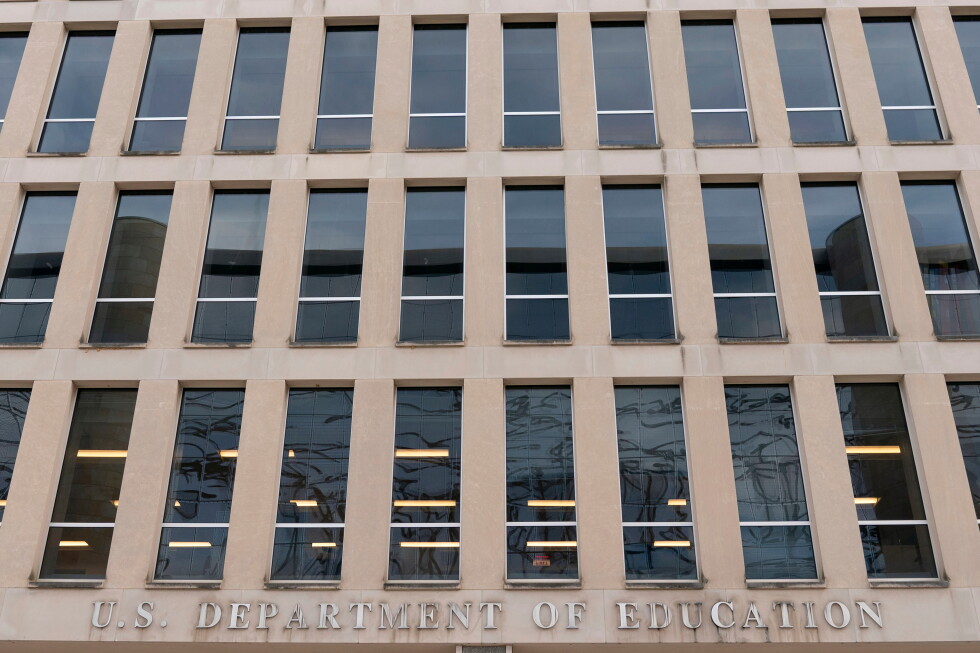
The U.S. Department of Education responded to the judicial order by adjusting the rule last Monday. This temporary amendment aligns with the court’s directive as the department continues to defend its original rule, which categorized certain fields like law and medicine as “professional programs,” while excluding others such as nursing.
Undersecretary Nicholas Kent expressed the department’s disagreement with the judge’s decision but acknowledged compliance. “We will continue to make the case that the definition is both lawful and appropriate,” Kent stated.
This interim ruling is seen as a victory for the eight groups that legally contested the rule. These groups, representing professionals like nurse practitioners and therapists, argued that the original rule’s definition was too restrictive.
In adhering to the judge’s order, the Department of Education has reclassified some degrees, resulting in lower loan limits for students in these programs. Notably, theology programs have seen a shift to non-professional status, affecting their federal loan cap. However, the master of divinity degree remains classified as a professional program, maintaining higher loan limits.
The updated rule, effective from Wednesday, stems from a student loan policy change included in President Donald Trump’s recent tax legislation. This policy caps federal loans for professional degree programs at $200,000, while other graduate programs are limited to $100,000.
Previously, graduate students could borrow federal loans covering the entire cost of their education. The Trump administration introduced these loan limits to control student debt and reduce tuition costs, which they claimed were increasing excessively.
The lawsuit’s plaintiffs argued that the rule would force students to abandon their studies or seek more hazardous private loans. Although many graduate nursing programs fall under the lower loan limit, some, especially in fields like nurse anesthesia, exceed $100,000 in costs.
In a notification sent to universities, the Education Department expressed confidence in ultimately upholding the initial rule in court. While the amended rule complies with the judge’s preliminary stay, the department cautioned that changes might occur as the litigation continues.
The original rule identified approximately twelve programs as professional, a categorization based on technical definitions from the 1960s. Besides law and medicine, this list included theology, pharmacy, veterinary medicine, and clinical psychology.
The temporary amendment expands the professional designation to 29 specific degree programs, adding fields like the master of science in nursing, doctor of nursing practice, and doctor of nurse anesthesia practice. Newly recognized professional programs also encompass degrees in physical therapy, athletic training, speech-language pathology, physician associates, and anesthesiologist assistants.
However, around 25 programs have been reclassified as non-professional degrees, including theology and applied psychology, though the doctor of pharmacy degree retains its professional status.
The court ruling last week challenged parts of the Education Department’s definition, with U.S. District Judge Beryl Howell criticizing it as a “misguided” interpretation that diverged from Congressional definitions.
The department outlined criteria for professional degrees, indicating these programs typically require six years of study and necessitate licensing for practice. Additionally, professional degrees should not result in employment that demands supervision by a more qualified professional.
A separate lawsuit, initiated by Democratic-led states, contesting the loan caps is still awaiting resolution.