Chief Justice Roberts Denies Political Influence in Supreme Court Decisions
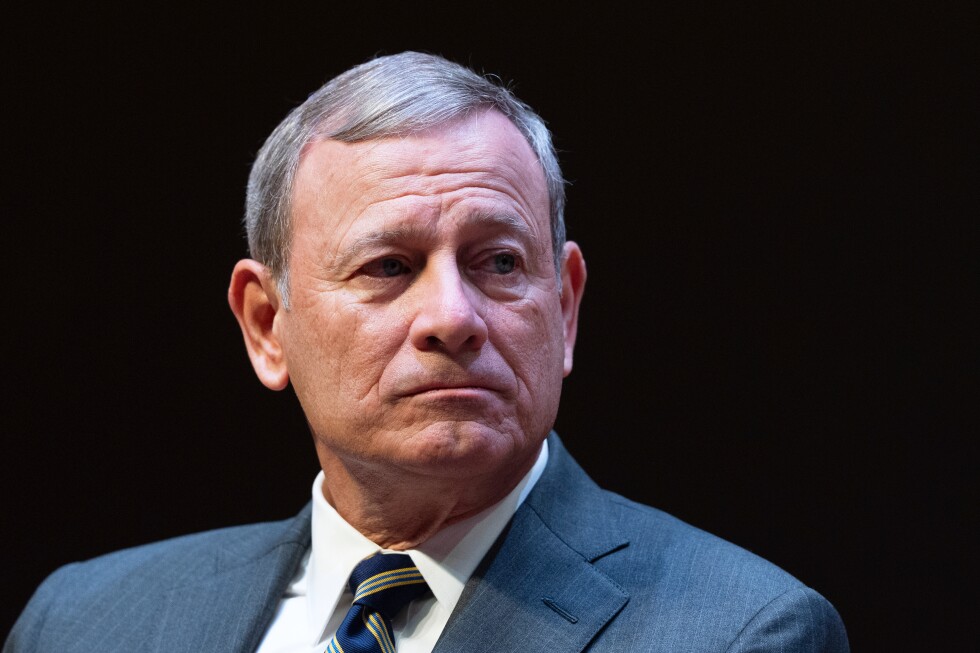
HERSHEY, Pa. (AP) — Chief Justice John Roberts addressed concerns regarding the perceived political bias of Supreme Court justices during a conference in Pennsylvania. He emphasized that the Court’s decisions are grounded in law, not political agendas.
Roberts stated, “I think, at a very basic level, people think we’re making policy decisions, we’re saying we think this is how things should be, as opposed to what the law provides,” and added, “I think they view us as purely political actors, which I don’t think is an accurate understanding of what we do.” His comments come amid a period of declining public trust in the institution, following a recent ruling that undermined the Voting Rights Act.
The Supreme Court recently invalidated a predominantly Black congressional district in Louisiana, citing it as an unconstitutional racial gerrymander. This decision has weakened a key Civil Rights era law that historically boosted minority representation in Congress and could allow for more redistricting benefiting Republican control of the House.
The conservative majority in the Court has also delivered landmark rulings in recent years, including the reversal of the constitutional right to abortion, the expansion of gun rights, and the cessation of affirmative action in higher education.
While Roberts refrained from mentioning specific cases, he reiterated that the Court is “simply not part of the political process.” He acknowledged that opinions are based on the Constitution, even if they are contentious, noting, “One thing we have to do is make decisions that are unpopular.”
Roberts urged that criticism should target rulings rather than personal attacks on judges. He condemned such attacks and reiterated a sentiment he has shared before about the increased threats to the judiciary, stating, “That’s not appropriate and it can lead to very serious problems.”
High-profile personal criticisms of judges have been made by figures like former President Donald Trump, who criticized Roberts and others for decisions against him, such as the ruling that nullified tariffs imposed under an emergency-powers law.