Venezuela Challenges Historical Claim Over Essequibo Region
THE HAGUE, Netherlands (AP) — In a legal dispute that dates back to the colonial era, Venezuela has asserted that the mineral-abundant Essequibo region was unjustly taken from it in a 19th-century decision influenced by colonial powers, and insists that a 1966 agreement should determine the rightful ownership, not the International Court of Justice (ICJ).
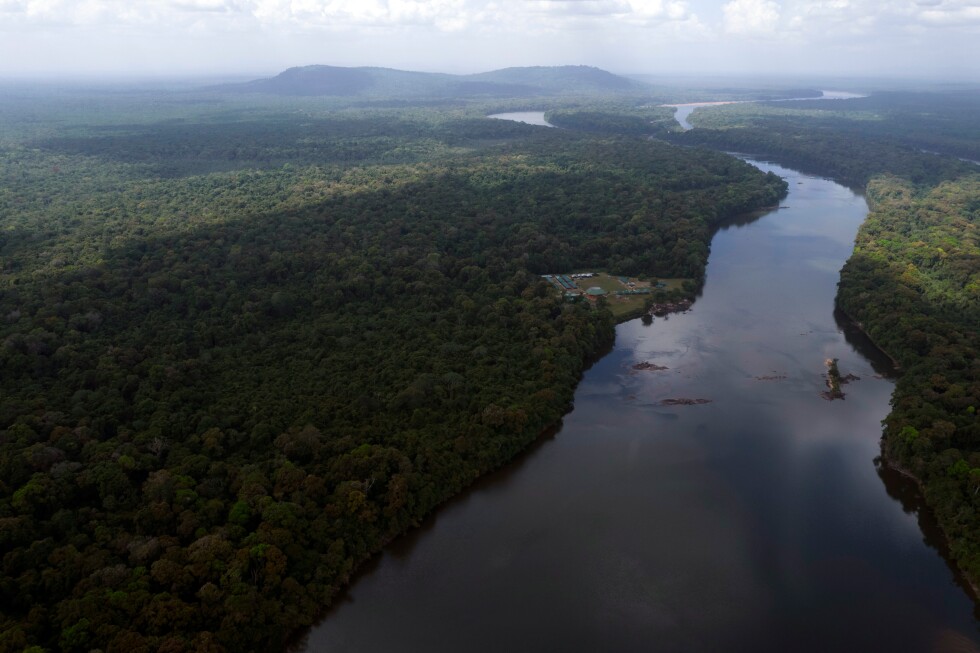
This week, the ICJ is conducting hearings involving the neighboring South American countries, Venezuela and Guyana, over the contested region. Essequibo, known for its gold, diamonds, timber, and proximity to vast offshore oil reserves, is claimed by both nations.
The border was originally delineated in 1899 by arbitrators representing Britain, Russia, and the United States, largely favoring Guyana. At the time, the U.S. acted on behalf of Venezuela due to its severed diplomatic ties with Britain. Venezuela argues that this decision was a result of a conspiracy by American and European powers to deprive it of its territory.
Venezuela maintains that Essequibo has been part of its territory since the Spanish colonial era. It believes that the 1966 Geneva Agreement, meant to address the territorial dispute, invalidates the arbitration ruling from the 19th century.
“Guyana presents itself as the true, legitimate heir to British and Dutch territories, but the reality is that it is the beneficiary of colonial dispossession, formalized through fraudulent arbitration. The Geneva Agreement seeks to correct this century-old injustice,” stated Samuel Reinaldo Moncada Acosta, representing Venezuela at the world court.
Moncada Acosta emphasized Venezuela’s rejection of the court’s jurisdiction, which he argues was “erroneously imposed” by a 2020 decision, advocating for the 1966 agreement as the basis for a negotiated settlement.
During the opening of the hearings, Guyana’s Foreign Minister, High Hilton Todd, addressed the panel of judges, describing the dispute as a significant challenge to Guyana’s sovereignty, affecting 70% of its territory.
The ICJ, located in The Hague, is expected to take several months before reaching a final and legally binding decision on the case.