Trump Announces Increase in EU Tariffs Amid Economic Concerns
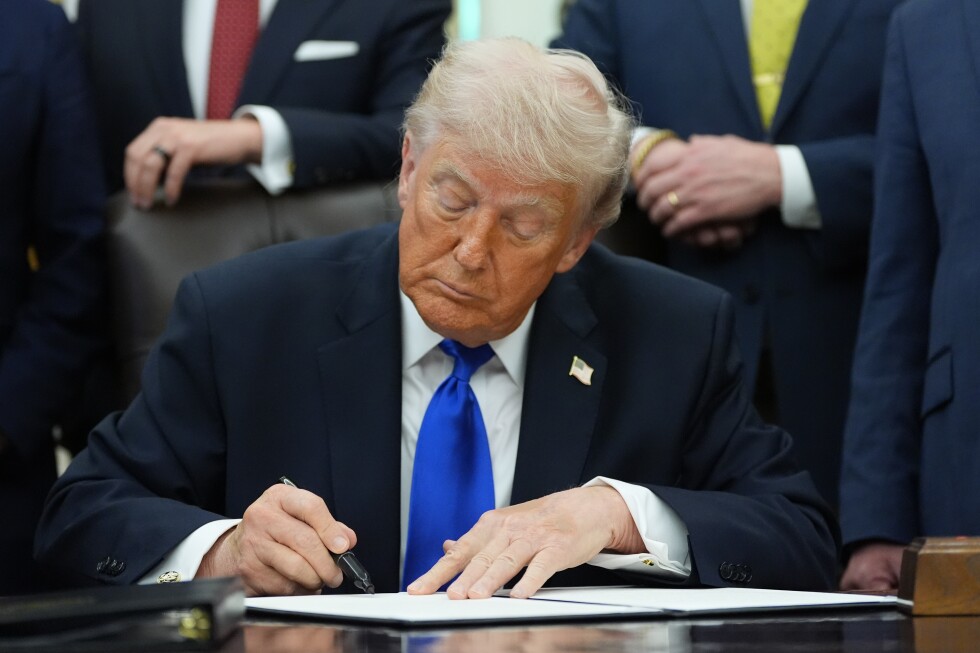
President Donald Trump revealed plans to raise tariffs on European Union cars and trucks to 25% next week. This decision comes as the global economy faces uncertainty.
In a statement on social media, Trump claimed the EU was not complying with the agreed trade deal, though he provided no further details. During a press briefing, he suggested that higher tariffs would encourage faster relocation of manufacturing to the U.S.
Impact of Tariffs on Global Economy
The tariff increase coincides with economic strains caused by the Iran conflict. Rising oil and gas prices, due to disruptions in the Strait of Hormuz, have slowed economic growth and increased inflation.
Domestically, Trump faces mounting political pressure as inflation remains a key issue ahead of the November midterm elections. Despite his campaign promise to control prices, inflation rose to 3.3% in March. A poll by The Associated Press-NORC Center for Public Affairs Research shows only 30% of Americans approve of Trump’s economic management.
EU’s Response to Proposed Tariffs
The European Parliament is finalizing last year’s trade agreement and expected to conclude soon. The EU expressed its commitment to the agreement while warning of potential protective measures if the U.S. acts contrary to the deal.
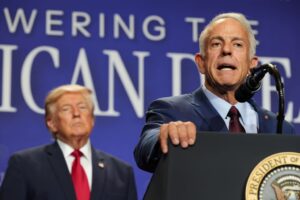
Bernd Lange, chair of the European Parliament trade committee, condemned the tariff hike as “unacceptable” and criticized the U.S. for breaking commitments, including those on steel and aluminum tariffs.
Legal and Economic Challenges
The Supreme Court recently invalidated Trump’s authority to impose high tariffs, prompting his administration to explore alternative legal justifications under Section 301 of the Trade Act of 1974. Investigations are underway into forced labor concerns and foreign overproduction harming U.S. manufacturing.
Potential new tariffs threaten the EU-U.S. trade agreement, though European Commissioner Maroš Šefčovič noted improved bilateral relations. Scott Lincicome of the Cato Institute remarked on the fragility of trade deals, relying on personal assurances rather than solid legal foundations.
The European Union had estimated the bilateral trade deal would save its automakers 500 to 600 million euros monthly. The value of EU-U.S. trade was 1.7 trillion euros in 2024, as per Eurostat.