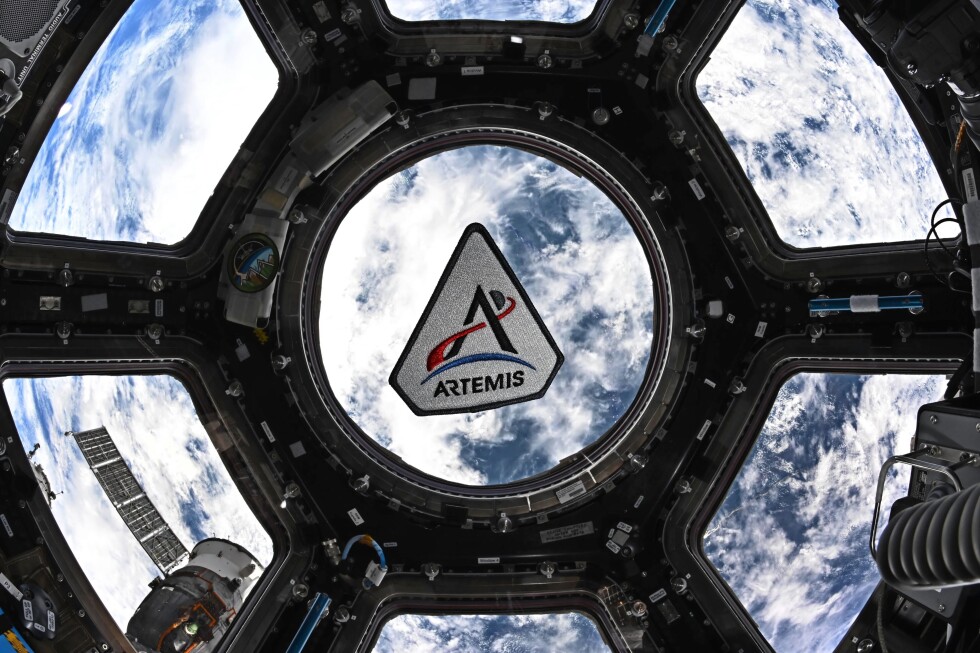
NASA’s Artemis II Mission Embarks on Historic Lunar Journey
On Thursday night, NASA’s Artemis II mission, featuring a team of astronauts, reignited humanity’s quest beyond Earth’s immediate orbit by propelling toward the moon, marking a significant step forward since the Apollo missions.
Following a successful translunar injection 25 hours after launch, the Artemis II crew, composed of three Americans and one Canadian, set their sights on a lunar flyby scheduled for early next week. Their spacecraft, the Orion capsule, left Earth’s orbit on schedule and commenced its journey of nearly 250,000 miles (400,000 kilometers) to the moon.
“Ladies and gentlemen, I am so, so excited to be able to tell you that for the first time since 1972 during Apollo 17, human beings have left Earth orbit,” announced Lori Glaze from NASA, highlighting the flawless execution of the engine firing.
Canadian astronaut Jeremy Hansen described the crew’s awe as they peered out the capsule’s windows, soaking in the “phenomenal” views of Earth fading into the distance. “Humanity has once again shown what we are capable of, and it’s your hopes for the future that carry us now on this journey around the moon,” Hansen said.
Prior to their lunar departure, the crew spent a day testing the capsule’s life-support systems closer to Earth. This mission marks the beginning of NASA’s broader ambitions for a permanent moon base and continued lunar exploration.
Commander Reid Wiseman, along with pilot Victor Glover, Christina Koch, and Hansen will execute a lunar flyby before returning to Earth, potentially setting records for the farthest distance humans have traveled from our planet and the fastest reentry speed on April 10.
Breaking New Ground
This mission has already seen Hansen, Glover, and Koch make history as the first Canadian, first Black person, and first woman, respectively, to journey to the moon. The Apollo missions previously only included white men among their 24 lunar explorers.
Glover shared his impressions of Earth from space, stating, “Trust us, you look amazing. You look beautiful.” He emphasized the unity of humanity, noting, “we’re all one people.”
Mission Control set the tone with an energizing start to the day by playing John Legend’s “Green Light” and cheers from NASA teams. As the crew prepared for the crucial engine burn, they were reminded of their role in “humanity’s lunar homecoming arc.” The capsule’s trajectory will rely on the gravitational forces of both Earth and the moon in a free-return lunar trajectory, with the engine propelling them at over 24,000 mph (38,000 kph).
Flight director Judd Frieling remarked on the significance of the mission, acknowledging the uniqueness of this moment in history.
Upcoming Lunar Flyby
The next milestone for the Artemis II crew will be a close approach to the moon on Monday. The Orion spacecraft will travel 4,000 miles (6,400 kilometers) beyond the moon, offering rare views of the lunar far side and a total solar eclipse as seen from their vantage point.
As they awaited departure from Earth, the astronauts marveled at the sight of entire continents and the South Pole from tens of thousands of miles above. Koch noted the clarity with which they could observe these features from space.
This test flight is crucial for NASA’s Artemis program, serving as the catalyst for future missions, including a planned moon landing by 2028. However, the journey isn’t without its challenges. The Orion capsule experienced a toilet malfunction soon after reaching orbit, which astronaut Koch managed to resolve with guidance from Mission Control.
Additionally, due to a valve issue in the capsule’s water dispenser, the crew prepared by filling empty urine storage bags with over 2 gallons (7 liters) of water for contingency purposes.
NASA continues to rely on this mission to pave the way for future lunar exploration and the establishment of sustainable human life on the moon.