Missouri Supreme Court Endorses Mid-Decade Redistricting
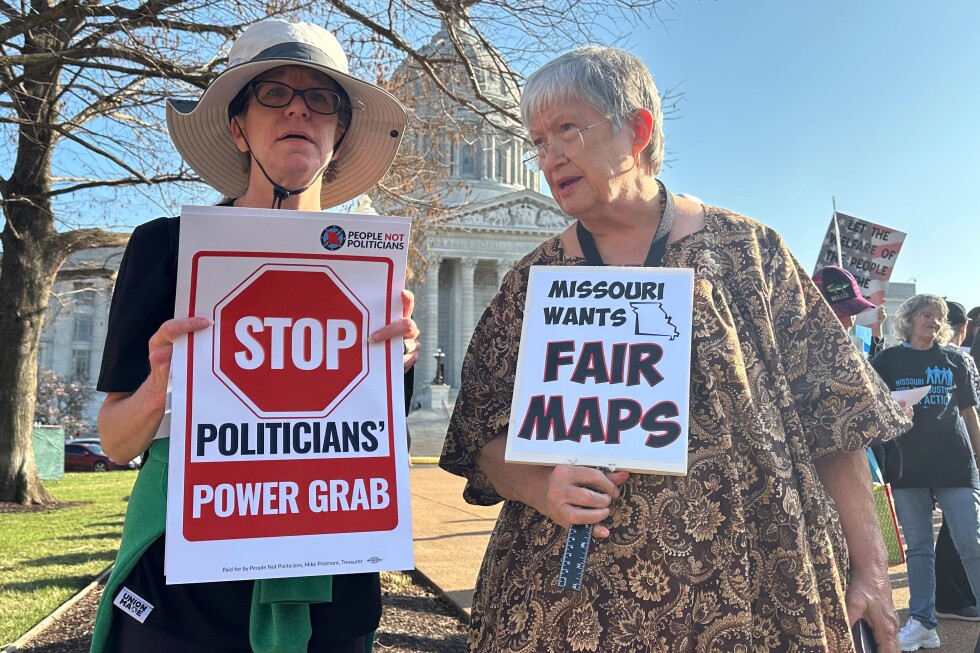
The Missouri Supreme Court has endorsed a redistricting plan that could bolster Republican chances of securing an additional U.S. House seat in the upcoming midterm elections. This ruling, delivered on Tuesday, aligns with President Donald Trump’s nationwide redistricting efforts, although the decision may face further challenges as over 300,000 signatures have been collected to potentially put the new map to a statewide vote.
The Republican-dominated Missouri Legislature had approved the new congressional districts in September at the behest of Trump, mirroring similar actions in Texas. The new boundaries are designed to enhance Republican prospects in a Kansas City-area district currently held by Democratic Representative Emanuel Cleaver by incorporating segments into adjacent Republican-leaning rural districts.
Critics have contended that the state constitution restricts redistricting to the period immediately following a census. However, the court’s 4-3 ruling dismissed this interpretation, stating that there is no explicit prohibition against more frequent redistricting.
Impact on Missouri’s Political Landscape
The revised district map affects Missouri’s current representation of six Republicans and two Democrats in the U.S. House. A trial court recently dismissed a separate lawsuit challenging the map’s compliance with state compactness requirements. This decision is also under appeal.
As Missouri’s candidate filing deadline approaches, six Republican candidates have announced their intentions to run against Cleaver under the new district plan, as confirmed by Attorney General Catherine Hanaway and Secretary of State Denny Hoskins, both Republicans. However, a pending lawsuit seeks to suspend the new map until a referendum can be held.
Attorney Chuck Hatfield, representing the plaintiffs, expressed determination to continue opposing the redistricting, stating, “We lost a battle today, but the war to stop this unfair redistricting goes on.”
Debate Over Redistricting Timing
The court’s ruling centered on the interpretation of the word “when” in the state constitution, which mandates redistricting “when” new census data is available. Plaintiffs argued this implies redistricting should coincide with new census data, whereas the attorney general’s office and the Missouri Republican State Committee contended that it sets only a minimum frequency, allowing the Legislature freedom to redistrict at any time.
“The Missouri Supreme Court has reinforced what we’ve known all along — the Missouri FIRST Map and mid-decade redistricting are constitutional,” stated Hanaway. Republican Party attorney Marc Ellinger noted that the decision bolsters the GOP’s recruitment and funding efforts.
In a related decision, the Supreme Court upheld the state’s voter photo identification law, citing plaintiffs’ lack of standing. However, the court invalidated several provisions of a 2022 voting law, ruling them unconstitutional on free speech grounds.
Broader National Context
Missouri’s redistricting case is part of a larger national trend, with states like Texas, North Carolina, and Ohio revising their congressional districts to potentially benefit Republicans. In contrast, California voters approved new districts favoring Democrats, while a Utah judge endorsed a plan aiding Democrats in one of the state’s U.S. House seats.
Virginia legislators have also proposed mid-decade redistricting, subject to a forthcoming ballot measure. Florida is preparing for a special legislative session on redistricting later this month. The overall impact of these changes on congressional control remains uncertain.