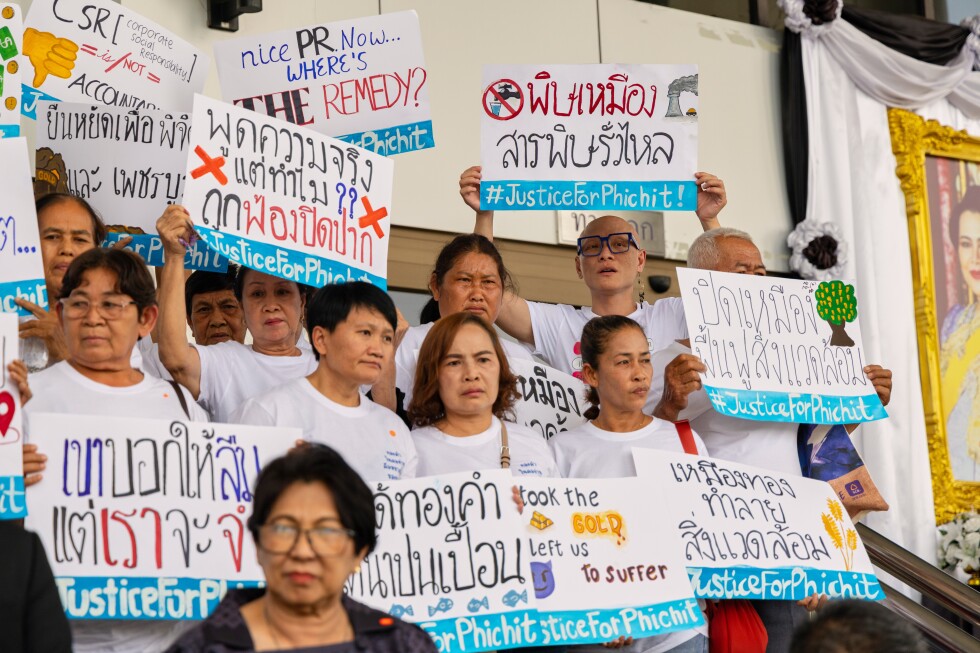
A landmark decision by a Thai court has held the operator of a prominent gold mine in northern Thailand accountable for environmental degradation and adverse health effects suffered by local villagers. This ruling could significantly impact climate litigation in the nation.
The 2016 class action lawsuit was initiated by hundreds of residents from Phichit province against the Chatree Gold Mine, which is run by Akara Resources, a subsidiary of Australia’s Kingsgate Consolidated. The villagers accused the mine of releasing toxic substances into their environment, prompting the Bangkok Civil Court to find the company liable and mandate compensation for those affected.
Emilie Palamy Pradichit from the Manushya Foundation, a human rights organization involved in the case, noted that the verdict might influence how communities perceive the role of courts in environmental issues.
Legal experts suggest that this ruling could set a benchmark for similar cases across Southeast Asia, where “polluter pays” principles are increasingly prevalent. Jameela Joy Reyes from the Grantham Research Institute highlighted the potential global influence of such decisions, especially in regions like the Philippines and Indonesia.
Implications of the Thai Court’s Decision
Over 300 plaintiffs pursued legal action against the Chatree Gold Mine following a 2015 amendment that allowed for environmental class actions. The court determined that the mine’s operations resulted in toxic runoff, contaminating the local area with harmful metals such as arsenic, cyanide, and manganese. Compensation was ordered for the villagers, covering medical costs and psychological distress.
The Chatree mine has been embroiled in various legal disputes, including intervention from former Prime Minister Prayuth Chan-ocha, who ceased mining operations using powers granted by the military-led government. Kingsgate later sued the Thai government over the revocation of its mining license, with a settlement reached in the previous year.
Despite the compensation being less than anticipated, plaintiff Thanyalak Boontham expressed satisfaction with the ruling, emphasizing the importance of a clean environment for future generations.
Akara Resources’ general manager for sustainability, Cherdsak Utha-aroon, indicated that the company respects the court’s decision and is considering its legal options.
Growing Trend of Environmental Litigation in Southeast Asia
Georgina Lloyd from the United Nations Environment Program noted the rise of climate litigation in Asia, with the region’s share of such cases steadily increasing. This trend is expected to continue, particularly in areas vulnerable to climate change impacts.
Two significant “polluter pays” cases in Southeast Asia are exploring new legal grounds by holding corporations responsible for climate-related damages. In the Philippines, victims of Super Typhoon Odette have sued Shell in the UK, claiming the company’s emissions intensified the typhoon. Meanwhile, a Swiss court has allowed Indonesian fisherfolk to proceed with a case against Holcim, alleging the company’s emissions contribute to climate change effects threatening their livelihoods.
Reyes remarked that these cases, alongside the Thai court’s decision, underscore the urgent need for discussions on climate justice. She emphasized that the acknowledgment of liability itself is a substantial victory that could serve as a warning to other corporations.