U.S. and Israel Launch Military Strike on Iran
DUBAI, United Arab Emirates — In a significant escalation of tensions, the United States and Israel initiated a military offensive against Iran on Saturday. The first reported attack occurred near the offices of Iran’s Supreme Leader Ayatollah Ali Khamenei.
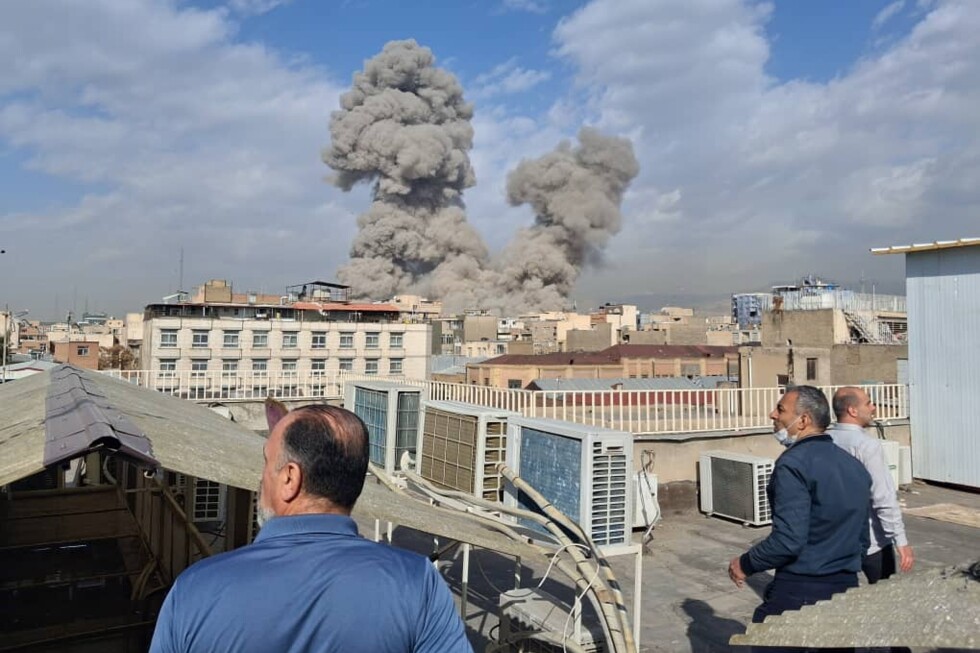
Iranian news outlets confirmed strikes across the country, with smoke visibly emanating from the capital, Tehran.
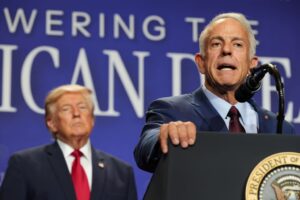
President Donald Trump announced through a social media video that the U.S. had embarked on “major combat operations in Iran.” He asserted that Iran’s ongoing nuclear ambitions and missile development plans pose a threat, urging Iranians to “take over your government — it will be yours to take.”
Addressing potential repercussions, Trump acknowledged the likelihood of American casualties, noting, “that often happens in war.”
Israeli Prime Minister Benjamin Netanyahu stated the joint military endeavor aims to “remove an existential threat posed” by Iran. He expressed hope that the operation would empower the Iranian populace to seize control of their destiny.
Strike Near Key Iranian Leadership
Uncertainty surrounds the whereabouts of the 86-year-old Khamenei during the strike, as he has not appeared publicly amid rising tensions with the U.S. This military action follows the U.S. deployment of significant air and naval forces in the region to pressure Iran into negotiating over its nuclear program.
Although Iran has reportedly ceased uranium enrichment since June, international inspectors have been barred from visiting the bombed sites during a previous 12-day conflict. Recent satellite imagery suggests renewed activity at two locations, indicating efforts by Iran to evaluate and potentially recover materials.
Iran maintains a self-imposed cap on its ballistic missile range at 2,000 kilometers (1,240 miles), encompassing the Middle East and parts of Eastern Europe. While no evidence suggests Iran is pursuing intercontinental ballistic missiles, Washington has expressed concerns over its space program’s potential military applications.
Regional Impact and Escalation
In response to the attack, Iran vowed retaliation, targeting American military forces and bases throughout the region. Shortly after the strikes, explosions were reported in northern Israel as the country intercepted Iranian missile fire.
The Israeli military confirmed the use of air defense systems to neutralize the incoming threat, though details on damage or casualties remain sparse.
The alert extended to neighboring Jordan, where sirens were heard. Hospitals across Israel activated emergency protocols, relocating operations to secure underground facilities.
Tehran Under Siege
Authorities in Tehran closed access to Khamenei’s compound amid a series of explosions across the city. Iraq, Iran’s neighbor, subsequently closed its airspace, according to the Ministry of Transport.
Targets of the Israeli offensive reportedly included military, governmental, and intelligence sites within Iran, according to an anonymous official privy to the operation.
Israeli Defense Minister Israel Katz described the strikes as a measure “to remove threats,” though further details were not provided.
President Trump is seeking a resolution to restrict Iran’s nuclear capabilities, hoping to capitalize on internal Iranian struggles, including widespread protests and economic challenges. Despite these pressures, Iran asserts its right to uranium enrichment and refuses to negotiate on its missile program or support for groups like Hamas and Hezbollah.
In Tehran, eyewitnesses reported hearing explosions near Khamenei’s office, with state television acknowledging the blast without specifying its cause. Subsequent attacks followed, with no immediate casualty reports available.
Iran responded by closing its airspace and cutting mobile phone services, while warnings to pilots were issued amidst the turmoil in Tehran.