WASHINGTON (AP) — In a significant development, the Supreme Court has backed the Trump administration in a legal battle concerning an executive order that restricts mail-in voting. However, it remains uncertain how much of this order can be executed before the upcoming midterm elections.
This decision potentially allows for further legal disputes that might delay the implementation of Trump’s order. The U.S. Postal Service outlined its implementation strategy last week, yet with some states preparing to distribute mail ballots soon, time is limited for substantial changes.
The conservative justices of the Supreme Court did not deliberate on the legality of the order but ruled that states lacked the right to contest it. The majority stated in an unsigned order, “The Court’s disposition of this application does not mean that any measure taken by the Government to implement the Order will necessarily be lawful. On that score, time will tell.”
In contrast, the Court’s three liberal justices expressed dissent, with Justice Ketanji Brown Jackson noting that the decision “lets another shoe drop in the Kafkaesque nightmare that our precedents have been steadily creating for certain plaintiffs who seek to bring election-related challenges.”
New York Attorney General Letitia James described the decision as a “painful setback” but assured that it would “not be the final word,” indicating more legal challenges ahead.
While the ruling opens the door for the administration to start restricting mail voting, it might also trigger further litigation that could stall federal actions, especially with North Carolina scheduled to send its first mail ballots to overseas and military voters in just ten days.
“This is just the first inning of a very fast nine-inning game,” remarked Derek Muller, a Notre Dame University law professor.
Mail-In Voting: A Controversial Topic
President Trump has consistently criticized mail balloting, alleging fraud despite credible evidence disproving such claims. Interestingly, he has also utilized this voting method himself.
The executive order, signed in March, mandates the administration to compile lists of eligible voters and instructs the U.S. Postal Service to deliver mail ballots solely to those on the lists.
Officials from 23 states and the District of Columbia have opposed the order, arguing that it could disrupt elections and lead to partisan misuse. They maintain that the Constitution grants election management powers to states and Congress.
“The consequences of allowing such transformative changes to take effect so close to this fall’s elections would be extreme,” state attorneys argued. Multiple election officials have urged the justices to keep the order on hold as election preparations are underway.
A judge in Massachusetts has halted the plan for the midterms in those states, and her decision was upheld by an appeals court. She subsequently issued a nationwide order blocking the order, posing another challenge to the Trump administration.
The Justice Department appealed to the Supreme Court, arguing that states acted prematurely. They referenced a Washington ruling allowing the order to proceed, which an appeals court supported while still permitting future legal action if changes occur.
Federal attorneys claimed that the order in Massachusetts “blocks the government’s ability to finalize and implement the President’s proposed policies to promote election integrity for the upcoming federal elections in November.”
Republican-leaning states supported the federal government’s stance, asserting that states would have a say in finalizing voter lists.
The Supreme Court has previously ruled against Trump-supporting arguments on mail-in ballots, emphasizing that states can count ballots received post-Election Day. This decision followed thorough briefings and arguments, differing from the court’s emergency docket approach.
Trump has attributed his 2020 election loss to Joe Biden to mail voting, promoting changes in his executive order to prevent non-citizens from voting. Although rare, noncitizen voting is a felony punishable by deportation.
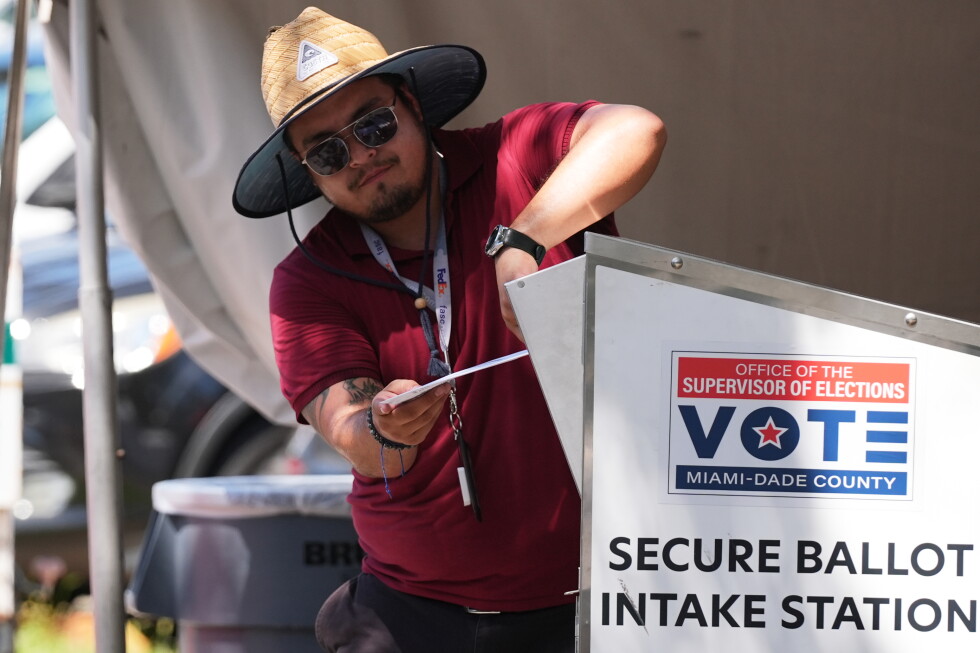
Mail-in voting is becoming increasingly popular among voters from both parties. In the 2024 presidential election, about 30% of ballots were cast by mail, as per federal data. This method is secure, as a 2025 Brookings Institution study reported only about four fraud cases per 10 million mail ballots.
___
Associated Press writer Nicholas Riccardi in Denver contributed to this story.