Federal Court Approves Controversial Tennessee Congressional Map
A federal judicial panel has decided to allow the use of a newly drawn congressional map in Tennessee, which divides a predominantly Black district in Memphis. This development marks another legal success for Republicans aiming to secure an additional seat in the upcoming midterm elections.
On Thursday, a three-judge panel declined to grant a preliminary injunction against the redrawn districts, enabling their use in the August 6 primary elections. Tennessee revised its congressional mapping back in May, shortly after a U.S. Supreme Court decision that lessened the Voting Rights Act protections for minority groups. For more on these developments, see the full story.
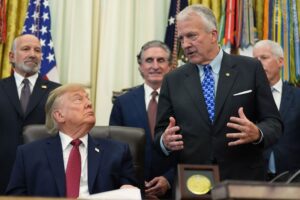
Former President Donald Trump has encouraged Republican-led states to redraw district lines to their advantage. This strategy is part of an effort to maintain a narrow majority in the U.S. House during the November elections. Since last year, Tennessee has joined eight GOP states in undertaking such redistricting. Trump hopes this mid-decade redistricting will help Republicans defy historical trends where the president’s party often loses seats in midterms.
Critics of Tennessee’s new district maps challenged them in court, arguing that the Republican lawmakers’ motivations included racial discrimination, which would contravene the U.S. Constitution. However, Republicans maintain that their intentions were purely political, aiming to secure the only Democratic-held seat in the state’s nine districts. A 2019 Supreme Court ruling allows legislatures to draw districts based on partisan considerations.
The panel of federal judges, comprised of two appointees by Trump and one by former President Barack Obama, stated that the plaintiffs are unlikely to succeed due to a “lack of any direct evidence of racial motivation.” The ruling noted, “The road to a reliably 9-0 map runs through Memphis. Thus, political motivations readily explain the map’s dilutive effects.”
In a decision earlier this year, the Supreme Court overturned a majority-Black congressional district in Louisiana, labeling it an illegal racial gerrymander. This decision weakened certain provisions of the federal Voting Rights Act of 1965, which had previously enabled minority voters to elect candidates of their choice. It also provided a rationale for Republicans in Southern states to adjust voting districts with substantial minority populations under the guise of political intentions.
In Tennessee, the Republican-led legislature divided a Memphis-based district, known for its majority-Black population and long-time representation by Democratic Rep. Steve Cohen, who is white. The newly configured district now extends hundreds of miles eastward and north toward Nashville suburbs. Cohen subsequently announced he would not seek reelection after the map’s redraw.
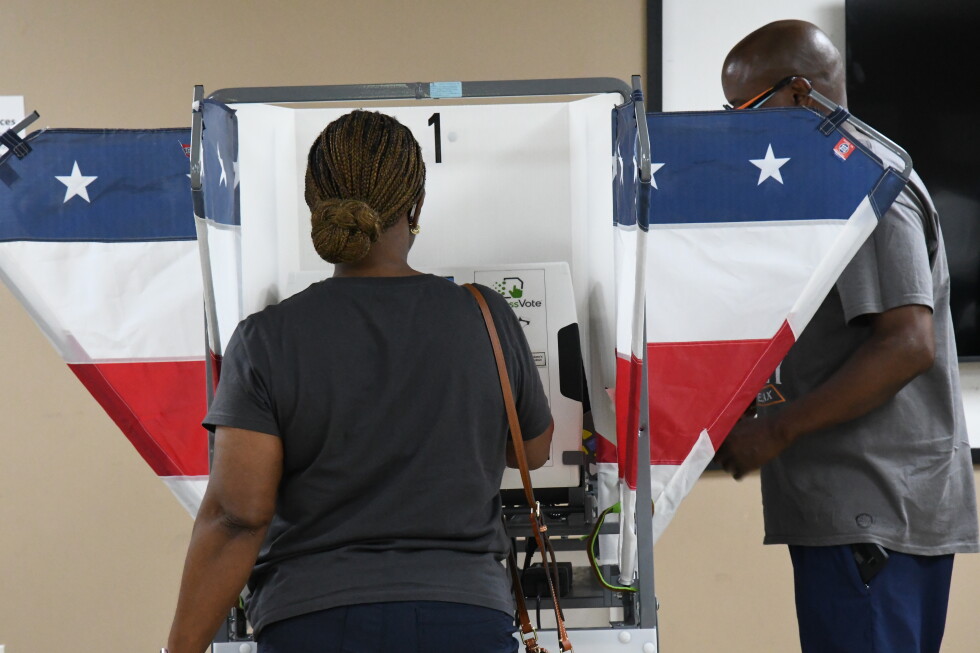
Amber Sherman, a Memphis voter and plaintiff in the lawsuit, expressed disappointment with the ruling, calling it “painful” to face an election under a map perceived to diminish Black voters’ influence. “We deserve the same opportunity to shape our future as anyone else,” Sherman stated. “When our voting power is diluted, our neighborhoods have a harder time making their voices heard on the issues that shape our daily lives.”
Ari Savitzky, an attorney with the American Civil Liberties Union Voting Rights Project, argued before the judges that Republicans, described as “essentially an all-white-controlled legislative body,” aimed to dismantle Tennessee’s sole area of Black political influence in federal elections.
On the other side, attorney Taylor Meehan, representing Tennessee election officials, dismissed claims of racial discrimination in the redistricting process. She argued that reverting to the previous districts was not feasible as primary election ballots had already been finalized using the new map. Early voting commenced on July 17. Meehan asserted, “Racial data was turned off” during the district drafting, stating that the “map was drafted for politics.”