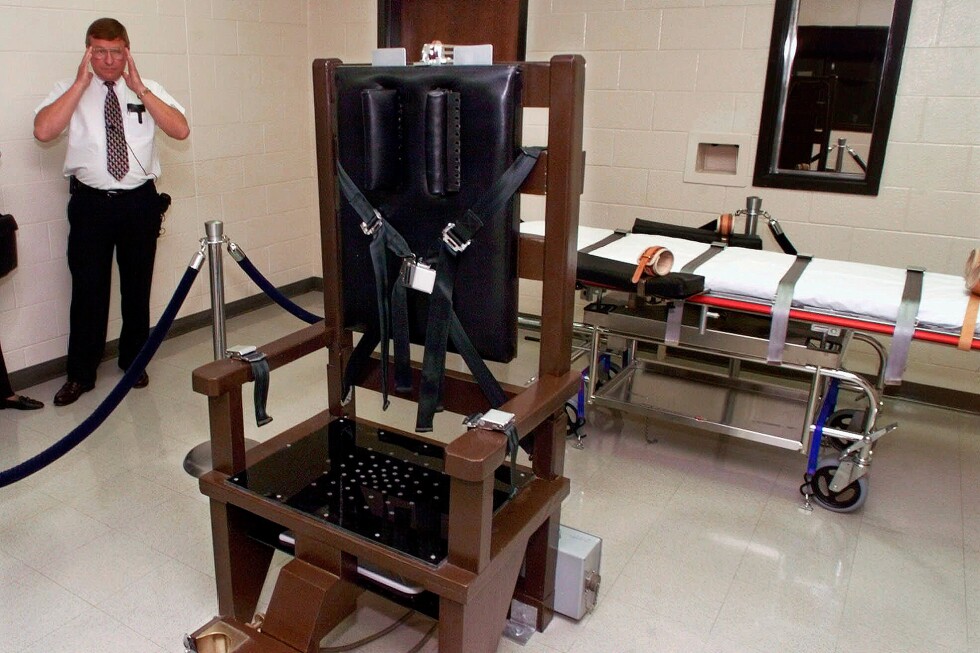
Tennessee Supreme Court Halts Expanded Media Access to Executions
The Tennessee Supreme Court has temporarily halted a lower court’s decision that would have increased media access during state executions. This pause affects the execution process ahead of Tony Carruthers’ scheduled execution on May 21, reinstating previous protocols while an appeal is underway.
Earlier this year, a Nashville judge sided with a coalition of media organizations, including The Associated Press, issuing a temporary injunction challenging the state’s execution procedures. According to the coalition, these protocols unconstitutionally restrict comprehensive reporting.
The judge had mandated that curtains in the witness room be drawn earlier during lethal injections, allowing observers to view the inmate being secured and the IV insertion. The curtains would remain open until the death pronouncement. Additionally, to protect the identities of the execution team, the judge required team members to wear protective suits and offered them masks.
During the appeal, the state attorney general’s office argued that the media does not have a First Amendment right to witness executions, particularly the additional segments specified by the judge. The state expressed concerns that the expanded viewing could reveal execution team members’ identities and introduce untested procedures based on a misinterpretation of state laws.
Conversely, lawyers representing the media coalition argued that restricting access would withhold critical information from the public about upcoming executions. They asserted a constitutional and statutory right to observe the entire execution process, suggesting that personal protective equipment would sufficiently conceal team members’ identities.
Under the reinstated protocol, media witnesses observe proceedings only after the inmate is strapped to a gurney and connected to IV lines, without knowing precisely when injections start. The execution team administers the lethal drugs from a different room. Saline and pentobarbital are injected, followed by a signal from the team leader to the warden, triggering a five-minute wait. Subsequently, the blinds close, the camera shuts off, and a doctor confirms death. If confirmed, the warden announces the execution’s completion through an intercom, and witnesses exit.
Execution team members, not media observers, view the process via closed-circuit TV. Besides The Associated Press, the media coalition comprises Gannett Co., Inc.; Nashville Public Media, Inc.; Nashville Public Radio; Scripps Media, Inc.; Six Rivers Media, LLC; and TEGNA INC.