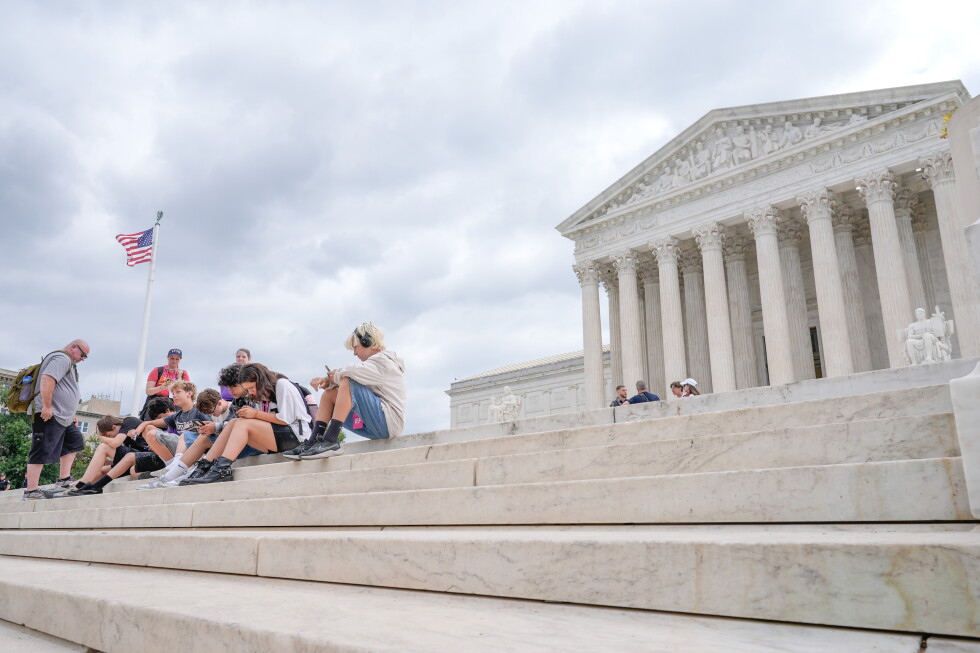
The Supreme Court delivered a decision on Tuesday that aligns with the Trump administration’s stance on immigration, specifically concerning the powers exercised over green card holders.
In a 6-3 ruling, the court examined a situation involving Muk Choi Lau, a green-card holder, who was placed on immigration parole by an immigration officer in 2012 upon his return from a brief trip abroad. This action was taken due to Lau’s accusation of involvement in a counterfeiting crime.
Lau contended that the immigration officer exceeded their authority, and that this decision enabled the Department of Homeland Security to expedite deportation proceedings after he admitted guilt to trademark counterfeiting.
This ruling is part of a broader context in which the Supreme Court is evaluating several immigration-related cases amidst President Donald Trump’s comprehensive immigration policies. Notably, this particular case was initiated prior to Trump’s presidency.
The administration’s legal team posited that mere suspicion of criminal activity is sufficient grounds to subject a lawful permanent resident, or green-card holder, to immigration parole. Furthermore, federal attorneys advocated for a broad interpretation of executive power regarding immigration matters.
In addition, the court is reviewing other significant issues related to immigration, such as Trump’s efforts to terminate birthright citizenship, potentially reinstate a stringent asylum policy, and withdraw temporary legal protections for migrants escaping conflict and natural disasters in their native countries.