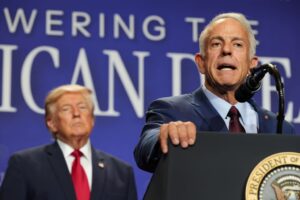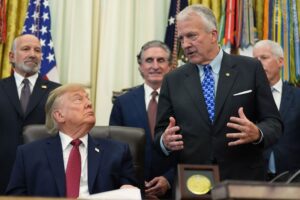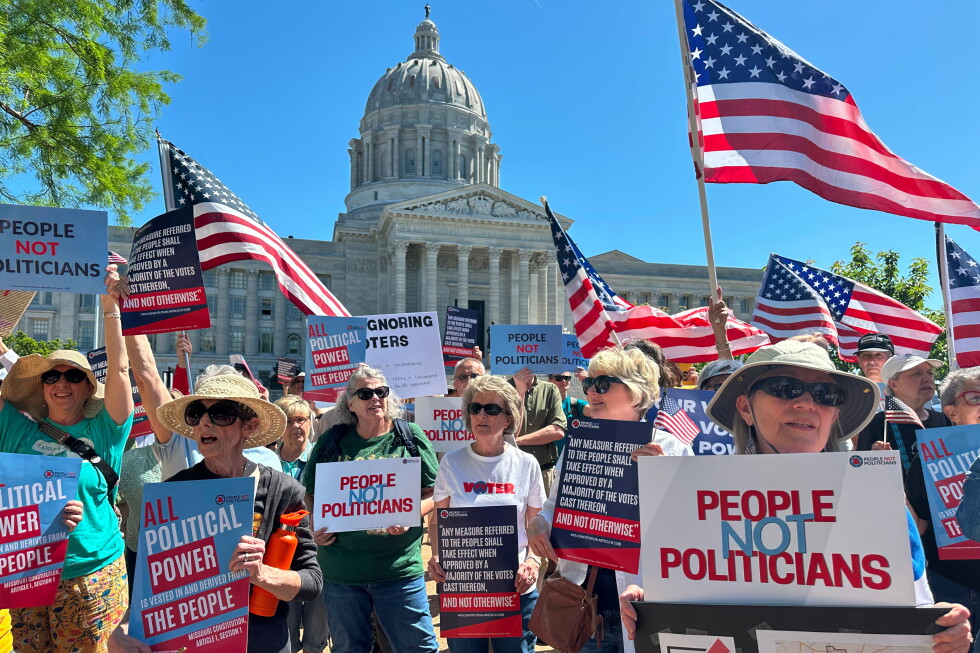
In a crucial decision affecting the upcoming elections, a Missouri judge has affirmed the use of new congressional districts advocated by President Donald Trump, thwarting efforts to put the Republican-favored map to a public vote. The districts are set to be used in November’s elections, despite ongoing legal challenges that could reach the state Supreme Court.
This ruling comes after Cole County Circuit Judge Daniel Green sided with Missouri’s Republican Secretary of State, Denny Hoskins, who had previously dismissed a petition aimed at triggering a November referendum on the redistricting plan. Hoskins pointed to the state’s Constitution, which he claims does not allow for a referendum on congressional redistricting.
“The Missouri Constitution does not supply any statement — let alone a clear one — reallocating authority over congressional redistricting away from the General Assembly to a referendum process,” Judge Green stated in his decision.
Impact on Missouri’s Congressional Representation
Currently, Missouri’s U.S. House delegation consists of six Republicans and two Democrats. The redistricting, influenced by Republican Gov. Mike Kehoe’s special session, is designed to challenge Democratic U.S. Rep. Emanuel Cleaver by redistributing parts of Kansas City into Republican-leaning districts. The shift means that about 59% of voters in Cleaver’s district will be new, potentially altering election outcomes.
The Republican Party had argued for the new districts’ implementation in the November elections, even if a referendum were to occur simultaneously. However, opponents, led by Richard von Glahn of People Not Politicians, are appealing the decision, hopeful that the Missouri Supreme Court will recognize their constitutional claims.
Legal Debate Over Referendum Rights
The legal contention centers around whether the Missouri Constitution allows for a referendum on congressional redistricting. The state’s Attorney General’s office, representing the Secretary of State, argues that redistricting is a legislative responsibility that cannot be subjected to a referendum without explicit constitutional authorization.
Attorney John Gore, representing Republican committees, stressed that altering districts post-primary could cause “widespread voter confusion” and undermine confidence in the election process. Judge Green agreed, noting that such a change could infringe on federal law.
Wider Implications Across States
Missouri’s redistricting is part of a broader national trend, with several states, including Texas and North Carolina, redrawing districts following Trump’s call for Republican-led states to optimize congressional maps for their advantage. The Republican Party aims to secure up to 16 additional seats across eight states, while Democrats are focused on potential gains in California and Utah.
The effectiveness of these redistricting efforts remains uncertain, particularly given historical trends of the president’s party losing seats during midterms and Trump’s low approval ratings potentially posing additional challenges for Republican candidates.
___
Associated Press journalist Hannah Recht contributed from Washington.