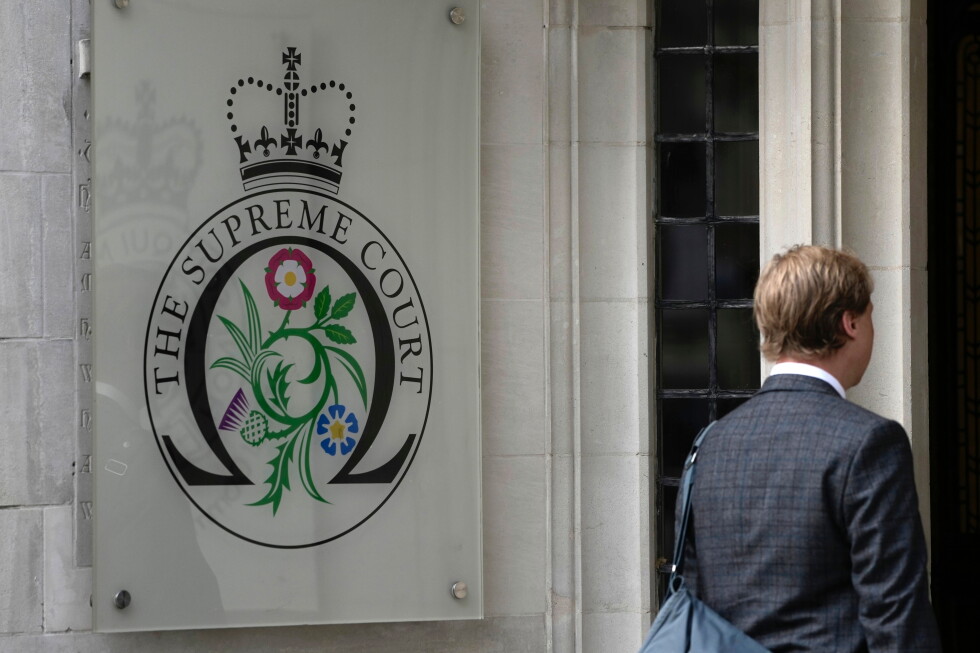
The ongoing legal struggle for gay rights in Trinidad and Tobago may reach a pivotal moment as the final appeals court in England considers a significant case. The Supreme Court in London will review a case that could potentially decriminalize gay sex in Trinidad and Tobago, a move that could influence the broader Caribbean region’s stance on LGBTQ rights.
Jason Jones initiated the case in February 2017, challenging the constitutionality of colonial-era laws that criminalize gay sex in the twin-island nation. These “buggery” laws, if violated, can lead to a prison sentence of up to five years.
The Trinidad and Tobago government, supported by the Council of Evangelical Churches and the Sanatan Dharma Maha Sabha, contests Jones’ claims. The legal battle has traversed multiple court levels, with the High Court in Trinidad deeming the laws unconstitutional in April 2018. However, this decision was partially overturned by a local appeals court in March 2025, allowing Jones to escalate the case to the Judicial Committee of the Privy Council in England.
The case has garnered attention from activists across the Caribbean, who are eager to see whether the outcome will spark change in other nations. Historical precedents exist, such as the Bahamas decriminalizing homosexuality in 1991 and the U.K. repealing similar laws in several territories in 2001.
Recently, judicial decisions have nullified comparable laws in Barbados, Dominica, St. Lucia, and Antigua and Barbuda. Nonetheless, gay sex remains illegal in Grenada, Jamaica, Trinidad and Tobago, and St. Vincent and the Grenadines.
Jason Jones, 61, who left Trinidad and Tobago in 1996 due to homophobia, argues that the criminalization of gay sex is a moral rather than a legal issue. “Trinidad and Tobago is a secular society and a multi-racial one. Christian morality is neither universal nor superior,” he states.
Supporters of Jones highlight his experience to illustrate broader societal issues, noting that such laws contribute to stigma and fear. “A law of this kind operates not only through arrest and conviction, but through the stigma, fear, concealment, and exclusion,” they argue, emphasizing the negative impact on young people exploring their identity.
The Judicial Committee of the Privy Council comprises five judges who could announce their decision shortly after the hearing. However, there is no set timeline for issuing a ruling.