Kenya’s High Court Upholds Marijuana Prohibition for Rastafarians
In Nairobi, Kenya, a significant legal decision was reached as the High Court dismissed a petition from the Rastafarian community seeking permission to use cannabis for religious purposes. This ruling came after Justice Bahati Mwamuye concluded that existing laws prohibiting marijuana do not infringe on the Rastafarians’ religious freedoms.
Justice Mwamuye emphasized that any exemption for religious use of cannabis would necessitate a robust constitutional and legal framework. He also proposed that Kenya engage in a broader national discussion regarding its drug policy, highlighting the societal implications beyond just the Rastafarian community.
The current legal framework in Kenya, under the Narcotic Drugs and Psychotropic Substances (Control) Act, strictly forbids marijuana cultivation, possession, and usage. Rastafarians, in their petition, argued that cannabis plays a pivotal role in their religious rites.
Violations of these laws, such as smoking marijuana, can result in penalties up to $2,000, imprisonment for a decade, or both. More severe penalties, including heftier fines and extended prison sentences, are imposed for drug trafficking offenses.
In his judgment, Mwamuye articulated that the petitioners did not present the necessary constitutional and legal arguments to justify an exemption from the drug laws.
Shadrack Wambui, the petitioners’ legal representative, announced plans to challenge the decision in the Court of Appeal.
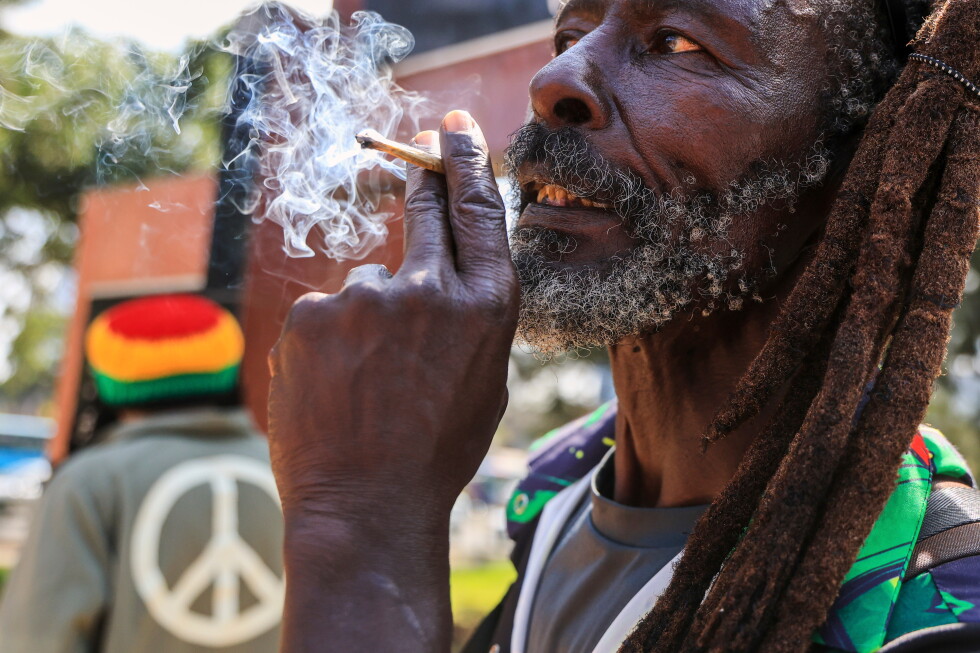
Following this legal setback, Rastafarians convened at Nairobi’s Freedom Corner, expressing their discontent through chants, drumbeats, and the symbolic smoking of marijuana. Wanjiru Gakiu, a 34-year practitioner of Rastafarianism, expressed her disillusionment with the ruling, labeling Kenya’s drug laws as “satanic.”
“I’m sure if we were seeking to legalize something satanic, we would have been allowed. But when it comes to religion, the country is deaf and doesn’t want us to enjoy our religious rights,” she remarked to The Associated Press.
Meanwhile, other Kenyans, citing religious concerns, support the court’s decision against legalizing marijuana. Jedidah Ng’ang’a, a Nairobi resident, commented, “I am very happy about it (the judgment) because, as a Christian, I wouldn’t advocate for use of marijuana in our country.”