Federal Judge Blocks Trump’s Effort to Alter Election Procedures
In a significant legal development, U.S. District Court Judge Indira Talwani ruled against President Donald Trump’s executive order aiming to establish a federal voter list and directly involve the U.S. Postal Service in election operations. This order, signed in March, was designed to limit mail voting, a move that has faced substantial opposition.
Judge Talwani, in her June 25 decision, had already issued a summary judgment backing Democratic state attorneys general, thereby preventing the order’s implementation. Her recent ruling further complicates the Trump administration’s legal standing as it seeks to overturn the injunction at the U.S. Supreme Court.
Highlighting the urgency of maintaining current election rules, Judge Talwani noted, “That it is now less than 90 days before the November 3, 2026 midterm elections underscores the critical need for an injunction to prevent Defendants from changing election rules on the eve of the election.”
The Trump administration, in response, has approached the Supreme Court to invalidate decisions from lower courts that have halted the proposed electoral changes across nearly half of the United States. However, Judge Talwani sided with the League of Women Voters and other voting rights groups, issuing a preliminary injunction that prevents the Postal Service from executing the order during the midterm elections.
In her written opinion, Judge Talwani asserted, “The executive branch has no authority to regulate elections,” questioning the administration’s reluctance to defend the order’s constitutionality.
The White House, responding to the judicial setback, emphasized President Trump’s ongoing advocacy for Congress to pass a stalled bill aimed at restructuring the American electoral system. White House spokeswoman Lauren Bis stated, “The entire Trump Administration will continue lawfully enacting the agenda President Trump was elected to enact — which includes the safety and security of American elections.”
Voting rights advocates celebrated the judicial decision. Marcia Johnson of the League of Women Voters declared, “This ruling is a victory for voters and for the Constitution. Neither the president nor the U.S. Postal Service has the authority to rewrite election rules.”
The ongoing legal dispute involves two federal lawsuits filed in Boston, arguing that the president’s order infringes upon the states’ and Congress’s constitutional prerogatives to set election rules. The plaintiffs assert that the U.S. Postal Service lacks the authority to implement the changes outlined in the executive order.
The Trump administration has countered, claiming the plaintiffs lack standing and that their legal challenges are premature, with Stephen Pezzi, a lawyer for the administration, asserting that potential harms are speculative and no prosecutions for order violations are anticipated.
This executive order represents Trump’s second attempt to establish election-related rules during his presidency, coinciding with his assertions of widespread voting by noncitizens, despite evidence to the contrary. The administration has also been pushing the SAVE America Act, which proposes a proof-of-citizenship requirement, yet faces legislative gridlock in the Senate.
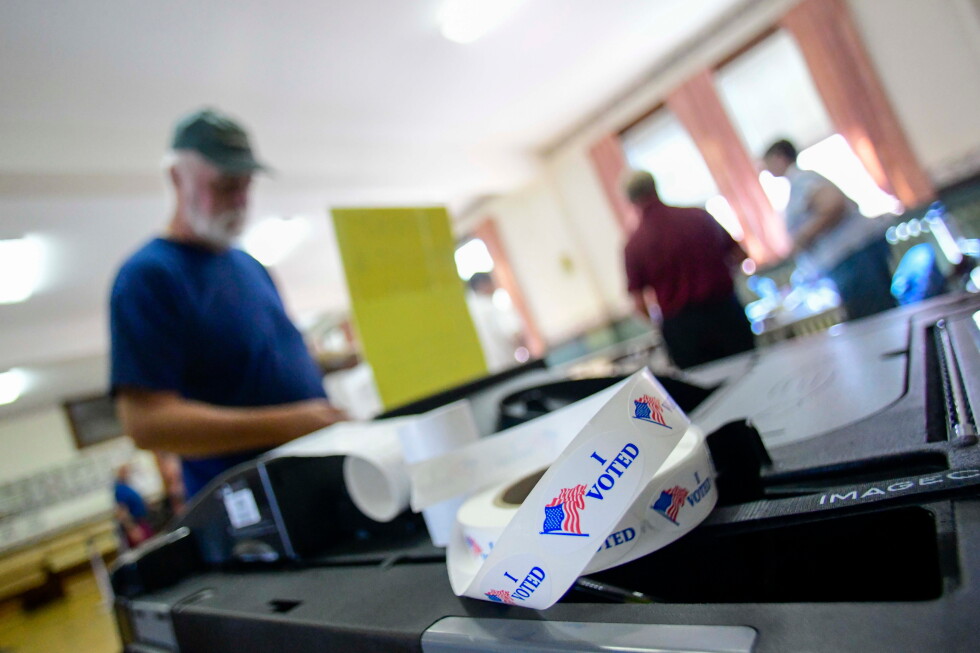
Efforts to regulate mail voting have been controversial, with states already employing measures to maintain accurate voter rolls and noncitizen voting being a rare occurrence. The Postal Service’s proposed rule, published in the Federal Register as required by the order, remains on hold following Judge Talwani’s initial ruling.
Earlier, a federal judge in Washington agreed with the Trump administration that it was premature to block the order before its implementation. However, other judicial decisions have opposed Trump’s previous election-related executive orders, including one that mandated citizenship documentation for voter registration.
Since losing the 2020 presidential election to Joe Biden, Trump has persistently claimed, without evidence, that mail voting is susceptible to fraud, despite audits and investigations, including those conducted by Republicans, which have found no widespread fraud.