LOS ANGELES (AP) — On Wednesday, a federal appeals court halted enforcement of a California statute mandating that federal immigration officers display identification, marking another setback for the state’s efforts to curtail aggressive policies by the Trump administration.
The administration argued that such a requirement could endanger officers, citing concerns over harassment, doxing, and violence. Furthermore, it claimed the law infringed upon the Constitution by attempting to regulate federal operations.
The injunction was issued by a three-judge panel from the 9th U.S. Circuit Court of Appeals, which had already prevented the law from being enacted.
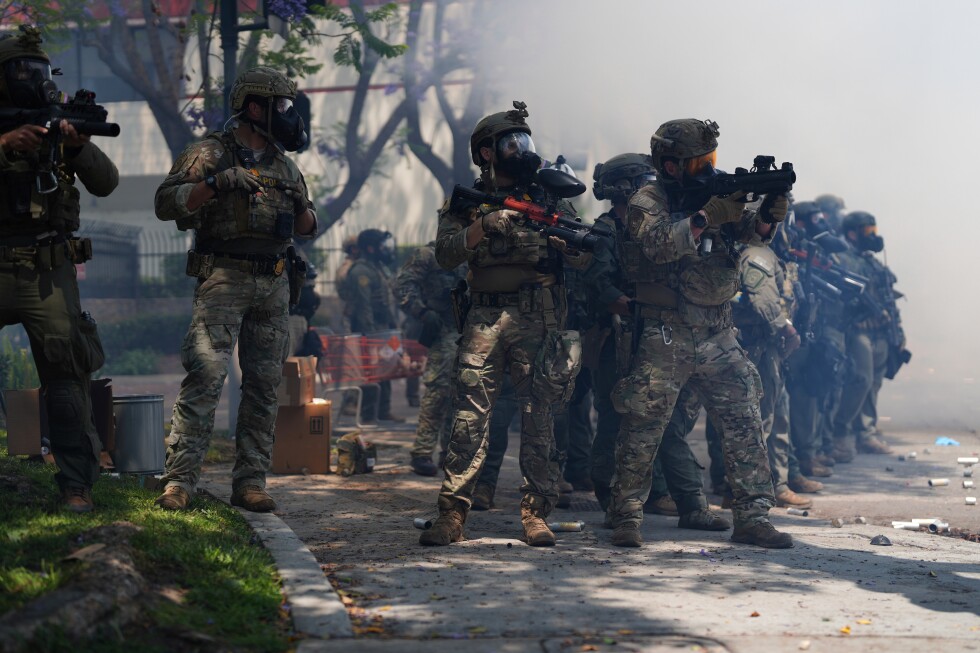
This ruling may influence other states that have sought to implement restrictions on immigration enforcement agents. The law was part of two significant legislative efforts enacted last fall to limit federal immigration authority following a major crackdown in Southern California. The other legislation aimed to prohibit most law enforcement officials from using facial coverings such as masks and neck gaiters. Concerns had been raised by advocates about masked agents conducting raids and arrests without showing identification.
The Trump administration had initiated legal action against both laws in November.
In February, a federal judge blocked the mask ban, declaring it discriminatory against the federal government as it did not apply to state law enforcement. The ban allowed exceptions for undercover work, protective gear like N95 masks, and situations where safety could be compromised without a mask. However, the judge permitted the identification requirement to remain.
During an appeal hearing on March 3, Department of Justice attorneys contended that the identification law violated the Supremacy Clause of the Constitution by attempting to regulate federal actions.
The appeals court unanimously agreed, with Judge Mark J. Bennett writing that the law “attempts to directly regulate the United States in its performance of governmental functions.” The panel included Trump appointees Bennett and Daniel P. Collins, along with Obama appointee Jacqueline H. Nguyen.
California’s legal team argued that the law was non-discriminatory, applying uniformly to all law enforcement officers. They maintained that it was crucial for public safety, noting that officers without visible identification could be mistaken for criminals, potentially leading to harm.
In a brief, they mentioned an October 2025 FBI report warning about “criminal actors impersonating ICE agents to commit violent crime,” a consequence of increased U.S. Immigration and Customs Enforcement activities.
Despite these concerns, the appeals court did not factor in public safety, emphasizing the constitutional rights at stake. “All citizens have a stake in upholding the Constitution,” the judges remarked.
While the lower court dismissed California’s mask ban, it suggested that a law banning masks for all law enforcement might be more acceptable. A new California legislative proposal seeks to expand mask restrictions to include state officers.
The appeals court’s decision underscores a stringent stance on the state’s authority over federal personnel, stating, “The Supremacy Clause prohibits States from enacting a law that directly regulates federal operations even if the law regulates state operations in the same manner.”
First Assistant U.S. Attorney Bill Essayli described the ruling as a “huge legal victory” on X.
California Attorney General Rob Bonta’s office is currently reviewing the decision. “The Trump Administration has stepped well outside the boundaries of normal practice, deploying masked and unidentified agents to carry out immigration enforcement, despite the risks these tactics pose to public safety and basic civil liberties,” Bonta’s office commented.