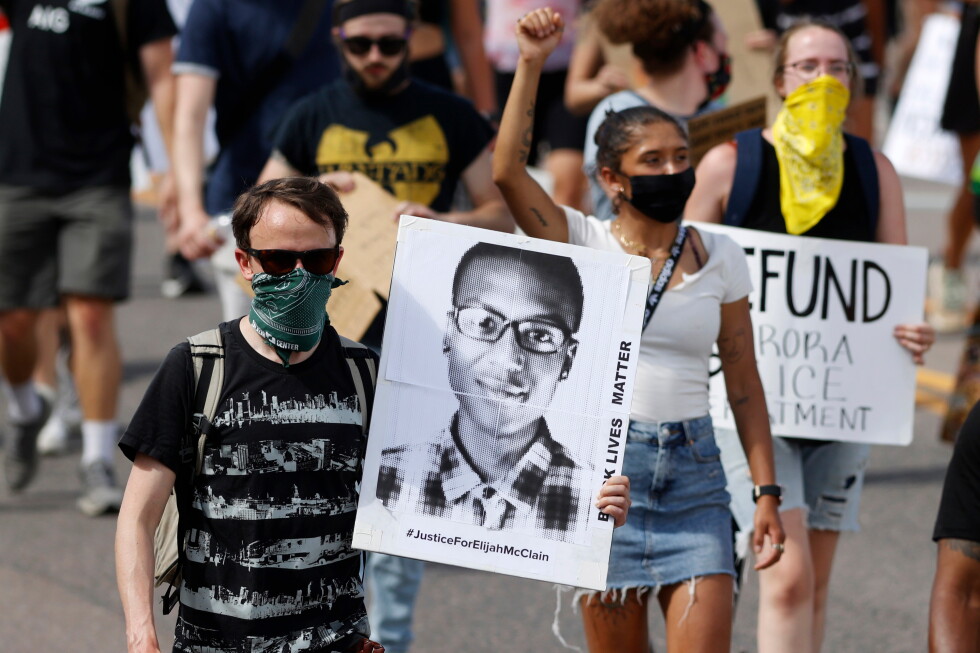
Paramedics’ Homicide Convictions Overturned in Elijah McClain Case
The Colorado Court of Appeals has overturned the homicide convictions of two Aurora paramedics involved in the 2019 death of Elijah McClain, a Black man who was forcibly restrained by police and injected with ketamine. The court’s decision, announced on Thursday, calls for new trials for Jeremy Cooper and Peter Cichuniec, both associated with Aurora Fire Rescue.
McClain’s dying words, “I can’t breathe,” echoed those of George Floyd, whose death in Minneapolis a year later ignited widespread protests across the United States. McClain, a 23-year-old massage therapist, was walking home when he was stopped by police responding to a suspicious person report in suburban Denver.
Though rare, the criminal charges against paramedics and EMTs in cases involving police custody have raised significant concerns among first responders nationwide. The use of ketamine to manage combative individuals, highlighted by McClain’s case and similar incidents, has come under intense scrutiny.
Criminologist Alex Piquero from the University of Miami remarked on the potential ramifications for first responders. “At 11 o’clock tonight when they’re on a call, and the circumstances are the same, is this going to influence their behavior?” Piquero questioned. “It may not be the first thing that comes into their heads, but it’s going to be there.”
Earlier this year, Cooper and Cichuniec were found guilty of criminally negligent homicide after a lengthy district court trial. Additionally, Cichuniec was convicted of second-degree felony assault. He received a five-year prison sentence, while Cooper was sentenced to 14 months in jail with work release and probation.
Attorney General Plans to Challenge Court’s Decision
The appellate court upheld Cichuniec’s assault conviction but identified issues with the jury instructions regarding the homicide charges. This development mandates a retrial on the overturned charges. In response, Colorado Attorney General Phil Weiser announced plans to appeal the recent ruling. “Bringing these cases to trial was the right thing to do for justice, for Elijah McClain, and for healing in the Aurora community,” Weiser stated.
In separate proceedings, an Aurora police officer was convicted for homicide and third-degree assault in McClain’s death, while two of his colleagues were acquitted. Cichuniec’s sentence was later reduced, allowing his release on probation, owing to what Judge Mark Warner described as “unusual and extenuating circumstances.”
The International Association of Fire Fighters expressed support for Cooper and Cichuniec. “Today’s ruling recognizes the challenges paramedics face when making split-second medical decisions in rapidly evolving situations,” said General President Edward Kelly.
Initial Prosecutorial Decisions and Community Response
Initially, local prosecutors opted against filing charges in McClain’s death due to inconclusive autopsy results. However, following nationwide demonstrations after Floyd’s death, Governor Jared Polis ordered a renewed investigation. This led to a grand jury indicting the paramedics and three officers involved, following a revised autopsy report that implicated the sedative ketamine as a contributing factor.
The City of Aurora settled a civil rights lawsuit with McClain’s family for $15 million in 2021. The paramedics’ legal defense argued their actions adhered to protocol, administering ketamine for what they diagnosed as “excited delirium,” a condition that has faced criticism for its scientific validity.
State guidelines have since advised against the use of excited delirium as justification for ketamine administration. Activist MiDian Shofner expressed disappointment with the appellate outcome, calling it “one of the most divisive judicial decisions our state has experienced in recent memory.”