Brazil’s Supreme Court to Review Amazon and Indigenous Rights Cases
SAO PAULO (AP) — Brazil’s highest court is preparing to deliberate on a number of pivotal cases that could significantly impact the Amazon rainforest and the Indigenous populations that rely on it. These cases involve issues such as Indigenous land rights, the reduction of environmental protections, and the development of infrastructure projects. Although different in nature, they all have found their way to the Supreme Court.
In recent legislative sessions, a predominantly conservative Congress passed laws that environmental groups argue infringe on constitutional rights. President Luiz Inácio Lula da Silva, whose administration has prioritized environmental policies, vetoed several of these laws. However, lawmakers overrode some of these vetoes, leading to legal battles that have now reached the Supreme Court. Environmental advocates view the court as a crucial ally in halting the erosion of Brazil’s environmental protections.
The constraints facing the Lula administration are highlighted by these cases. Despite progress in reducing deforestation and promoting ecological investments, the government often finds itself at odds with a Congress dominated by agribusiness interests. “The government is very weak in the legislative arena,” said Suely Araújo, a policy coordinator at the Climate Observatory. “It often opposes anti-environmental bills, but it lacks the political strength to persuade Congress to vote with it.”
Agribusiness Influence in Brazilian Politics
The Lula administration finds itself outnumbered in Congress and with fewer negotiation tools than its predecessors. In recent years, Congress has gained more control over the federal budget, a traditional instrument of political negotiation. Agribusiness, a powerful economic sector in Brazil, holds a majority in Congress, facilitating the passage of laws that weaken environmental protections. Consequently, the Supreme Court has become a crucial check on legislative actions that conflict with Lula’s environmental initiatives. The president’s chief of staff declined to comment on ongoing Supreme Court cases.
Brazil remains the top global producer of soybeans and beef. While domestic consumption accounts for most of the beef production, a significant portion of soybean output is exported. Between January and July 2026, China imported 50% of Brazil’s beef exports and 70% of its soybean exports, according to trade data.
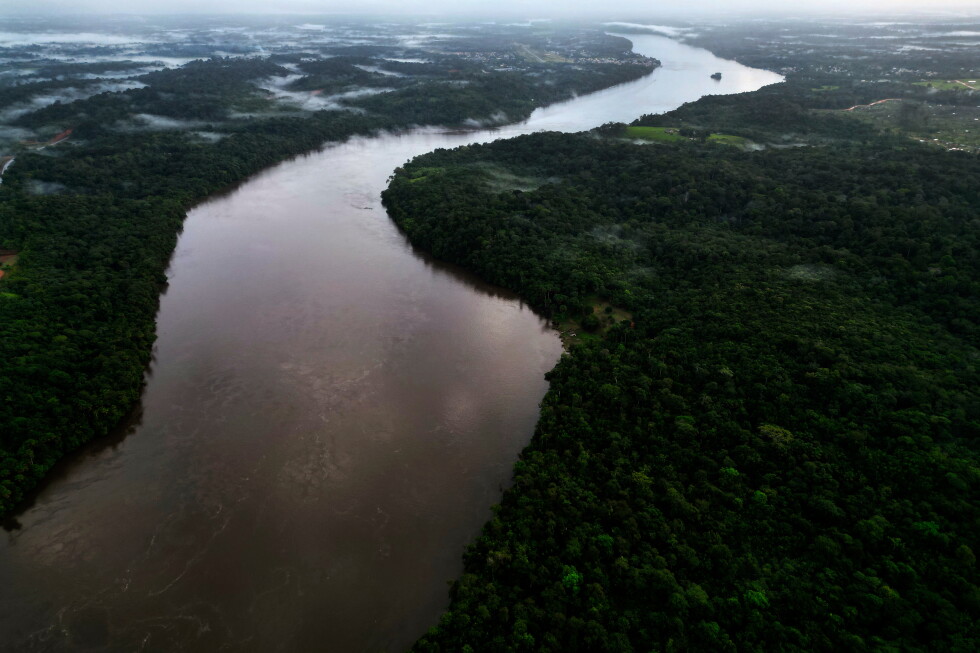
The expansion of Brazil’s agricultural frontier, primarily for cattle ranching and soybean cultivation, is the nation’s leading cause of deforestation, much of which occurs in the Amazon. The Parliamentary Agricultural Front did not respond to requests for comment. Agribusiness groups maintain they are against illegal deforestation and highlight increased productivity alongside reduced forest clearing.
Preserving the rainforest is vital for addressing climate change. The Amazon helps regulate climate and rainfall and stores large amounts of carbon, which could exacerbate global warming if released.
The Future of Indigenous Lands
On Friday, Brazil’s Supreme Court began reviewing motions related to a 2025 ruling that dismissed the “time limit” thesis, a legal concept supported by the agribusiness caucus to limit Indigenous land claims to territories occupied or legally disputed as of October 5, 1988. Proponents argue it brings legal certainty, while Indigenous groups contend it ignores historical expulsions and forced displacements.
The court is evaluating motions from various stakeholders, including government, political parties, farmers, and Indigenous organizations, with a decision expected by August 18. Possible topics include compensation rules and deadlines for completing Indigenous land demarcations. Ricardo Terena, a lawyer with Articulation of Indigenous Peoples of Brazil, warned some proposals could delay future demarcations by introducing administrative obstacles and extending compensation rights to non-Indigenous occupants.
The Kawahiva Indigenous people, living in isolation in the Amazon, could be affected by these proceedings. Although their presence in Mato Grosso state was confirmed in 1999, their territory was only physically demarcated recently. Survival International describes the Kawahiva as nomadic hunter-gatherers who continue to avoid external contact.
Upcoming Cases Impacting Amazon Governance
On Wednesday, the Supreme Court will review significant cases, including state laws ending the soy moratorium and a new environmental licensing law that fast-tracks strategic projects. In January, major grain traders exited the soy moratorium, a 20-year pact credited with reducing Amazon deforestation by prohibiting soy cultivation on cleared land. The agreement collapsed after top soy-producing states revoked tax benefits for participating companies. Justice Flávio Dino temporarily halted the state legislation, and the full court will now review his order.
The court will also assess the new environmental licensing law, which expedites permits for impactful projects like mines and highways. Araújo anticipates the court will invalidate provisions deemed unconstitutional, such as self-licensing for projects with moderate impacts. She noted the law’s tangible effects in the Amazon, like the paving of a contentious highway and plans to dredge a major river without adequate prior review.
The environment ministry supports the soy moratorium, citing its role in reducing deforestation while expanding production. Regarding the licensing law, the ministry expressed concerns about maintaining national standards, despite efforts to veto problematic provisions.
“Brazil needs an environmental licensing system that is more efficient, predictable, technically robust and capable of addressing the challenges of an economy that must expand infrastructure investment while confronting climate change and biodiversity loss,” the ministry stated.