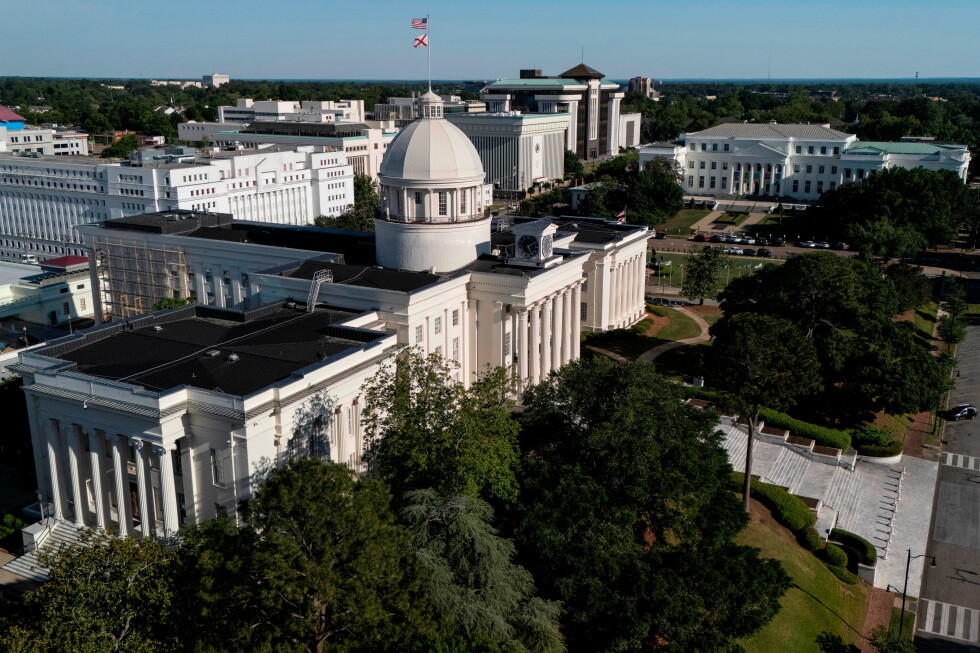
Alabama voters are set to choose U.S. House nominees in four of the state’s seven districts on Tuesday, following the introduction of a new electoral map. This map, which reduces the number of majority-Black districts from two to one, affects areas currently represented by Democrats.
Initially, the primaries for all districts were scheduled for May 19. However, Republican Governor Kay Ivey postponed the elections for the 1st, 2nd, 6th, and 7th districts. This decision came in response to a U.S. Supreme Court ruling that led several Republican-led Southern states to discard their existing congressional maps.
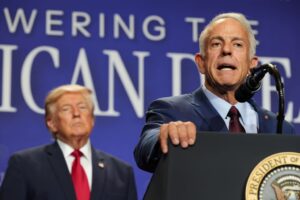
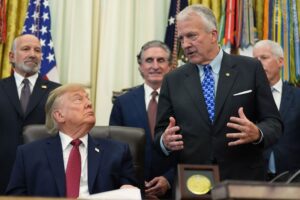
This redistricting effort in Alabama, along with similar actions in Louisiana and Tennessee, is part of a broader Republican strategy driven by former President Donald Trump. The aim is to bolster the party’s chances of maintaining its narrow majority in the U.S. House during the 2026 midterms.
Current Alabama U.S. House members will continue in their roles until the end of 2026. The new map, backed by Republicans, will take effect in January 2027. Both Democratic representatives from Alabama are running for reelection in the redefined districts without facing primary opposition.
In Alabama’s 2nd District, where U.S. Rep. Shomari Figures is seeking a second term, the Black demographic will decrease from 50% to approximately 40% under the new district boundaries. Had these boundaries been in place for the 2024 presidential election, Trump would have secured a 57% to 42% victory over Democratic Vice President Kamala Harris, contrary to the 53% to 46% win by Harris under the current lines.
Six Republican candidates are vying to challenge Figures in the November election, including state Rep. Rhett Marques, endorsed by Trump, alongside Army veteran Joshua McKee and real estate broker Hampton Harris. Marques is currently leading in fundraising among the contenders.
The 7th District will retain a slight Black majority, with U.S. Rep. Terri Sewell running for a ninth term. In the current boundaries, Harris outperformed Trump 61% to 38% and would have won 58% to 41% with the new boundaries in place. Two Republicans, Ammie Akin and David Perry, are competing for the chance to challenge Sewell.
When do polls close?
Polling stations will close at 7 p.m. CT, equivalent to 8 p.m. ET.
What’s on the ballot?
The Associated Press will deliver results and announce winners in the contested primaries for the 1st, 2nd, 6th, and 7th Congressional Districts.
Who gets to vote?
All registered voters within their respective districts can participate in the special primaries. Although Alabama doesn’t require party registration, voters must declare a party preference when selecting a primary ballot.
How many voters are there?
As of June 1, Alabama had 3.8 million registered voters. Each congressional district contains roughly 718,000 residents.
How many people actually vote?
In the May 19 primaries, about 409,000 ballots were cast statewide, representing approximately 11% of registered voters. There is no available data for past vote totals in the newly established districts.
How much of the vote is cast early or by absentee ballot?
Few Alabama voters utilize early or absentee voting. The state remains one of the few without in-person early voting options. In the 2024 primaries, about 4% of Democratic and 1% of Republican voters cast mail ballots.
When are early and absentee votes released?
Vote release procedures differ by county. Most counties release absentee voting results in the initial vote update, sometimes alongside in-person Election Day results.
How long does vote-counting usually take?
For the May 19 state primary, the AP first reported results at 8:28 p.m. ET, 28 minutes post-poll closure. The final update occurred at 12:54 a.m. ET, with over 99.9% of votes counted.
When will the AP declare a winner?
The AP refrains from projecting outcomes and will only declare a winner when no possible scenario allows the trailing candidate to close the gap. If a race remains uncalled, the AP will continue covering significant developments like candidate concessions or victory claims, clarifying that no winner has been declared and explaining why.
How do recounts work?
In 2010, Alabama’s attorney general opined that the state’s automatic recount law doesn’t apply to primaries. The AP may declare a winner in a recount-eligible race if it determines the lead is insurmountable by recount or legal challenge.
Are we there yet?
As of Tuesday, 84 days remain until the 2026 midterm elections.
___
For ongoing coverage of the 2026 election, visit AP’s election coverage.