Troy Jackson’s Rise from Lumberjack to U.S. Senate Candidate
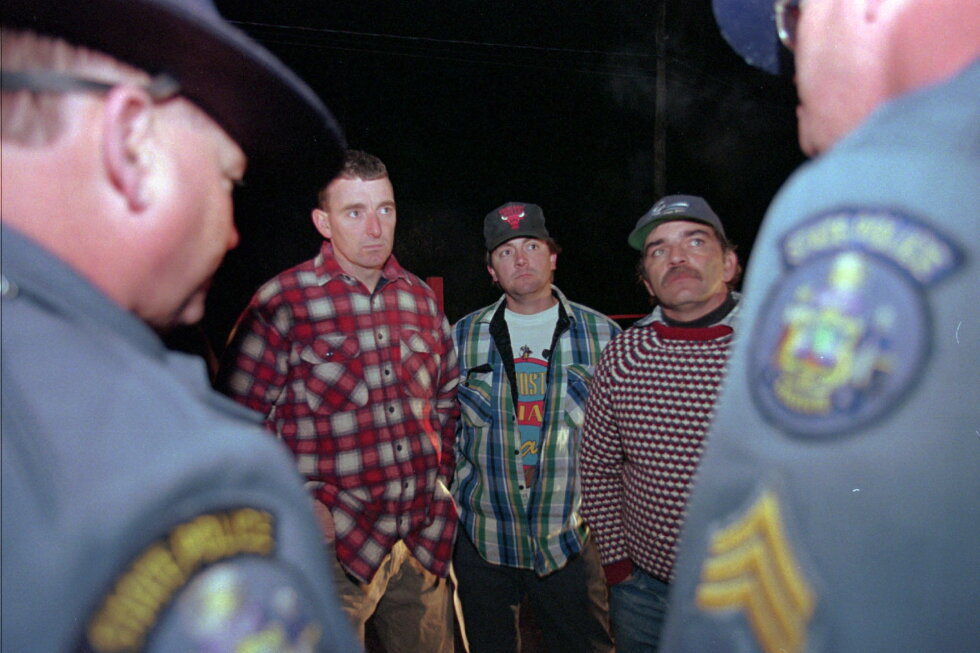
In the remote woods of northern Maine, Troy Jackson once confronted State Police troopers with a group of fellow loggers, protesting against Canadian workers taking local jobs. This event, nearly three decades ago, marked the beginning of Jackson’s political journey, transitioning from a fifth-generation lumberjack to the Democratic nominee for the U.S. Senate.
Jackson’s political path has been shaped by his deep roots in Aroostook County, a vast and heavily forested region known locally as “The County.” At 58, Jackson cites his experiences in this area as the foundation for his commitment to championing the working class and challenging the influence of billionaires and corporations.
He now faces Republican Sen. Susan Collins, a five-term incumbent, in a pivotal race that could sway control of the Senate. Despite the challenge, Jackson’s campaign emphasizes his connection to the region, which has continued to support him even as it leaned towards Republican Donald Trump in presidential elections.
Initially entering the race as a late substitute for Graham Platner, Jackson has critiqued Collins for prioritizing personal interests over Maine’s, particularly highlighting her vote that facilitated the Supreme Court’s decision to overturn the nationwide right to abortion. Collins, 73, who also hails from Aroostook County, counters by labeling Jackson as excessively liberal for the state.
From the Woods to the Political Arena
Jackson’s hometown of Allagash, located in the northern extremity of Aroostook County, is emblematic of the challenges faced by rural communities. Once a logger himself, Jackson describes the demanding hours and lack of benefits that defined his early career. Reflecting on those times, Jackson remarked, “The harder we worked, the more that companies took from us.”
Political aspirations led Jackson to initially run as a Republican, though he failed to gain traction in a predominantly Democratic area at the time. After several attempts, he found success as an independent before affiliating with the Democratic Party in 2004, eventually rising to the position of state Senate president.
Throughout his political career, Jackson’s views have evolved, particularly on social issues. Initially opposing abortion and same-sex marriage, he has since reversed these positions. Louie Pelletier, Jackson’s partner’s brother, noted Jackson’s shift, attributing it to a change in perspective over time.
Allagash’s Political Landscape in the Spotlight
Allagash, a small community with only one restaurant and a museum along the St. John River, displays just one campaign sign for Jackson. The town remains politically divided, with visible support for various Republican candidates.
Resident Darlene Dumond, who supports Jackson, expressed disappointment with Collins for her role in confirming Brett Kavanaugh to the Supreme Court, a decision that contributed to overturning Roe v. Wade. Collins has stated she disagrees with the ruling but stands by her vote for Kavanaugh.
Despite his resilience in maintaining his legislative seat in a shifting political landscape, Jackson has faced challenges beyond Allagash. He failed to secure the Democratic nomination for Maine’s 2nd Congressional District in 2014 and lost a local race in 2023 by a narrow margin.
Jackson’s legislative career has seen confrontations with both Republican and Democratic colleagues, including Democratic Gov. Janet Mills, who withdrew from the Senate race due to funding issues and has not endorsed Jackson. Some lawmakers have criticized Jackson for his temperament, though his supporters describe him as passionate and competitive.
Hilton Hafford, who stood with Jackson during the logger protests, recalls Jackson’s intensity in discussions about improving working conditions. “Troy would look over at me and he’d say, ‘Is it time yet?’” Hafford recounted, reflecting on Jackson’s enduring commitment to his principles.