In a significant legal development, conservative legal groups and Elon Musk’s artificial intelligence company have mounted challenges against the ability of private entities in the United States to enforce federal laws through citizen suits. Their stance, which echoes support from the Trump administration, argues that the power to enforce federal law should primarily lie with the president and federal agencies, as mandated by the Constitution. They assert that Congress should not have delegated such enforcement authority to individuals or groups.
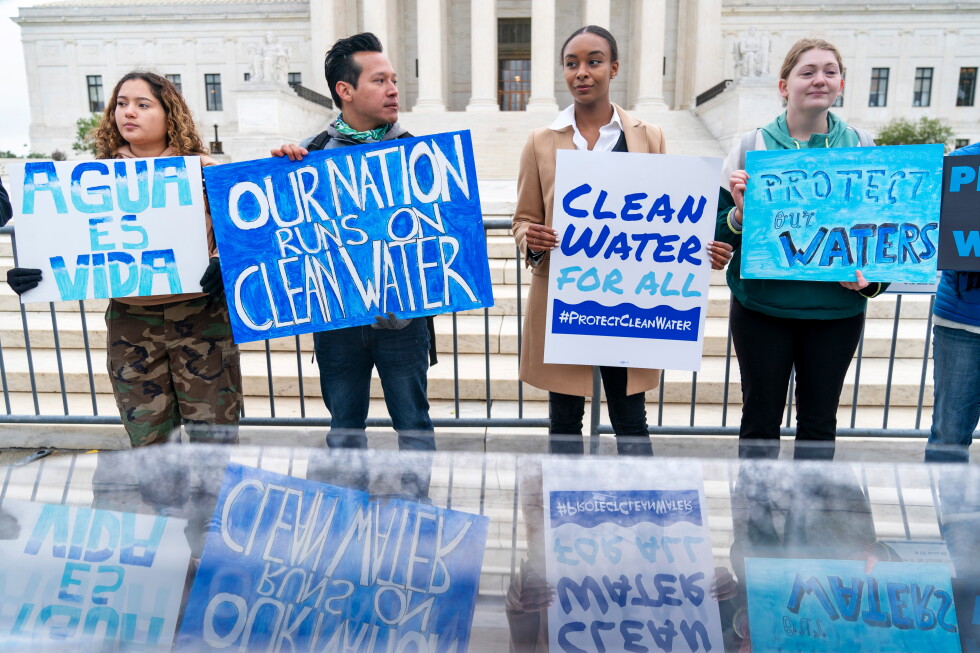
Environmentalists warn that eliminating this long-standing mechanism could severely impact efforts to curb illegal activities and impose penalties on violators. Citizen suits have been crucial in holding polluting entities accountable and addressing public health crises, such as the lead contamination in Flint, Michigan.
Currently, four federal cases are under judicial consideration, with one case filed just last week. Legal analysts suggest that with a conservative majority in the Supreme Court, the chances of success for opponents of citizen suits have increased. To prompt Supreme Court intervention, these opponents need to secure early victories in federal cases and create a divide among the appellate courts.
Supreme Court Dynamics
In 2000, a Supreme Court opinion hinted at the potential for challenging citizen suits. Justice Anthony Kennedy’s remarks in a Clean Water Act case highlighted the complexities these suits pose regarding executive authority. Similarly, Justice Antonin Scalia had expressed concerns about citizen suits allowing private citizens to enforce laws, though he did not explicitly declare them unconstitutional.
“The court is more like Scalia’s court since he died than it ever was when he was there,” noted Richard Lazarus, a Harvard professor experienced in environmental law, indicating the court’s current conservative leaning might favor those challenging citizen suits.
The focus of these suits is on who should collect fines and enforce compliance—government agencies or private citizens. While citizen suits enable individuals to initiate legal action, the government can intervene if it decides to pursue the matter. If successful, fines from these suits are directed to the U.S. Treasury.
Push Against Citizen Suits
Efforts to expand presidential power and restrict who can file lawsuits have gained momentum, with crucial federal backing received recently. The Pacific Legal Foundation, a right-leaning entity, has taken up a case in Tennessee to challenge the constitutionality of citizen suits. Representing Springfield, a town accused of violating the Clean Water Act, they argue that private groups exert undue influence by continuously forcing defendants to allocate resources for legal defenses.
“It’s better when the government is the one wielding the power because the government remains accountable to the people,” stated Sean Radomski, an attorney with the Pacific Legal Foundation.
Radomski clarified that the challenge does not target all federal lawsuits but focuses on those where fines benefit the Treasury, suggesting these suits usurp government authority. Civil rights lawsuits, where damages are awarded to victims, would remain unaffected.
Elon Musk’s AI Company Enters the Legal Fray
Elon Musk’s xAI is contesting a lawsuit filed by the NAACP, which accuses the company of operating gas turbines near Memphis without permits, posing a pollution risk to nearby communities. The Trump administration has backed Musk’s company, citing national security concerns related to the AI’s role in defense operations.
Laura Thoms from Earthjustice, representing the NAACP, criticized the administration’s stance, suggesting it undermines traditional law enforcement roles. “This administration has determined that the company should be allowed to continue to pollute,” she said.
Implications of Legal Changes
Citizen suits were embedded in key environmental laws to address the federal government’s limited capacity to tackle polluters, as well as the political nuances of certain cases. Richard Lazarus emphasized their importance in fulfilling legislative goals.
Some argue the need for such suits is heightened under the Trump administration, which has reduced environmental protections and restricted enforcement to severe cases only. Environmentalists contend that citizen suits are critical for closing enforcement gaps.
However, concerns also arise about potential corruption, as presidential authority could be used to bypass laws for personal gain. Without citizen suits, areas with weaker state protections might become “sacrifice zones,” particularly affecting impoverished and minority communities.
While some experts remain skeptical about the challengers’ claims, the current Supreme Court’s defense of executive power suggests a potential shift. “This court has been so protective of the executive branch’s complete control,” remarked David Adelman from the University of Texas at Austin School of Law.
For more environmental news, visit AP’s climate and environment section.