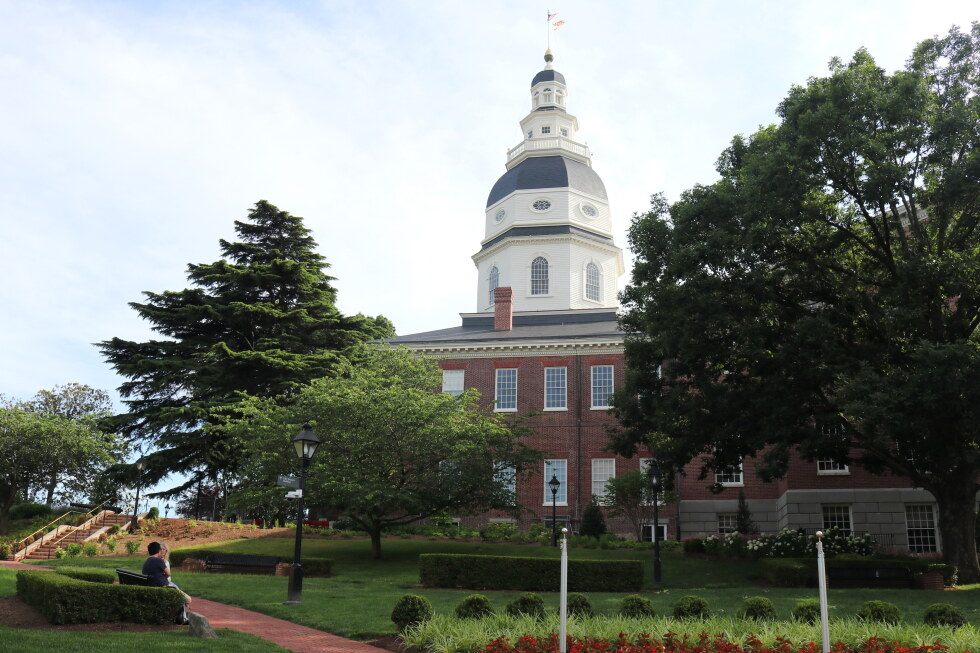
Maryland’s legislature is convening for a special session starting Monday, focusing on a redistricting proposal that could potentially boost Democratic representation in the U.S. House by 2028. The General Assembly is set to discuss a constitutional amendment aimed at allowing Democrats more flexibility in drafting congressional maps, as they currently hold seven out of the state’s eight House seats. Voter approval is necessary before any redistricting changes can be implemented.
Initiated amidst national redistricting battles, Maryland’s move has been criticized by the state’s Republican minority as a power grab. The redistricting debate, which began last year, has reshaped the U.S. House map ahead of the upcoming midterm elections. Bill Ferguson, the Democratic state Senate President, had previously blocked a similar redistricting effort over judicial review concerns. However, his stance changed following a U.S. Supreme Court decision that weakened the Voting Rights Act, prompting Republicans to alter districts in Southern states with significant minority populations. Ferguson expressed concern over the rapid changes, stating, “It felt like the unwinding of any type of democratic norms in the blink of an eye.”
Potential Gains for Democrats in Maryland
Currently, Andy Harris, a Republican and chair of the House Freedom Caucus, is Maryland’s sole Republican representative, with his district spanning the rural Eastern Shore. In 2021, an attempt to redraw the district to increase Democratic competitiveness was struck down by a judge, who labeled it “extreme partisan gerrymandering.” In response, the legislature is considering a constitutional amendment to limit judicial interpretations concerning compactness and natural boundaries to General Assembly districts only, not congressional ones. Voter approval could enable new maps for the 2028 elections.
Republican Opposition to Redistricting Efforts
Republicans have voiced their disapproval of the Democrats’ redistricting initiative, citing restrictions on testimony as a concern. House Minority Leader Jason Buckel criticized the process, stating it seemed like “a brief and meaningless formality.” Rep. Harris warned that the proposed amendment could fragment communities of interest, disadvantaging rural voters and leading to potential legal challenges.
Governor Wes Moore, a Democrat, emphasized the urgency of the proposal due to Republican redistricting elsewhere, arguing that the decision should rest with voters, not political leaders. He remarked, “And if the people determine that there’s nothing to do, then there’s nothing to do. But if the people determine that we move, we move.”
National Implications of Redistricting
Maryland’s initiative is part of a broader national redistricting conflict spurred by former President Donald Trump’s call for Republican-led states to adjust districts to maintain a House majority. Republicans aim to gain up to 16 additional seats through new maps across several states, while Democrats hope to gain up to six seats in California and Utah.
In addition to Maryland, states like New York are also pursuing redistricting initiatives ahead of the 2028 elections. New York’s Democratic-led legislature has passed a constitutional amendment proposal to allow mid-decade redistricting and ease bypassing an independent commission. It requires another legislative approval before appearing on a ballot.